


Experience with a novel efalizumab-based immunosuppressive regimen to facilitate single donor islet cell transplantation
- PMID: 20883542
- PMCID: PMC3335736
- DOI: 10.1111/j.1600-6143.2010.03212.x
Experience with a novel efalizumab-based immunosuppressive regimen to facilitate single donor islet cell transplantation
Abstract
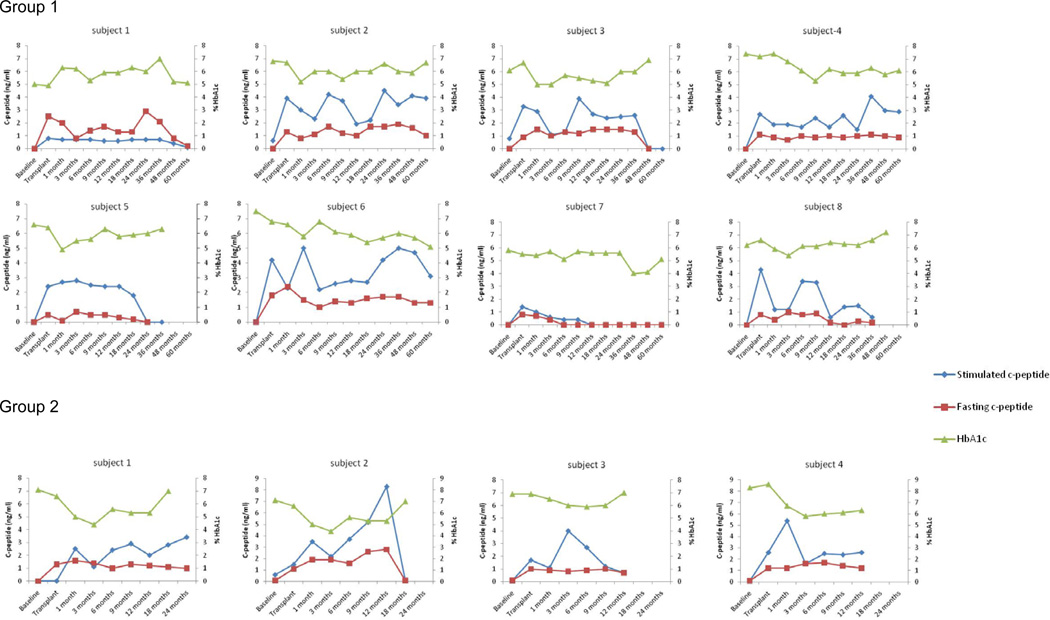
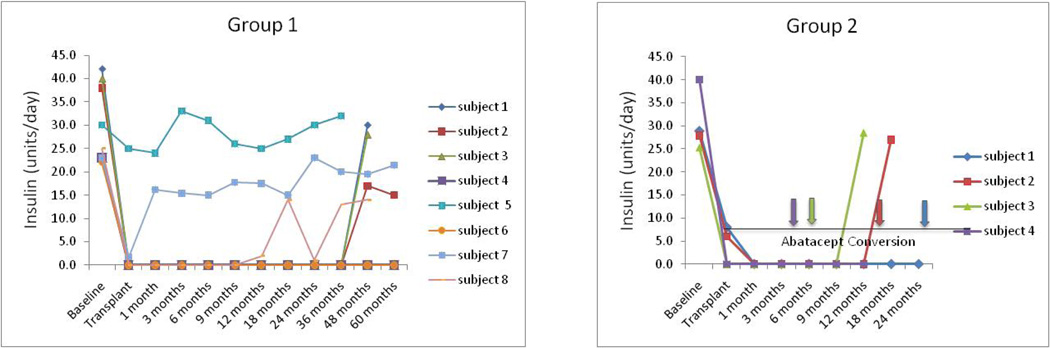
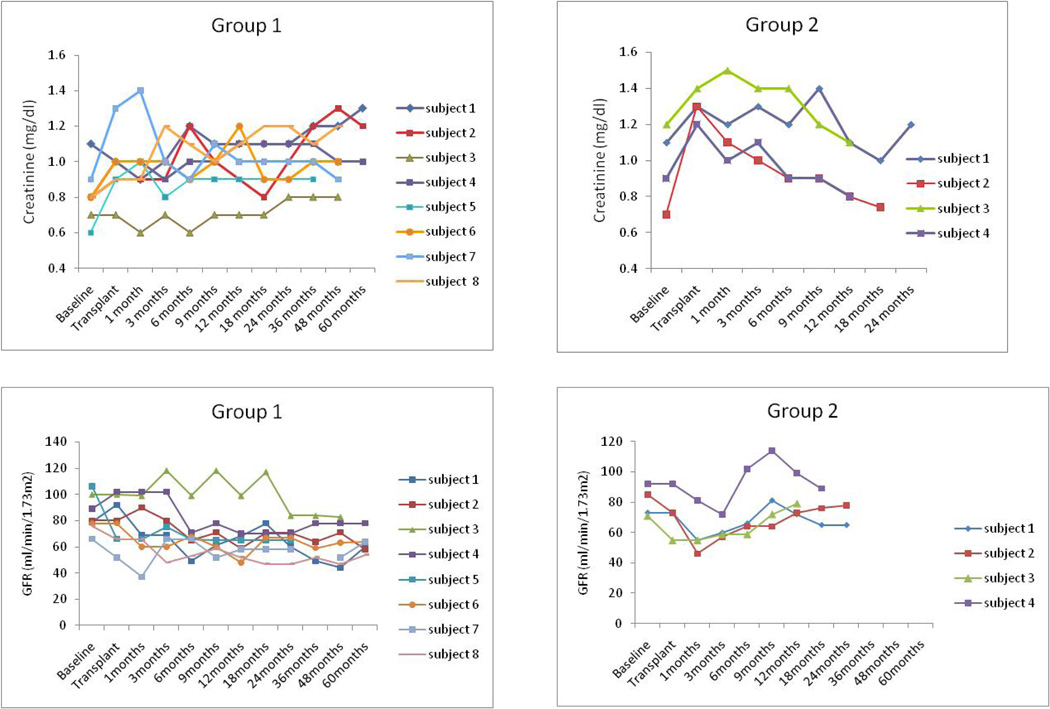
Islet transplantation is an experimental therapy for selected patients with type 1 diabetes (T1DM). It remains limited by immunosuppressive drug toxicity, progressive loss of insulin independence, allosensitization and the need for multiple islet donors. We describe our experience with an efalizumab-based immunosuppressive regimen as compared to the prevailing standard regimen, the Edmonton protocol. Twelve patients with T1DM received islet transplants: eight were treated with the Edmonton protocol; four were treated with daclizumab induction, a 6-month course of tacrolimus, and maintenance with efalizumab and mycophenolate mofetil. The primary endpoint was insulin independence after one islet infusion. Only two Edmonton protocol treated patients achieved the primary endpoint; six required islets from multiple donors, and all experienced leukopenia, mouth ulcers, anemia, diarrhea and hypertransaminasemia. Four became allosensitized. All patients treated with the efalizumab-based regimen achieved insulin independence with normal hemoglobin A1c after a single islet cell infusion and remained insulin independent while on efalizumab. These patients experienced significantly fewer side effects and none became allosensitized. Trial continuation was terminated by withdrawal of efalizumab from the market. These data suggest that this efalizumab-based regimen prevents islet rejection, is well tolerated, and allows for single donor islet transplantation.
© 2010 The Authors Journal compilation © 2010 The American Society of Transplantation and the American Society of Transplant Surgeons.
Figures
Comment in
-
Blockade of leukocyte function antigen-1 (LFA-1) in clinical islet transplantation.Curr Diab Rep. 2011 Oct;11(5):337-44. doi: 10.1007/s11892-011-0214-y. Curr Diab Rep. 2011. PMID: 21755435 No abstract available.
References
-
- Wild S, Roglic G, Green A, Sicree R, King H. Global prevalence of diabetes: estimates for the year 2000 and projections for 2030. Diabetes Care. 2004 May;27(5):1047–1053. - PubMed
-
- Hypoglycemia in the Diabetes Control and Complications Trial. The Diabetes Control and Complications Trial Research Group. Diabetes. 1997 Feb;46(2):271–286. 1997. - PubMed
-
- Jacqueminet S, Masseboeuf N, Rolland M, Grimaldi A, Sachon C. Limitations of the so-called "intensified" insulin therapy in type 1 diabetes mellitus. Diabetes Metab. 2005 Sep;31(4 Pt 2):4S45–4S50. - PubMed
-
- Shapiro AM, Lakey JR, Ryan EA, Korbutt GS, Toth E, Warnock GL, et al. Islet transplantation in seven patients with type 1 diabetes mellitus using a glucocorticoid-free immunosuppressive regimen. N Engl J Med. 2000 Jul 27;343(4):230–238. - PubMed
-
- Shapiro AM, Ricordi C, Hering BJ, Auchincloss H, Lindblad R, Robertson RP, et al. International trial of the Edmonton protocol for islet transplantation. N Engl J Med. 2006 Sep 28;355(13):1318–1330. - PubMed
Publication types
MeSH terms
Substances
Grants and funding
LinkOut - more resources
Full Text Sources
Other Literature Sources
Medical
