


Associations between fluorosis of permanent incisors and fluoride intake from infant formula, other dietary sources and dentifrice during early childhood
- PMID: 20884921
- PMCID: PMC5538250
- DOI: 10.14219/jada.archive.2010.0046
Associations between fluorosis of permanent incisors and fluoride intake from infant formula, other dietary sources and dentifrice during early childhood
Abstract
Objectives: The authors describe associations between dental fluorosis and fluoride intakes, with an emphasis on intake from fluoride in infant formula.
Methods: The authors administered periodic questionnaires to parents to assess children's early fluoride intake sources from beverages, selected foods, dentifrice and supplements. They later assessed relationships between fluorosis of the permanent maxillary incisors and fluoride intake from beverages and other sources, both for individual time points and cumulatively using area-under-the-curve (AUC) estimates. The authors determined effects associated with fluoride in reconstituted powdered infant formulas, along with risks associated with intake of fluoride from dentifrice and other sources.
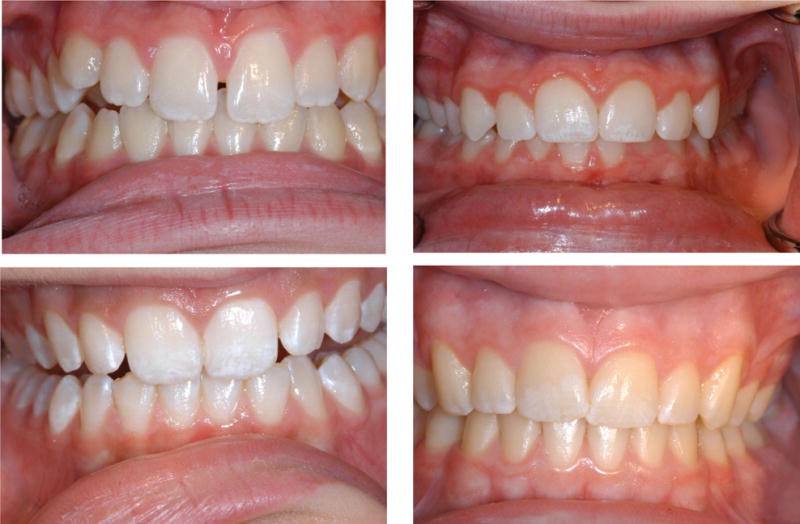
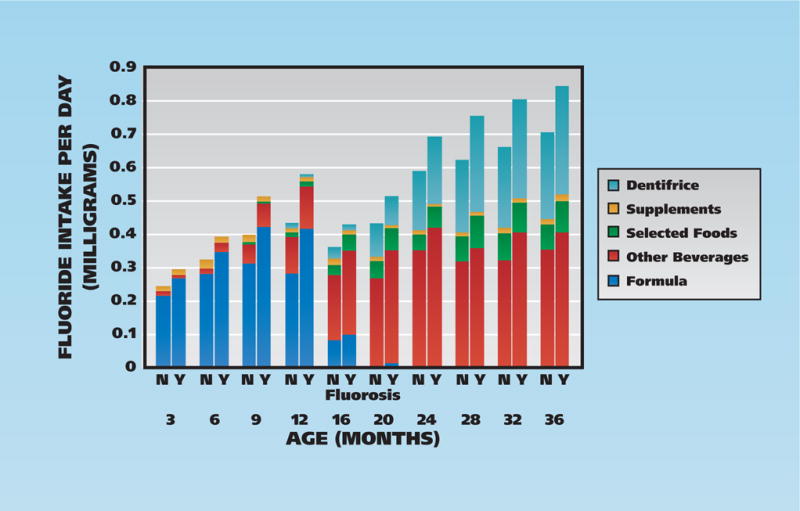
Results: Considering only fluoride intake from ages 3 to 9 months, the authors found that participants with fluorosis (97 percent of which was mild) had significantly greater cumulative fluoride intake (AUC) from reconstituted powdered infant formula and other beverages with added water than did those without fluorosis. Considering only intake from ages 16 to 36 months, participants with fluorosis had significantly higher fluoride intake from water by itself and dentifrice than did those without fluorosis. In a model combining both the 3- to 9-months and 16- to 36-months age groups, the significant variables were fluoride intake from reconstituted powder concentrate formula (by participants at ages 3-9 months), other beverages with added water (also by participants at ages 3-9 months) and dentifrice (by participants at ages 16-36 months).
Conclusions: Greater fluoride intakes from reconstituted powdered formulas (when participants were aged 3-9 months) and other water-added beverages (when participants were aged 3-9 months) increased fluorosis risk, as did higher dentifrice intake by participants when aged 16 to 36 months.
Clinical implications: Results suggest that prevalence of mild dental fluorosis could be reduced by avoiding ingestion of large quantities of fluoride from reconstituted powdered concentrate infant formula and fluoridated dentifrice.
Figures
Comment in
-
Infant formula.J Am Dent Assoc. 2011 Apr;142(4):369-70; author reply 370. doi: 10.14219/jada.archive.2011.0180. J Am Dent Assoc. 2011. PMID: 21454840 No abstract available.
-
Higher fluoride intakes in early childhood may increase the risk of milder forms of dental fluorosis.J Evid Based Dent Pract. 2012 Jun;12(2):119-20. doi: 10.1016/j.jebdp.2012.03.014. J Evid Based Dent Pract. 2012. PMID: 22726798 No abstract available.
References
-
- Centers for Disease Control. Achievements in public health, 1900–1999: fluoridation of drinking water to prevent dental caries. MMWR. 1999;48(41):933–940. - PubMed
-
- Centers for Disease Control and Prevention. Recommendations for using fluoride to prevent and control dental caries in the United States. MMWR Recomm Rep. 2001;50(RR-14):1–42. - PubMed
-
- U.S. Department of Health and Human Services. Oral Health in America: A Report of the Surgeon General. Rockville, Md.: U.S. Department of Health and Human Services, National Institute of Dental and Craniofacial Research, National Institutes of Health; 2000. pp. 160–161.
-
- Clark DC. Trends in prevalence of dental fluorosis in North America. Community Dent Oral Epidemiol. 1994;22(3):148–152. - PubMed
-
- Rozier RG. The prevalence and severity of enamel fluorosis in North American children. J Public Health Dent. 1999;59(4):239–246. - PubMed
Publication types
MeSH terms
Substances
Grants and funding
LinkOut - more resources
Full Text Sources
Medical
