


Weight considerations in pharmacotherapy for type 2 diabetes
- PMID: 20885921
- PMCID: PMC2946585
- DOI: 10.1155/2011/984245
Weight considerations in pharmacotherapy for type 2 diabetes
Abstract
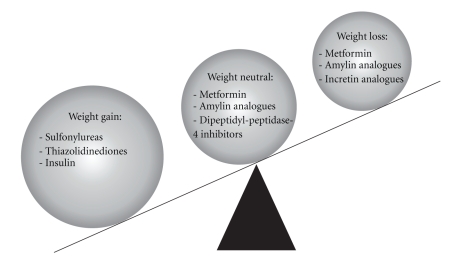
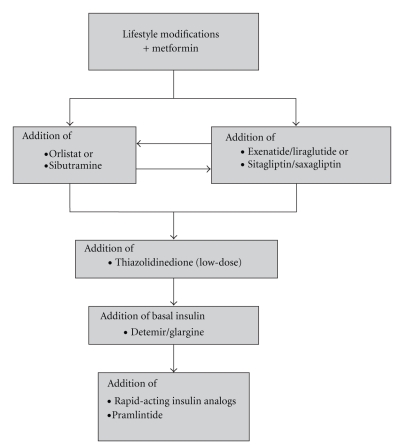
Obesity has been increasing in prevalence worldwide and the majority of patients with type 2 diabetes are either overweight or obese. Diabetes management in this population has been difficult since a number of antidiabetes agents are associated with weight gain. The effects of various antidiabetes agents and antiobesity agents on glycemic control and body weight will be reviewed. Briefly, sulfonylureas, thiazolidinediones, and insulin are associated with weight gain, whereas metformin and amylin analogs are weight neutral or associated with modest weight loss. Dipeptidyl-peptidase-4 inhibitors are weight neutral, whereas glucagon-like peptide-1 analogs are associated with weight loss. The effect of orlistat and sibutramine in type 2 diabetes is also evaluated. The treatment of diabetes should not only focus on glycemic control as its sole intention, but it should factor in the effect of these various agents on weight, as well, since obesity aggravates insulin resistance, beta cell failure, and cardiovascular risk.
Figures
References
-
- Narayan KMV, Boyle JP, Thompson TJ, Gregg EW, Williamson DF. Effect of BMI on lifetime risk for diabetes in the U.S. Diabetes Care. 2007;30(6):1562–1566. - PubMed
-
- Centers for Disease Control and Prevention (CDC) Prevalence of overweight and obesity among adults with diagnosed diabetes—United States, 1988–1994 and 1999–2002. Morbidity and Mortality Weekly Report . 2004;53(45):1066–1068. - PubMed
-
- Goldstein BJ. Insulin resistance as the core defect in type 2 diabetes mellitus. American Journal of Cardiology. 2002;90(5):3G–10G. - PubMed
-
- DeFronzo RA. Pathogenesis of type 2 diabetes mellitus. Medical Clinics of North America. 2004;88(4):787–835. - PubMed
LinkOut - more resources
Full Text Sources
Other Literature Sources
