Sibling recurrence and the genetic epidemiology of autism
- PMID: 20889652
- PMCID: PMC2970737
- DOI: 10.1176/appi.ajp.2010.09101470
Sibling recurrence and the genetic epidemiology of autism
Abstract
Objective: Although the symptoms of autism exhibit quantitative distributions in nature, estimates of recurrence risk in families have never previously considered or incorporated quantitative characterization of the autistic phenotype among siblings.
Method: The authors report the results of quantitative characterization of 2,920 children from 1,235 families participating in a national volunteer register, with at least one child clinically affected by an autism spectrum disorder and at least one full biological sibling.
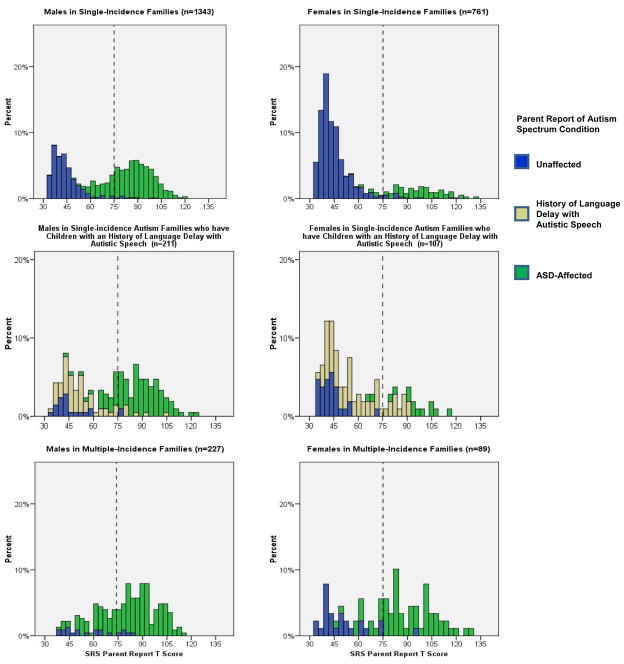
Results: A traditionally defined autism spectrum disorder in an additional child occurred in 10.9% of the families. An additional 20% of nonautism-affected siblings had a history of language delay, one-half of whom exhibited autistic qualities of speech. Quantitative characterization using the Social Responsiveness Scale supported previously reported aggregation of a wide range of subclinical (quantitative) autistic traits among otherwise unaffected children in multiple-incidence families and a relative absence of quantitative autistic traits among siblings in single-incidence families. Girls whose standardized severity ratings fell above a first percentile severity threshold (relative to the general population distribution) were significantly less likely to have elicited community diagnoses than their male counterparts.
Conclusions: These data suggest that, depending on how it is defined, sibling recurrence in autism spectrum disorder may exceed previously published estimates and varies as a function of family type. The results support differences in mechanisms of genetic transmission between simplex and multiplex autism and advance current understanding of the genetic epidemiology of autism spectrum conditions.
Figures
References
-
- Lauritsen MB, Pedersen CB, Mortensen PB. Effects of familial risk factors and place of birth on the risk of autism: a nationwide register-based study. J Child Psychol Psychiatry. 2005;46(9):963–71. - PubMed
-
- Weiss LA. Autism genetics: emerging data from genome-wide copy-number and single nucleotide polymorphism scans. Expert Rev Mol Diagn. 2009;9(8):795–803. - PubMed
-
- Constantino JN, Todd RD. Autistic traits in the general population: a twin study. Arch Gen Psychiatry. 2003;60(5):524–30. - PubMed
-
- Ronald A, Happe F, Price TS, Baron-Cohen S, Plomin R. Phenotypic and genetic overlap between autistic traits at the extremes of the general population. J Am Acad Child Adolesc Psychiatry. 2006;45(10):1206–14. - PubMed
-
- Skuse DH, Mandy W, Steer C, Miller LL, Goodman R, Lawrence K, Emond A, Golding J. Social communication competence and functional adaptation in a general population of children: preliminary evidence for sex-by-verbal IQ differential risk. J Am Acad Child Adolesc Psychiatry. 2009;48(2):128–37. - PubMed
Publication types
MeSH terms
Grants and funding
LinkOut - more resources
Full Text Sources