


Comparison of the pathogenic potentials of environmental and clinical vibrio parahaemolyticus strains indicates a role for temperature regulation in virulence
- PMID: 20889774
- PMCID: PMC2976215
- DOI: 10.1128/AEM.01450-10
Comparison of the pathogenic potentials of environmental and clinical vibrio parahaemolyticus strains indicates a role for temperature regulation in virulence
Abstract
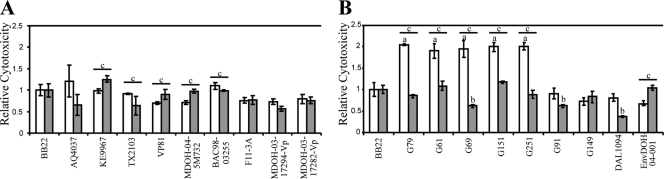
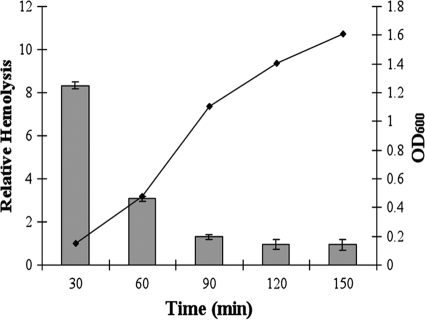
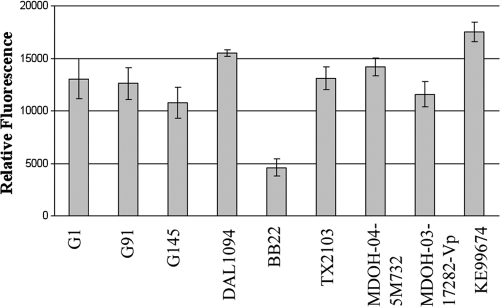
Although the presence of pathogenic Vibrio spp. in estuarine environments of northern New England has been known for some time (C. H. Bartley and L. W. Slanetz, Appl. Microbiol. 21: 965-966, 1971, and K. R. O'Neil, S. H. Jones, and D. J. Grimes, FEMS Microbiol. Lett. 60:163-167, 1990), their virulence and the relative threat they may pose to human health has yet to be evaluated. In this study, the virulence potential of 33 Vibrio parahaemolyticus isolates collected from the Great Bay Estuary of New Hampshire was assessed in comparison to that of clinical strains. The environmental isolates lack thermostable direct hemolysin (TDH) and TDH-related hemolysin (TRH), which are encoded by tdh and trh, respectively. Though not hemolytic, they do possess putative virulence factors, such type III secretion system 1, and are highly cytotoxic to human gastrointestinal cells. The expression of known and putative virulence-associated traits, including hemolysin, protease, motility, biofilm formation, and cytotoxicity, by clinical reference isolates correlated with increased temperature from 28°C to 37°C. In contrast, the environmental isolates did not induce their putative virulence-associated traits in response to a temperature of 37°C. We further identified a significant correlation between hemolytic activity and growth phase among clinical strains, whereby hemolysin production decreases with increasing cell density. The introduction of a tdh::gfp promoter fusion into the environmental strains revealed that they regulate this virulence-associated gene appropriately in response to temperature, indicating that their existing regulatory mechanisms are primed to manage newly acquired virulence genes.
Figures
References
-
- Atlung, T., and H. Ingmer. 1997. H-NS: a modulator of environmentally regulated gene expression. Mol. Microbiol. 24:7-17. - PubMed
-
- Caburlotto, G., M. Gennari, V. Ghidini, M. Tafi, and M. Lleo. 2009. Presence of T3SS2 and other virulence-related genes in tdh-negative Vibrio parahaemolyticus environmental strains isolated from marine samples in the area of the Venetian Lagoon, Italy. FEMS Microb. Ecol. 70:506-514. - PubMed
Publication types
MeSH terms
Substances
Grants and funding
LinkOut - more resources
Full Text Sources
Other Literature Sources
Miscellaneous
