


Descriptive epidemiology of the Multicenter ACL Revision Study (MARS) cohort
- PMID: 20889962
- PMCID: PMC3655411
- DOI: 10.1177/0363546510378645
Descriptive epidemiology of the Multicenter ACL Revision Study (MARS) cohort
Abstract
Background: Revision anterior cruciate ligament (ACL) reconstruction has worse outcomes than primary reconstructions. Predictors for these worse outcomes are not known. The Multicenter ACL Revision Study (MARS) Group was developed to perform a multisurgeon, multicenter prospective longitudinal study to obtain sufficient subjects to allow multivariable analysis to determine predictors of clinical outcome.
Purpose: To describe the formation of MARS and provide descriptive analysis of patient demographics and clinical features for the initial 460 enrolled patients to date in this prospective cohort.
Study design: Cross-sectional study; Level of evidence, 2.
Methods: After training and institutional review board approval, surgeons began enrolling patients undergoing revision ACL reconstruction, recording patient demographics, previous ACL reconstruction methods, intra-articular injuries, and current revision techniques. Enrolled subjects completed a questionnaire consisting of validated patient-based outcome measures.
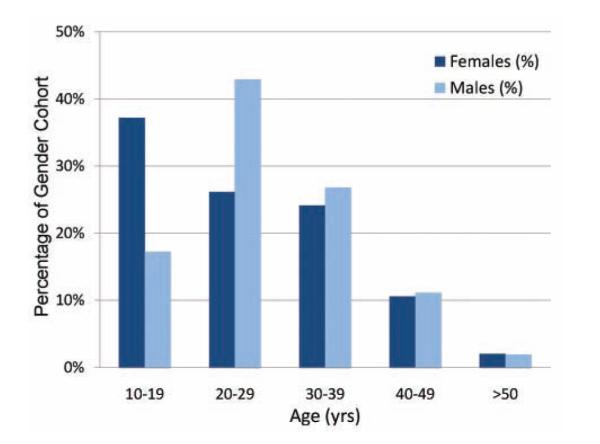
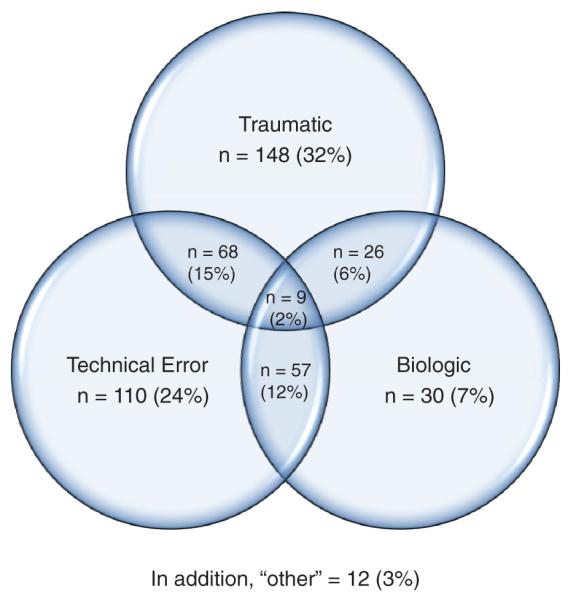
Results: As of April 1, 2009, 87 surgeons have enrolled a total of 460 patients (57% men; median age, 26 years). For 89%, the reconstruction was the first revision. Mode of failure as deemed by the revising surgeon was traumatic (32%), technical (24%), biologic (7%), combination (37%), infection (<1%), and no response (<1%). Previous graft present at the time of injury was 70% autograft, 27% allograft, 2% combination, and 1% unknown. Sixty-two percent were more than 2 years removed from their last reconstruction. Graft choice for revision ACL reconstruction was 45% autograft, 54% allograft, and more than 1% both allograft and autograft. Meniscus and/or chondral damage was found in 90% of patients.
Conclusion: The MARS Group has been able to quickly accumulate the largest revision ACL reconstruction cohort reported to date. Traumatic reinjury is deemed by surgeons to be the most common single mode of failure, but a combination of factors represents the most common mode of failure. Allograft graft choice is more common in the revision setting than autograft. Concomitant knee injury is extremely common in this population.
Figures
References
-
- Battaglia MJ, 2nd, Cordasco FA, Hannafin JA, et al. Results of revision anterior cruciate ligament surgery. Am J Sports Med. 2007;35(12):2057–2066. - PubMed
-
- Carson EW, Anisko EM, Restrepo C, Panariello RA, O’Brien SJ, Warren RF. Revision anterior cruciate ligament reconstruction: etiology of failures and clinical results. J Knee Surg. 2004;17(3):127–132. - PubMed
-
- Cummins J, Lurie JD, Tosteson T, et al. Descriptive epidemiology and prior healthcare utilization of patients in the Spine Patient Outcomes Research Trial’s (SPORT) three observational cohorts: disc herniation, spinal stenosis, and degenerative spondylolisthesis. Spine. 2006;31(7):806–814. - PMC - PubMed
-
- Curl WW, Krome J, Gordon ES, Rushing J, Smith BP, Poehling GG. Cartilage injuries: a review of 31,516 knee arthroscopies. Arthroscopy. 1997;13(4):456–460. - PubMed
Publication types
MeSH terms
Grants and funding
LinkOut - more resources
Full Text Sources
Other Literature Sources
Medical
Research Materials
Miscellaneous
