


Preference for one or two hearing AIDS among adult patients
- PMID: 20890203
- PMCID: PMC3042486
- DOI: 10.1097/AUD.0b013e3181f8bf6c
Preference for one or two hearing AIDS among adult patients
Erratum in
- Ear Hear. 2011 May-Jun;32(3):409
Abstract
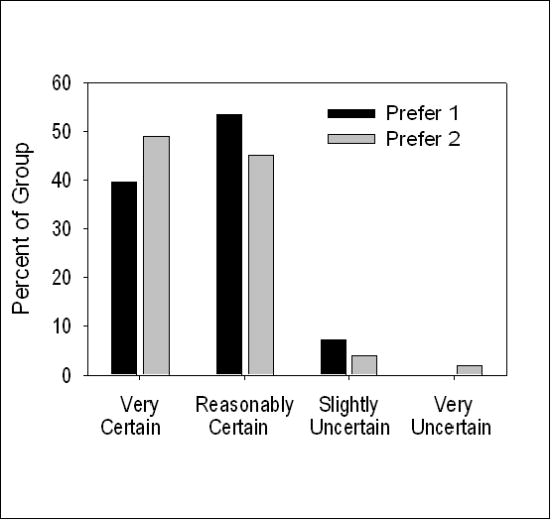
Objectives: Most practitioners believe that use of two hearing aids is the ideal fitting for adults with bilateral symmetrical hearing loss. However, previous research has consistently shown that a substantial proportion of these patients actually prefer to use only one hearing aid. This study explored whether this pattern of preferences is seen with technologically advanced hearing aids. In addition, a selection of variables that were available prefitting were used to attempt to predict which patients will prefer one hearing aid rather than two.
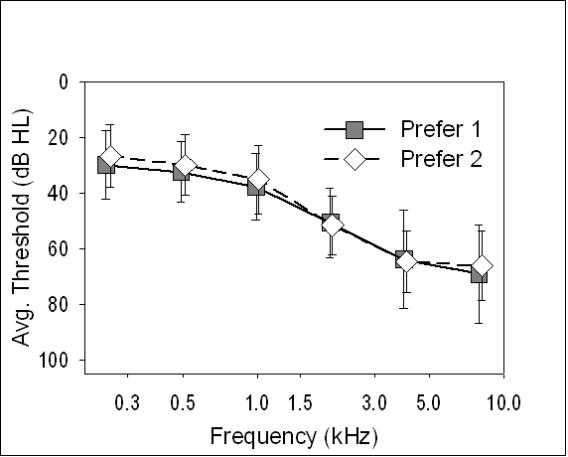
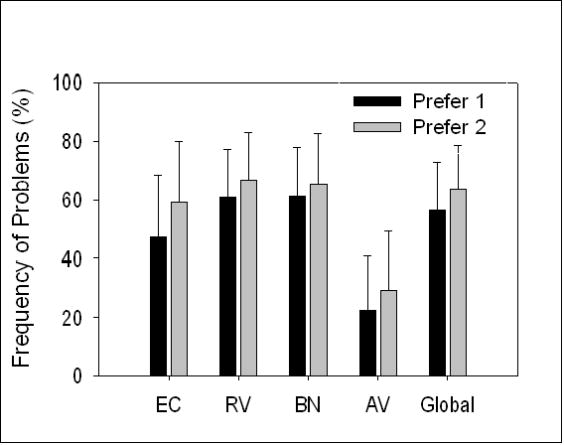
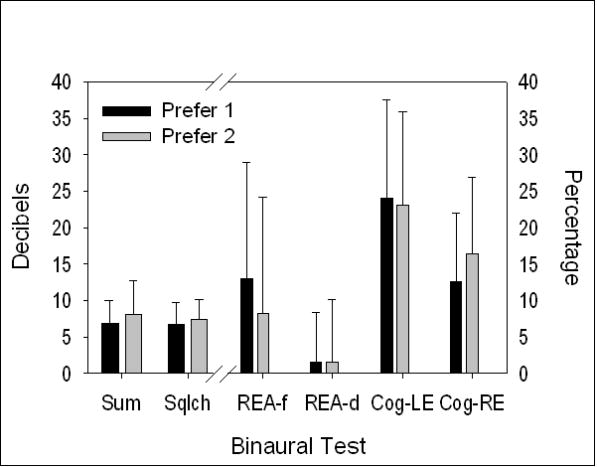
Design: The study was designed as a 12-week field trial including structured and unstructured use of one and two hearing aids. Ninety-four subjects with mild to moderate bilaterally symmetrical hearing loss were bilaterally fit with 2005-2007 era hearing aids. Potential predictors included demographic, audiometric, auditory lifestyle, personality, and binaural processing variables. After the field trial, each subject stated his or her preference for one or two hearing aids and completed three self-report outcome questionnaires for their preferred fitting.
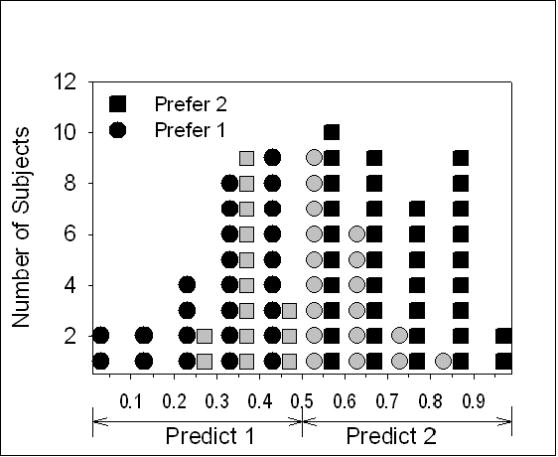
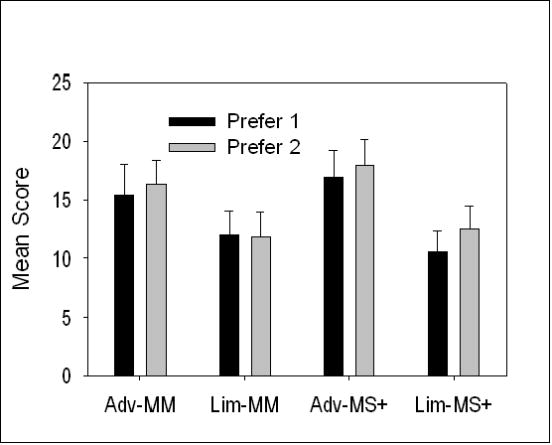
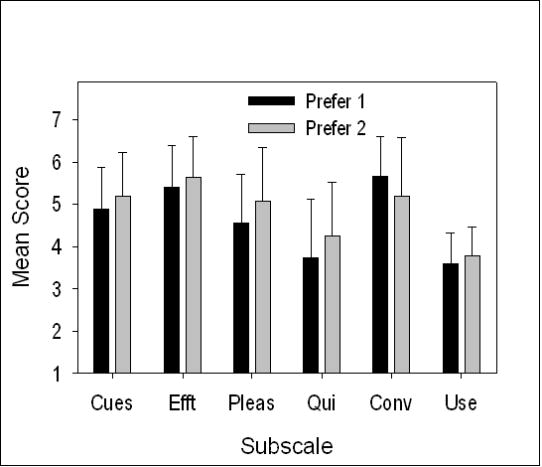
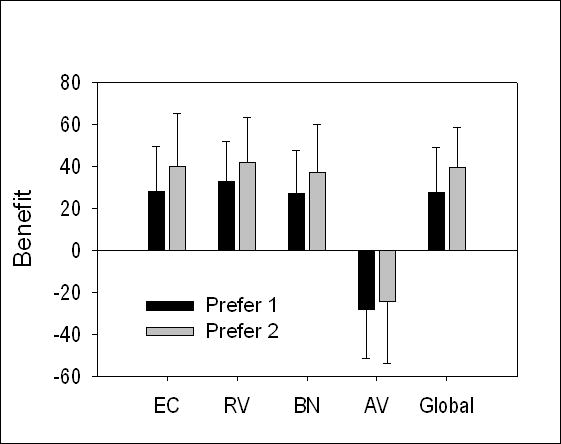
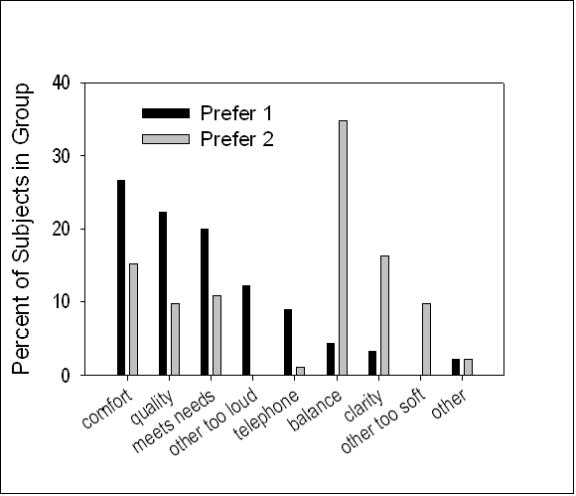
Results: Previous research was confirmed with modern technology hearing aids: after the field trial, 46% of the subjects preferred to use one hearing aid rather than two. Subjects who preferred two hearing aids tended to report better real-world outcomes than those who preferred one. Subjects who reported more hearing problems in daily life, who experienced more binaural loudness summation, and whose ears were more equivalent in dichotic listening were more likely to prefer to use two hearing aids. Contrary to conventional wisdom (ideas that are generally accepted as true), audiometric hearing loss and auditory lifestyle were not predictive of aiding preference. However, the best predictive approach from these data yielded accurate predictions for only two-thirds of the subjects.
Conclusions: Evidence-based practice calls for a conscientious melding of current evidence, clinical judgment, and patient preferences. The results of this research challenge practitioners to recognize that many patients who seem to be ideal candidates for bilateral aiding will actually prefer to wear only one hearing aid. Furthermore, at this time, there is no accurate method that will predict which patients will prefer one hearing aid rather than two. At present, the most effective approach open to practitioners would be to conduct a candid unbiased systematic field trial allowing each patient to compare unilateral and bilateral fittings in daily life. This might necessitate more fitting sessions and could perhaps add to the practitioner's burden. This downside should be weighed against the additional patient satisfaction that can be anticipated as a result of transparency in the fitting protocol, collaboration with the patient in the treatment decisions, and the knowledge of selecting the most cost-effective patient-centered solution.
Figures
References
-
- Akeroyd MA. The psychoacoustics of binaural hearing. Int J Audiol. 2006;45 1:S25–33. - PubMed
-
- Boymans M, Goverts ST, Kramer SE, Festen JM, Dreschler WA. Candidacy for bilateral hearing aids: a retrospective multicenter study. J Speech Lang Hear Res. 2009;52(1):130–140. - PubMed
-
- Brooks DN, Bulmer D. Survey of binaural hearing aid users. Ear and Hearing. 1981;2(5):220–224. - PubMed
-
- Byrne D, Noble W, LePage B. Effects of long-term bilateral and unilateral fitting of different hearing aid types on the ability to locate sounds. Journal of the American Academy of Audiology. 1992;3(6):369–382. - PubMed
-
- Carter AS, Noe CM, Wilson RH. Listeners who prefer monaural to binaural hearing aids. Journal of the American Academy of Audiology. 2001;12:261–272. - PubMed
Reference Notes
-
- Kelly R, Cox R. Relationship between the NEO five-Factor Inventory (NEO-FFI) and the Positive and Negative Affect Schedule (PANAS) questionnaires. Hearing Aid Research Laboratory. University of Memphis; 2003. Unpublished Report.
-
- Cox RM, Alexander GC, Xu J. Development of the Device Oriented Subjective Outcome Scale (DOSO). Annual Meeting of the American Auditory Society; 2009. Retrieved from http://www.memphis.edu/ausp/harl/publications.htm#posters. - PMC - PubMed
-
- Shaughnessy K, Cox RM. Auditory Ecology and Preference for Unilateral or Bilateral Hearing Aids. Annual Meeting of the American Auditory Society; 2009. Retrieved from http://www.memphis.edu/ausp/harl/publications.htm#posters.
Publication types
MeSH terms
Grants and funding
LinkOut - more resources
Full Text Sources
Medical
