Review
. 2010 Nov-Dec;2(6):670-82.
doi: 10.1002/wsbm.94.

Systems analysis of salivary gland development and disease

Affiliations
Review

Systems analysis of salivary gland development and disease

Melinda Larsen et al. Wiley Interdiscip Rev Syst Biol Med. 2010 Nov-Dec.

Erratum in

  • Wiley Interdiscip Rev Syst Biol Med. 2011 May-Jun;3(3):377

Abstract

Branching morphogenesis is a crucial developmental process in which vertebrate organs generate extensive epithelial surface area while retaining a compact size. In the vertebrate submandibular salivary gland, branching morphogenesis is crucial for the generation of the large surface area necessary to produce sufficient saliva. However, in many salivary gland diseases, saliva-producing acinar cells are destroyed, resulting in dry mouth and secondary health conditions. Systems-based approaches can provide insights into understanding salivary gland development, function, and disease. The traditional approach to understanding these processes is the identification of molecular signals using reductionist approaches; we review current progress with such methods in understanding salivary gland development. Taking a more global approach, multiple groups are currently profiling the transcriptome, the proteome, and other 'omes' in both developing mouse tissues and in human patient samples. Computational methods have been successful in deciphering large data sets, and mathematical models are starting to make predictions regarding the contribution of molecules to the physical processes of morphogenesis and cellular function. A challenge for the future will be to establish comprehensive, publicly accessible salivary gland databases spanning the full range of genes and proteins; plans are underway to provide these resources to researchers in centralized repositories. The greatest challenge for the future will be to develop realistic models that integrate multiple types of data to both describe and predict embryonic development and disease pathogenesis.


Figures

Figure 1
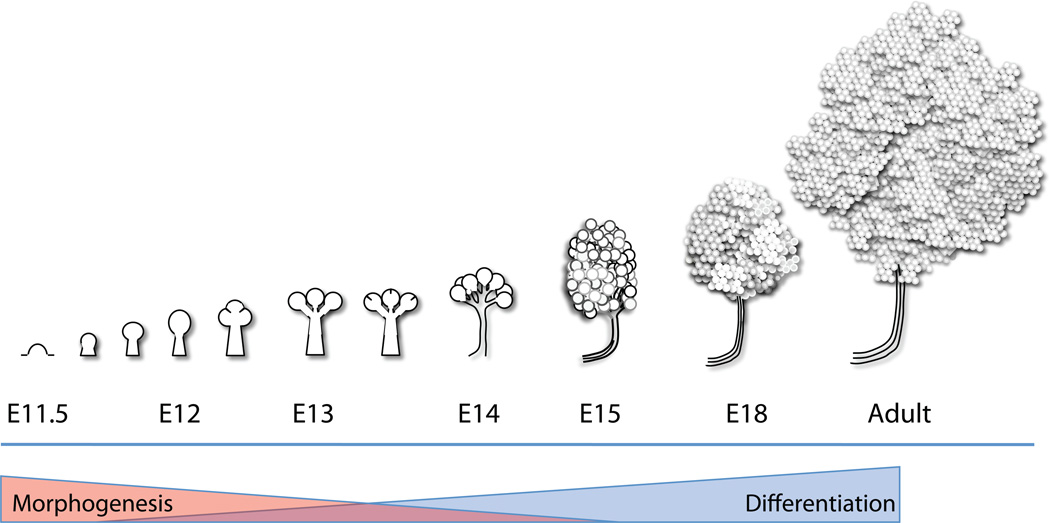
Figure 1. Overview of salivary gland development
The submandibular salivary gland undergoes branching morphogenesis, beginning as a protrusion from the oral epithelium at E11 that forms a solid primary bud on a stalk by E12. The primary bud undergoes an iterative pattern of cleft formation followed by duct outgrowth and bud expansion to produce the acini and ducts of the adult gland. As the process of morphogenesis attenuates during development, cell differentiation increases to produce the complex assembly of cells that comprise the adult gland. Not drawn to scale, and some details are excluded for simplicity.
Figure 2
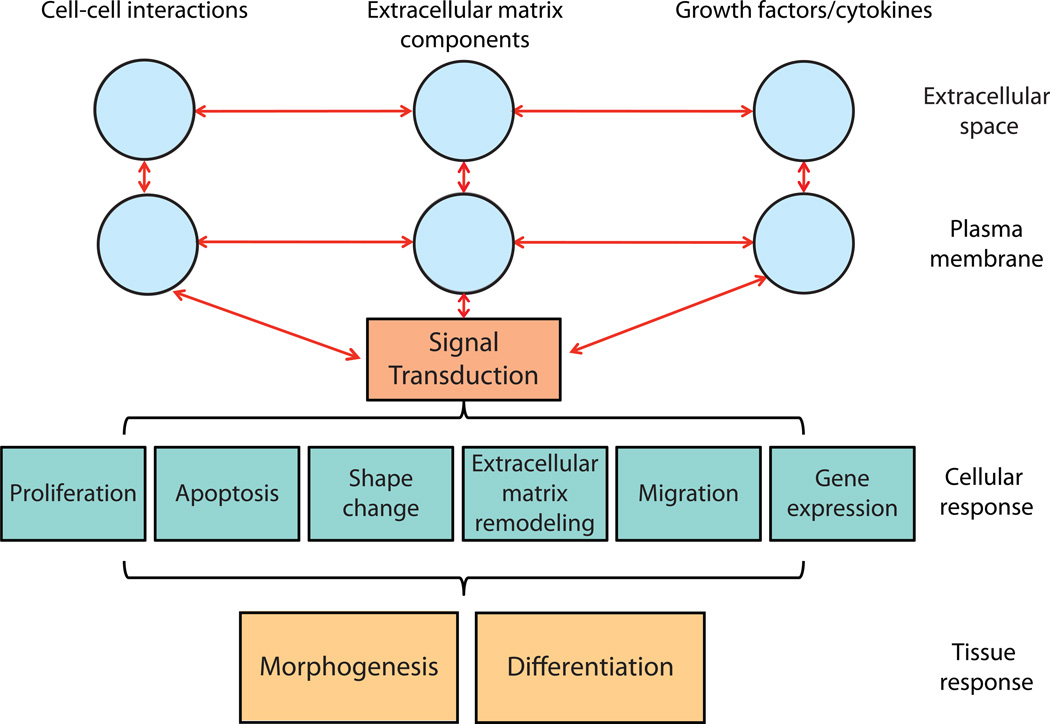
Figure 2. Signaling hierarchy controlling branching morphogenesis and cellular differentiation
Extracellular interactions between cells, between cells and the ECM, and with growth factors and cytokines activate cytoplasmic signaling pathways that alter cell behavior. The combination of these cellular behaviors results in changes at the tissue level: morphogenesis and differentiation. The goal of systems biology is to understand all of the inputs contributing to tissue and organ-level changes so that they can be synthesized into a systems-level understanding of organ biology.
Figure 3
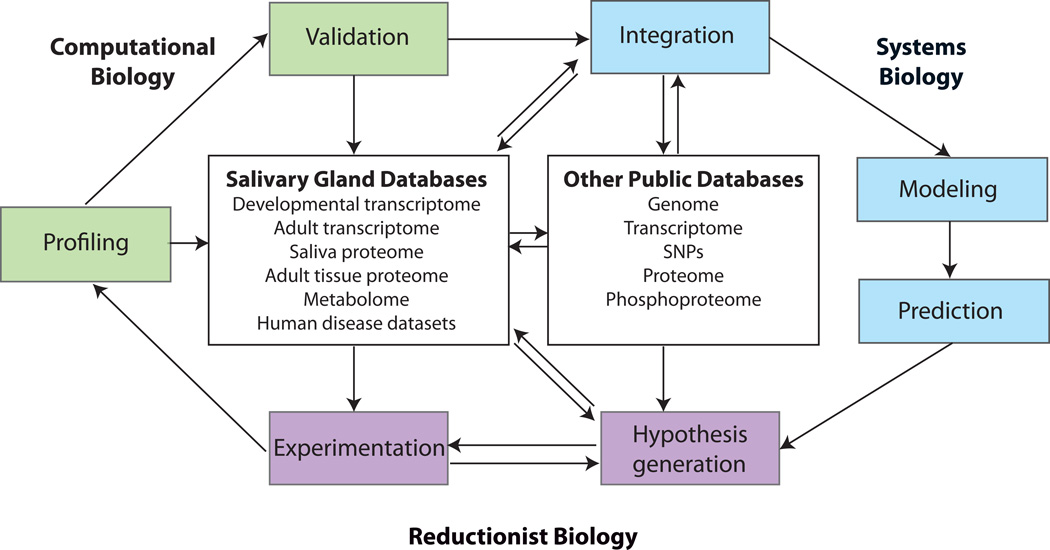
Figure 3. Schematic diagram illustrating how systems biology can be integrated into research projects
Reductionist approaches utilize experimentation to test hypotheses, which can lead to systems approaches through profiling methods. Profiling data can be validated using traditional and/or computational methods and can become part of public databases. Individual profiling data can also be computationally integrated with public datasets, both salivary gland-specific and general, to transition into the realm of systems biology. Systems biology includes computational modeling of various types and ultimately prediction, which can lead to further hypothesis generation and experimentation.
Figure 4
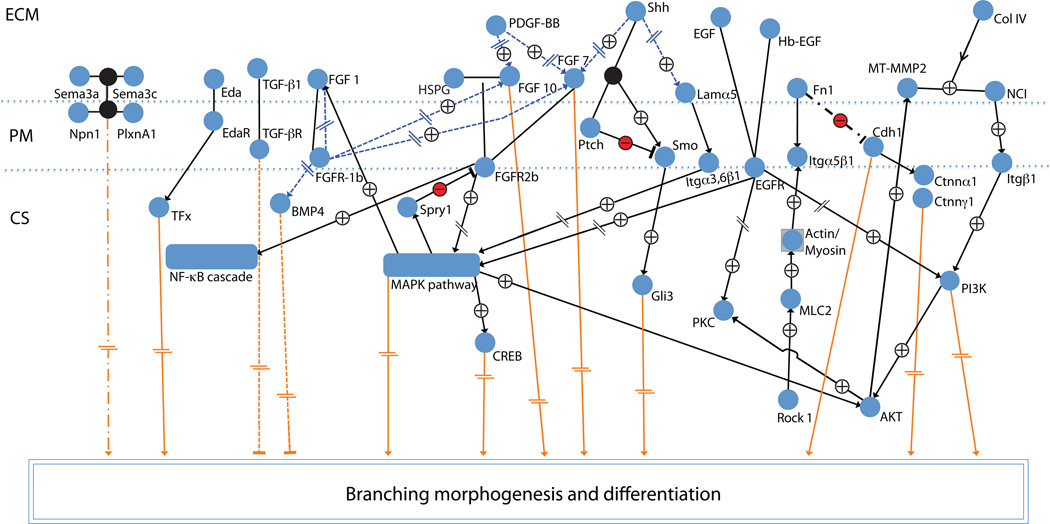
Figure 4. Cellular signaling map of embryonic salivary gland development
A simplified overview of major signaling pathways known to control salivary gland development based on experimental studies. Slash dot slash: known effect, but pathway not identified/described yet; orange lines/arrows: pathways that affect morphogenesis/differentiation; plus sign: positive effect (activation); minus: negative effect (inhibition); interrupted lines: intermediate steps omitted; blue dotted lines and arrows: affect expression; open arrows: protein is modified (proteolysis); blunt line (inverted T): inhibition; and circular edge rectangles: signaling modules. See [66] for a detailed computational model of signaling pathways.
Figure 5
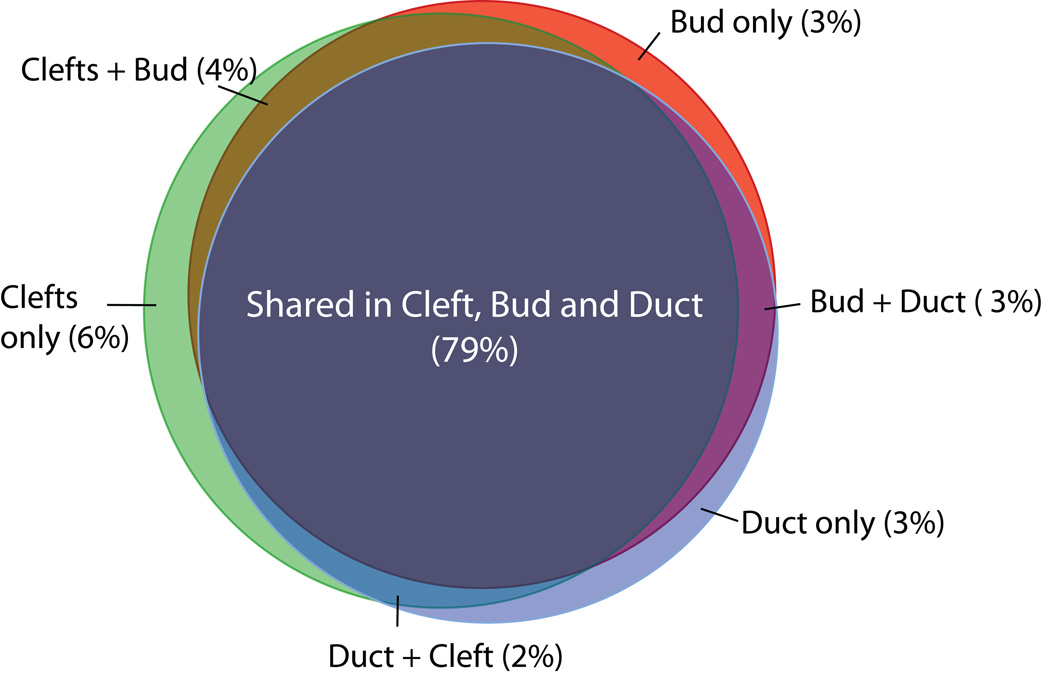
Figure 5. Venn diagram of genes expressed in epithelial cells from cleft, bud, and duct regions of E12.5 mouse salivary glands
Note the extensive overlaps of gene expression between regions, as well as some differentially expressed genes. Based on preliminary analyses of microarray data involving >20,000 genes; numbers in parentheses indicate the percentage of total unique genes in that category.

References

    1. Davies J, editor. Branching Morphogenesis. 1 ed. Springer; 2005.
    1. Tucker AS. Salivary gland development. Seminars in cell & developmental biology. 2007 Apr;18(2):237–244. - PubMed
    1. Jaskoll T, Melnick M. Embryonic Salivary Gland Branching Morphogenesis. In: Davies JA, editor. Branching Morphogenesis. New York: Landes Bioscience/Springer; 2005. pp. 160–175.
    1. Patel VN, Rebustini IT, Hoffman MP. Salivary gland branching morphogenesis. Differentiation; research in biological diversity. 2006 Sep;74(7):349–364. - PubMed
    1. Cutler LS. The dependent and independent relationships between cytodifferentiation and morphogenesis in developing salivary gland secretory cells. The Anatomical record. 1980 Mar;196(3):341–347. - PubMed

Publication types