


Discovery of novel 2-aryl-4-benzoyl-imidazoles targeting the colchicines binding site in tubulin as potential anticancer agents
- PMID: 20919720
- PMCID: PMC2964152
- DOI: 10.1021/jm100884b
Discovery of novel 2-aryl-4-benzoyl-imidazoles targeting the colchicines binding site in tubulin as potential anticancer agents
Abstract
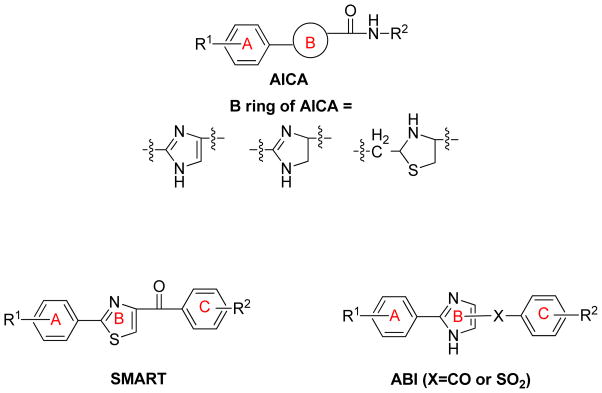
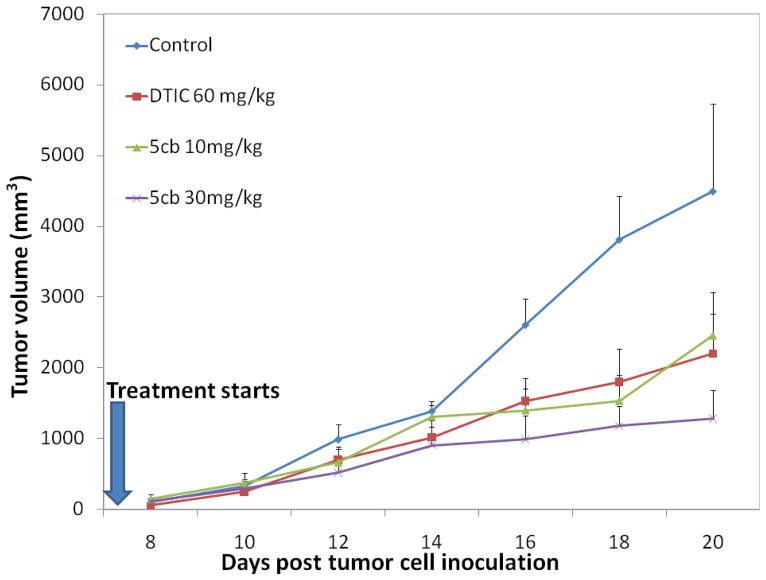
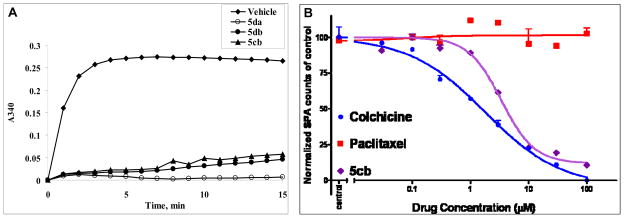
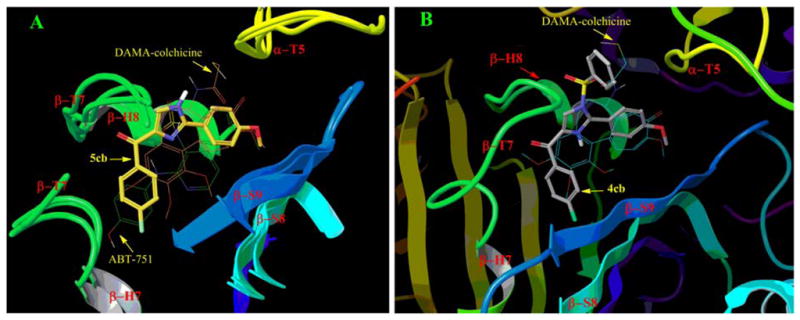
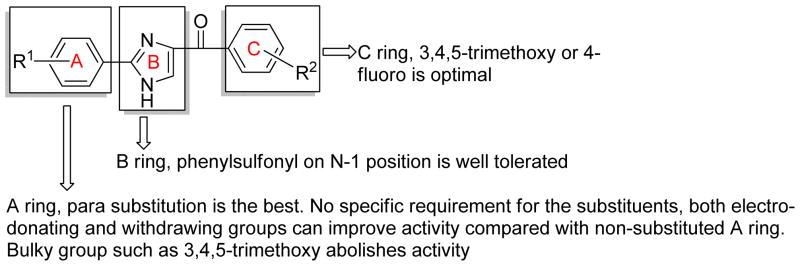
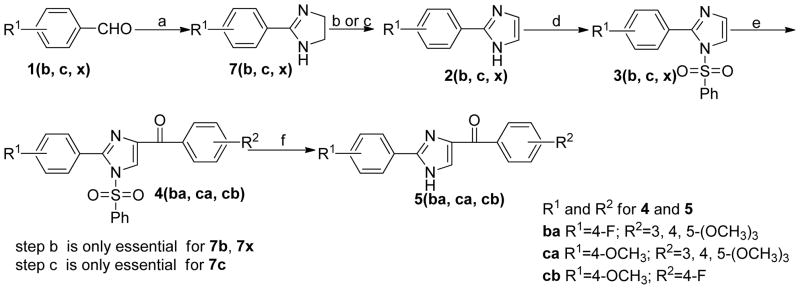
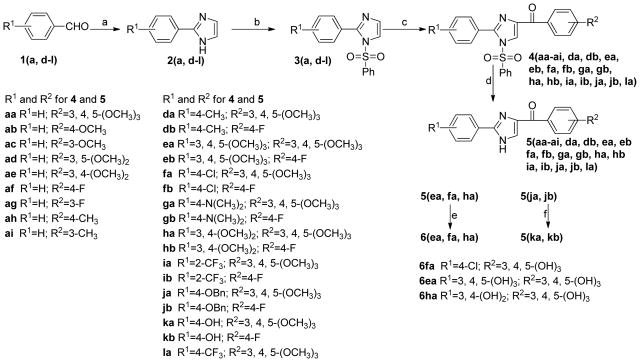
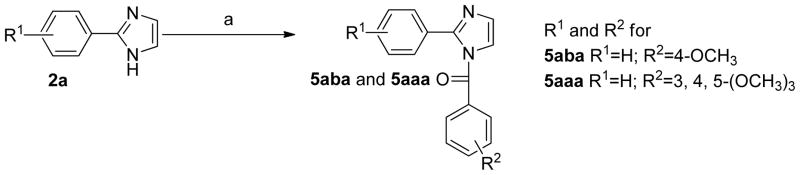
A series of 2-aryl-4-benzoyl-imidazoles (ABI) was synthesized as a result of structural modifications based on the previous set of 2-aryl-imidazole-4-carboxylic amide (AICA) derivatives and 4-substituted methoxylbenzoyl-aryl-thiazoles (SMART). The average IC(50) of the most active compound (5da) was 15.7 nM. ABI analogues have substantially improved aqueous solubility (48.9 μg/mL for 5ga vs 0.909 μg/mL for SMART-1, 0.137 μg/mL for paclitaxel, and 1.04 μg/mL for combretastatin A4). Mechanism of action studies indicate that the anticancer activity of ABI analogues is through inhibition of tubulin polymerization by interacting with the colchicine binding site. Unlike paclitaxel and colchicine, the ABI compounds were equally potent against multidrug resistant cancer cells and the sensitive parental melanoma cancer cells. In vivo results indicated that 5cb was more effective than DTIC in inhibiting melanoma xenograph tumor growth. Our results suggest that the novel ABI compounds may be developed to effectively treat drug-resistant tumors.
Figures
References
-
- Li F, Lu Y, Li W, Miller DD, Mahato RI. Synthesis, formulation and in vitro evaluation of a novel microtubule destabilizer, SMART-100. Journal of Controlled Release. 2010;143:151–158. - PubMed
-
- Amir E, Rozen S. Easy access to the family of thiazole N-oxides using HOF x CH3CN. Chem Commun (Camb) 2006:2262–2264. - PubMed
-
- Williams DA, Lemke TL. Foye’s Principles of Medicinal Chemistry. 5. Lippincott Williams & Wilkins; Philadelphia: 2002.
Publication types
MeSH terms
Substances
Grants and funding
LinkOut - more resources
Full Text Sources
Other Literature Sources
