


Oral squamous cell carcinoma in non-smoking and non-drinking patients
- PMID: 20920351
- PMCID: PMC2958869
- DOI: 10.1186/1758-3284-2-24
Oral squamous cell carcinoma in non-smoking and non-drinking patients
Abstract
Introduction: Of the many different factors associated with an increased risk for oral squamous cell carcinoma (SCC), tobacco and alcohol seem to be the most studied. The aim of the current study was to evaluate the clinicopathologic characteristics of patients without the mentioned risk factors.
Patients and methods: Out of 278 patients (159 male and 119 female patients) with oral SCC, 67 patients had no history of tobacco or alcohol use. The minimum follow-up time was 12 months.
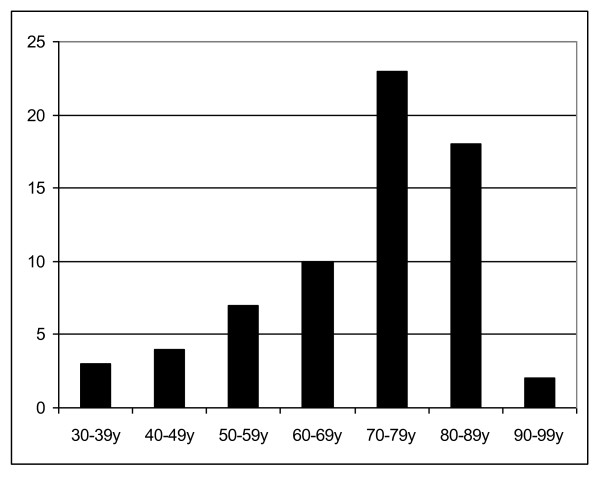
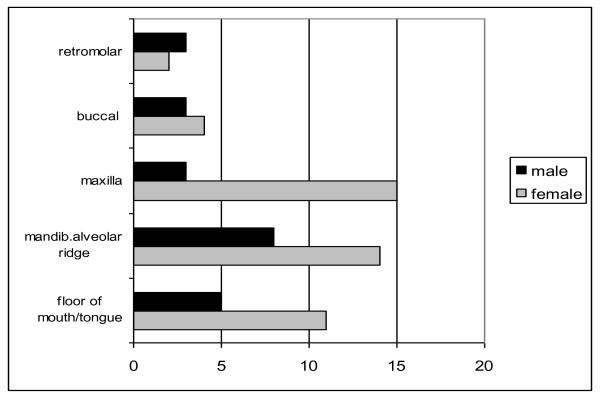
Results: Of the 67 patients, 45 (67.2%) were women, and the mean age was 70 years. The most common tumor sites were mandibular alveolar ridge (22) and maxilla (18). Fifteen patients experienced a recurrence, and 10 developed lymph node metastases during the follow-up period.
Conclusion: The group of patients with no tobacco and alcohol use tends toward a higher proportion of females, a higher proportion of patients over 70 years, and a higher number of oral maxillary SCC.
Figures
References
-
- Hashibe M, Brennan P, Benhamou S, Castellsague X, Chen C, Curado MP, Dal Maso L, Daudt AW, Fabianova E, Fernandez L, Wünsch-Filho V, Franceschi S, Hayes RB, Herrero R, Koifman S, La Vecchia C, Lazarus P, Levi F, Mates D, Matos E, Menezes A, Muscat J, Eluf-Neto J, Olshan AF, Rudnai P, Schwartz SM, Smith E, Sturgis EM, Szeszenia-Dabrowska N, Talamini R, Wei Q, Winn DM, Zaridze D, Zatonski W, Zhang ZF, Berthiller J, Boffetta P. Alcohol drinking in never users of tobacco, cigarette smoking in never drinkers, and the risk of head and neck cancer: pooled analysis in the International Head and Neck Cancer Epidemiology Consortium. J Natl Cancer Inst. 2007;99(10):777–89. doi: 10.1093/jnci/djk179. - DOI - PubMed
MeSH terms
LinkOut - more resources
Full Text Sources
Medical
Research Materials
