


Enhancing the antihepatitis B virus immune response by adefovir dipivoxil and entecavir therapies
- PMID: 20921939
- PMCID: PMC4002983
- DOI: 10.1038/cmi.2010.37
Enhancing the antihepatitis B virus immune response by adefovir dipivoxil and entecavir therapies
Abstract
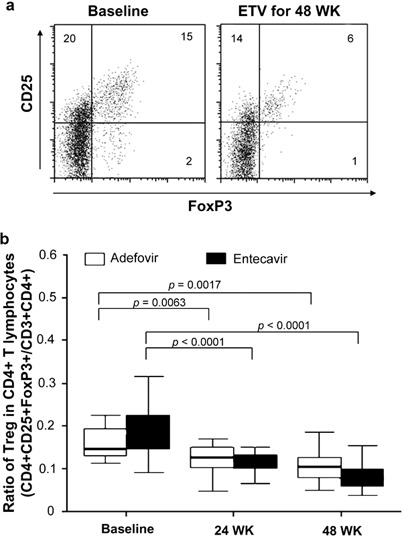
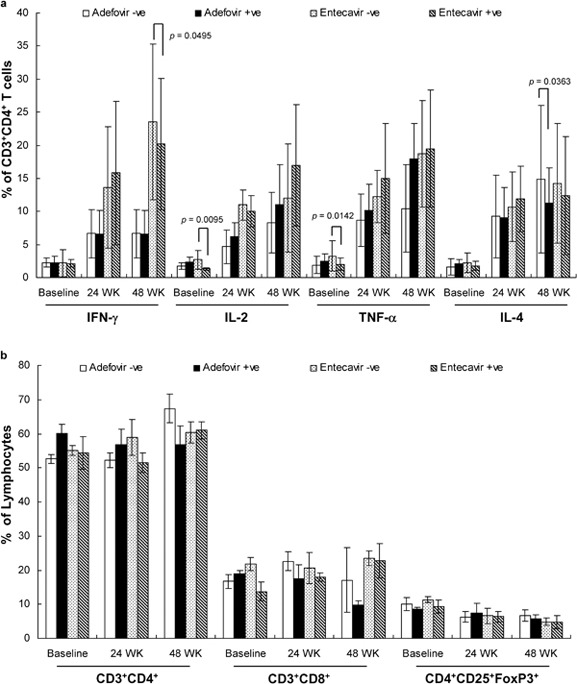
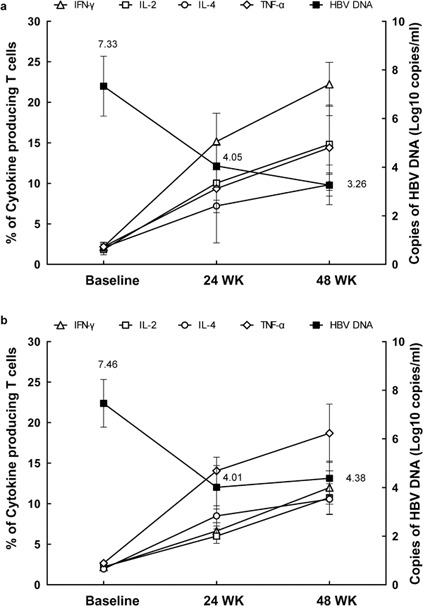
Chronicity of hepatitis B (CHB) infection is characterized by a weak immune response to the virus. Entecavir (ETV) and adefovir dipivoxil (ADV) are effective in suppressing hepatitis B virus (HBV) replication. However, the underlying immune mechanism in the antiviral response of patients treated with nucleoside or nucleotide analogs is not clearly understood. In this study, regulatory T cells (Tregs) and intracellular cytokines, including IL-2, interferon (IFN)-γ, tumor-necrosis factor (TNF)-α and IL-4, were measured prior to and at 12, 24, 36 and 48 weeks after treatment with ETV or ADV. The cytokines were increased from 24 to 48 weeks after treatment. Higher levels of Th1 cytokines were observed with ETV (n=29) versus ADV (n=28) treatment. By contrast, the numbers of Tregs in both groups were decreased. The altered cytokine profile and cellular component was accompanied by a decrease in HBV DNA levels in both groups, which may contribute to their therapeutic effect in CHB infection. Our findings suggest that the antiviral effect of the drugs may be attributed not only to their direct effect on virus suppression but also to their immunoregulatory capabilities.
Figures
References
-
- WHO . Hepatitis B. Geneva; WHO; 2008.
-
- Bertoletti A, Gehring AJ. The immune response during hepatitis B virus infection. J Gen Virol. 2006;87:1439–1449. - PubMed
-
- Huang CF, Lin SS, Ho YC, Chen FL, Yang CC. The immune response induced by hepatitis B virus principal antigens. Cell Mol Immunol. 2006;3:97–106. - PubMed
Publication types
MeSH terms
Substances
LinkOut - more resources
Full Text Sources
