Osteoplant acts on stem cells derived from peripheral blood
- PMID: 20922073
- PMCID: PMC2933523
- DOI: 10.4103/0972-124X.65429
Osteoplant acts on stem cells derived from peripheral blood
Abstract
Objectives: The osteoplant is an equine, flexible, heterologous, deantigenic, cortical, and spongy bone tissue, totally reabsorbable, used for implantation of bone tissue, to restore skeletal, even weight-bearing structures. However, how the osteoplant alters osteoblast activity to promote bone formation is poorly understood.
Materials and methods: To study how the osteoplant induces osteoblast differentiation in mesenchymal stem cells, the expression levels of bone-related genes, and mesenchymal stem cell markers are analyzed, using real time Reverse Transcription-Polymerase Chain Reaction (RT-PCR).
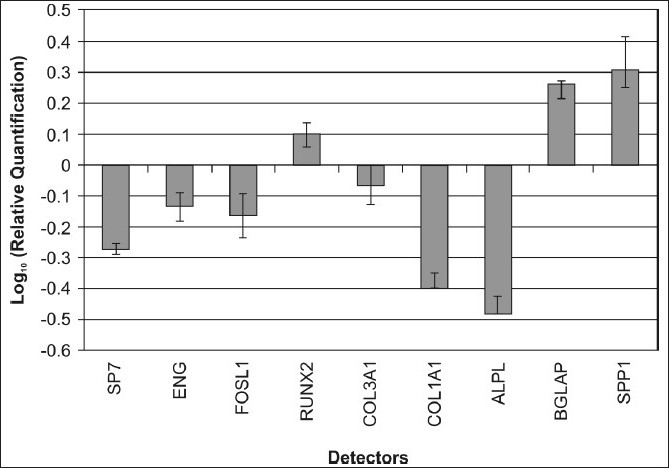
Results: The osteoplant causes induction of osteoblast transcriptional factors such as osterix (RUNX2), and of bone-related genes such as osteopontin (SPP1) and osteocalcin (BGLAP). In contrast the expression of ENG (CD105) is significantly decreased in stem cells treated with osteoplant, with respect to untreated cells, indicating the differentiation effect of this biomaterial on stem cells.
Conclusion: The obtained results can be relevant to better understand the molecular mechanism of bone regeneration and as a model for comparing other materials with similar clinical effects.
Keywords: Gene expression; bone; osteoplant; stem cell.
Conflict of interest statement
Figures
References
-
- Välimäki VV, Aro HT. Molecular basis for action of bioactive glasses as bone graft substitute. Scand J Surg. 2006;95:95–102. - PubMed
-
- Ramaswamy Y, Haynes DR, Berger G, Gildenhaar R, Lucas H, Holding C, et al. Bioceramics composition modulate resorption of human osteoclasts. J Mater Sci Mater Med. 2005;16:1199–205. - PubMed
-
- Perrotti V, Nicholls BM, Piattelli A. Human osteoclast formation and activity on an equine spongy bone substitute. Clin Oral Implants Res. 2009;20:17–23. - PubMed
-
- Bellone G, Scirelli T, Emanuelli G. Osteo-promoting activity of osteoplant angiostad in vitro. Minerva Stomatol. 2008;57:189–98. - PubMed
LinkOut - more resources
Full Text Sources
Research Materials
Miscellaneous