


Characteristics and outcome of patients with acute myeloid leukemia refractory to 1 cycle of high-dose cytarabine-based induction chemotherapy
- PMID: 20923968
- PMCID: PMC4081278
- DOI: 10.1182/blood-2010-07-296392
Characteristics and outcome of patients with acute myeloid leukemia refractory to 1 cycle of high-dose cytarabine-based induction chemotherapy
Abstract
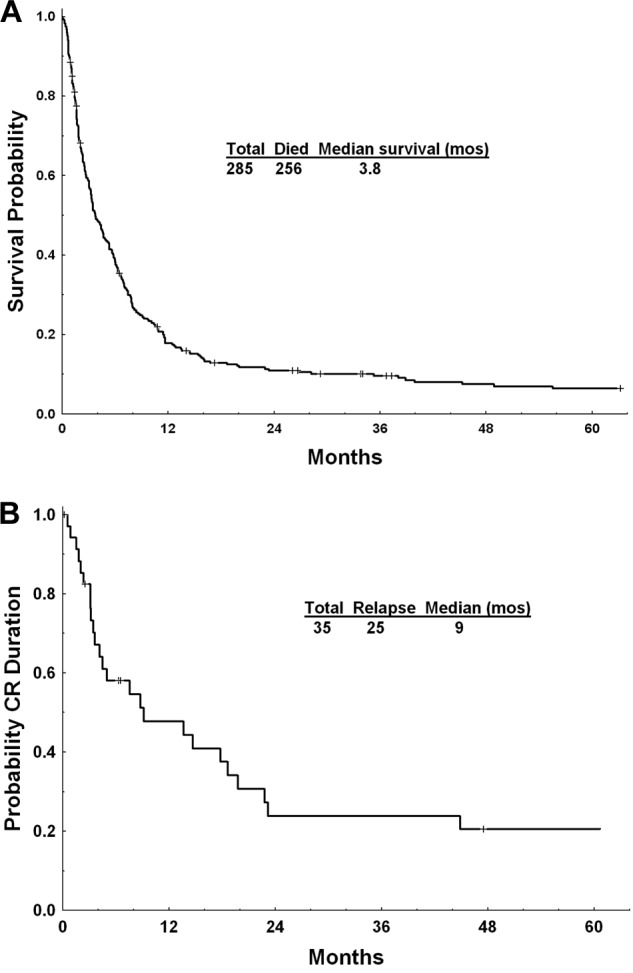
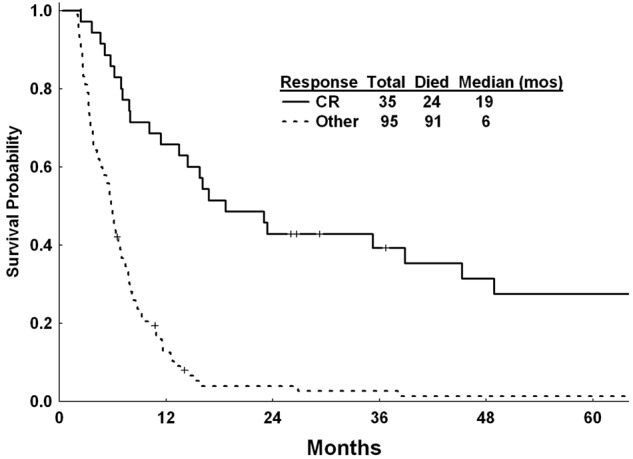
Pretreatment characteristics and outcome of patients treated with induction regimens containing high-dose ara-C (HiDAC) at M. D. Anderson Cancer Center refractory to 1 cycle of induction were compared with similar patients achieving a complete response (CR). Among 1597 patients treated with HiDAC-based induction from 1995 to 2009, 285 were refractory to 1 cycle. Median age was 59 years (range, 18-85 years). Induction regimens included HiDAC with anthracyclines (n = 181; 64%) or HiDAC with nonanthracycline chemotherapy (n = 104; 36%). Refractory patients were older (median age, 59 vs 56 years; P < .001), more likely with unfavorable cytogenetics (P < .001) and antecedent hematologic disorder (P < .001), and had a higher presentation white blood cell count (P = .04), but not a higher incidence of FLT3 mutations (P = .85), than those achieving CR. Forty-three patients (22%) responded to salvage (35 CR and 8 CR without platelet recovery). With a median follow-up of 72 months (range, 27-118 months) in responders, 11 are alive. Nineteen patients (7%) were alive and in CR for at least 6 months, including 9 who underwent allogeneic stem cell transplantation. On multivariate analysis, severe thrombocytopenia, leukocytosis, increasing marrow blast percentage, unfavorable cytogenetics, and salvage not including allogeneic stem cell transplantation were associated with a worse survival. Alternative strategies are needed for these patients.
Figures
References
-
- Schlenk RF, Dohner K. Impact of new prognostic markers in treatment decisions in acute myeloid leukemia. Curr Opin Hematol. 2009;16(2):98–104. - PubMed
-
- Ravandi F, Burnett AK, Agura ED, Kantarjian HM. Progress in the treatment of acute myeloid leukemia. Cancer. 2007;110(9):1900–1910. - PubMed
-
- Ferrara F, Palmieri S, Mele G. Prognostic factors and therapeutic options for relapsed or refractory acute myeloid leukemia. Haematologica. 2004;89(8):998–1008. - PubMed
-
- Breems DA, Van Putten WL, Huijgens PC, et al. Prognostic index for adult patients with acute myeloid leukemia in first relapse. J Clin Oncol. 2005;23(9):1969–1978. - PubMed
MeSH terms
Substances
LinkOut - more resources
Full Text Sources
Other Literature Sources
Medical
Research Materials
Miscellaneous
