


Chemopreventive potential of natural compounds in head and neck cancer
- PMID: 20924973
- PMCID: PMC3744227
- DOI: 10.1080/01635581.2010.509538
Chemopreventive potential of natural compounds in head and neck cancer
Abstract
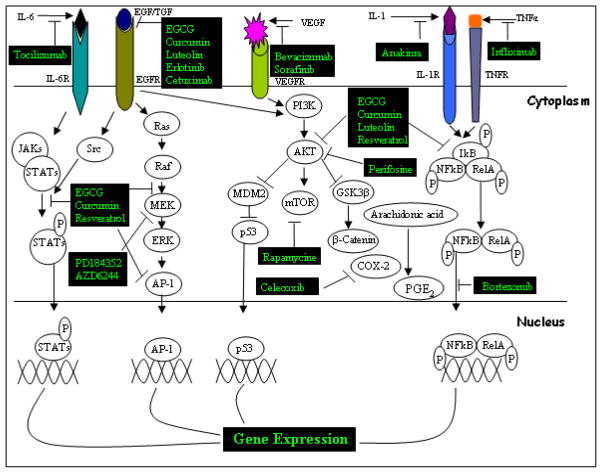
Head and neck squamous cell carcinoma (HNSCC) is one of the most fatal cancers worldwide. Despite advances in the management of HNSCC, the overall survival for patients has not improved significantly due to advanced stages at diagnosis, high recurrence rate after surgical removal, and second primary tumor development, which underscore the importance of novel strategies for cancer prevention. Cancer chemoprevention, the use of natural or synthetic compounds to prevent, arrest, or reverse the process of carcinogenesis at its earliest stages, aims to reverse premalignancies and prevent second primary tumors. Genomics and proteomics information including initial mutation, cancer promotion, progression, and susceptibility has brought molecularly targeted therapies for drug development. The development of preventive approaches using specific natural or synthetic compounds, or both, requires a depth of understanding of the cross-talk between cancer signaling pathways and networks to retain or enhance chemopreventive activity while reducing known toxic effects. Many natural dietary compounds have been identified with multiple molecular targets, effective in the prevention and treatment of cancer. This review describes recent advances in the understanding of the complex signaling networks driving cancer progression and of molecularly targeted natural compounds under preclinical and clinical investigation.
Figures
References
-
- Jemal A, Siegel R, Ward E, Hao Y, Xu J, et al. Cancer statistics, 2009. CA Cancer J Clin. 2009;59:225–249. - PubMed
-
- Haddad RI, Shin DM. Recent advances in head and neck cancer. N Engl J Med. 2008;359:1143–1154. - PubMed
-
- Tsao AS, Kim ES, Hong WK. Chemoprevention of cancer. CA Cancer J Clin. 2004;54:150–180. - PubMed
-
- Khuri FR, Kim ES, Lee JJ, Winn RJ, Benner SE, et al. The impact of smoking status, disease stage, and index tumor site on second primary tumor incidence and tumor recurrence in the head and neck retinoid chemoprevention trial. Cancer Epidemiol Biomarkers Prev. 2001;10:823–829. - PubMed
-
- Abbruzzese JL, Lippman SM. The convergence of cancer prevention and therapy in early-phase clinical drug development. Cancer Cell. 2004;6:321–326. - PubMed
Publication types
MeSH terms
Substances
Grants and funding
LinkOut - more resources
Full Text Sources
Medical
