. 2010 Dec;84(24):12761-70.
doi: 10.1128/JVI.00701-10. Epub 2010 Oct 6.

Glycine 184 in nonstructural protein NS1 determines the virulence of influenza A virus strain PR8 without affecting the host interferon response

Affiliations

Glycine 184 in nonstructural protein NS1 determines the virulence of influenza A virus strain PR8 without affecting the host interferon response

Sabine Steidle et al. J Virol. 2010 Dec.

Abstract

The nonstructural protein NS1 of influenza A virus counteracts the interferon (IFN) system and thereby promotes viral replication. NS1 has acquired different mechanisms to limit induction of IFN. It prevents double-stranded RNA (dsRNA) and RIG-I-mediated activation of interferon regulatory factor 3 (IRF3), and it blocks posttranscriptional processing of cellular mRNAs by binding to the cleavage and polyadenylation specificity factor (CPSF). Using a mouse-adapted A/PR/8/34 virus and reverse genetics to introduce specific mutations in NS1 which eliminate one or both functions, we determined the relative contributions of these two activities of NS1 to viral virulence in mice. We found that a functional RNA-binding motif was required for IFN suppression and virulence. Restoration of CPSF binding in the NS1 protein of wild-type A/PR/8/34 virus, which cannot bind CPSF due to mutations in the central binding motif at positions 103 and 106, resulted in enhanced virulence. Surprisingly, if CPSF binding was abolished by substituting glycine for arginine at position 184 in the classical NS1-CPSF binding motif, the mutant virus replicated much more slowly in mice, although the mutated NS1 protein continued to repress the IFN response very efficiently. Our results show that a functional RNA-binding motif is decisive for NS1 of A/PR/8/34 virus to suppress IFN induction. They further demonstrate that in addition to its contribution to CPSF binding, glycine 184 strongly influences viral virulence by an unknown mechanism which does not involve the IFN system.


Figures
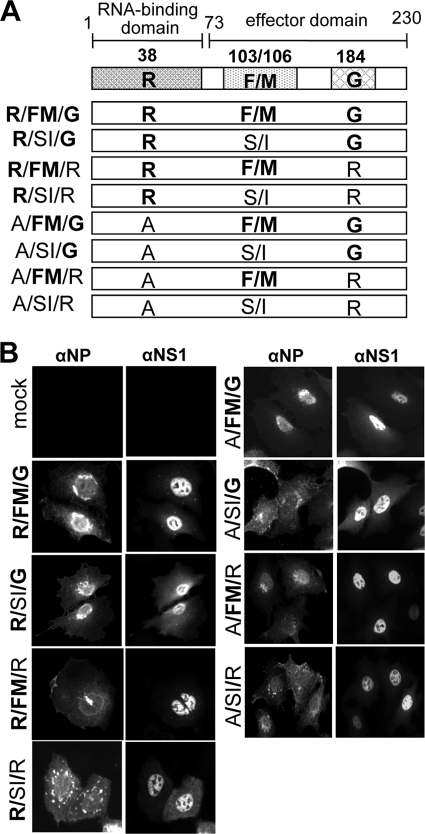
FIG. 1.
FIG. 1.
A/PR/8/34 viruses with mutations in the NS1 gene. (A) Schematic representation of functional domains of NS1 and the inactivating mutations. The functional amino acids are indicated by bold letters. The RNA-binding domain (positions 1 to 73) was inactivated by mutation R38A. CPSF binding in the effector domain (positions 74 to 230) was abolished by mutations F103S, M106I, and G184R. NS1(R/SI/G) represents wild-type NS1 of A/PR/8/34. (B) Subcellular localization of NP and NS1 in virus-infected cells. A549 cells were infected with the recombinant viruses at an MOI of 0.25. At 8 h p.i. the cells were fixed and stained with a polyclonal rabbit antiserum directed against NP and a monoclonal mouse antibody (1A7) directed against NS1. One representative result out of three independent experiments is shown.
FIG. 2.
FIG. 2.
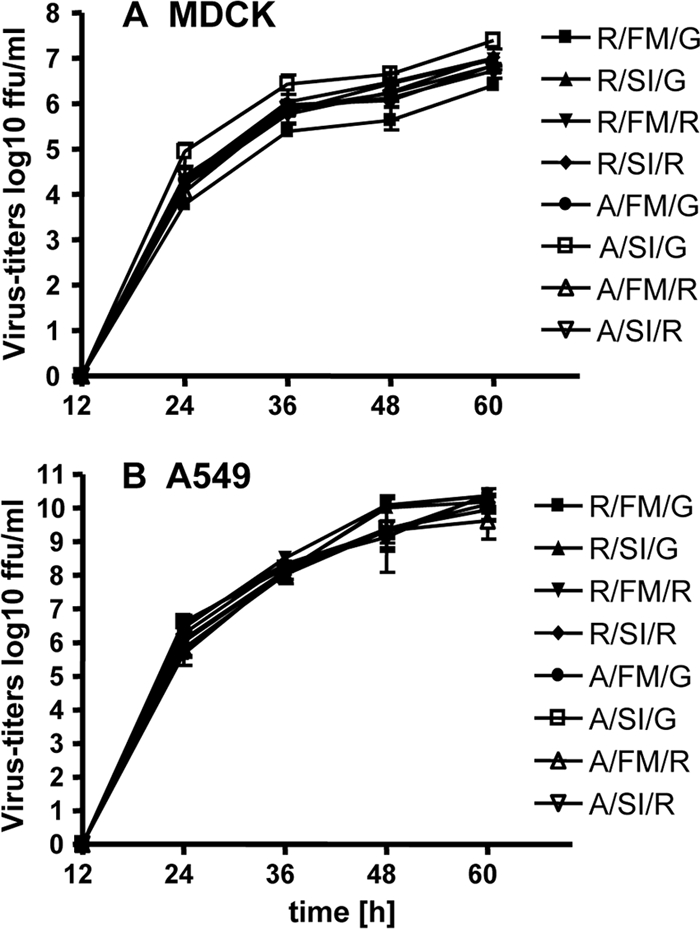
Growth of the recombinant viruses in cell culture. MDCK (A) and A549 (B) cells in six well plates were infected in triplicates with the viruses at MOIs of 0.001 and 0.01, respectively. At the indicated time points, supernatants were harvested and stored at −70°C. Virus titers were determined on MDCK cells. Error bars indicate standard deviations.
FIG. 3.
FIG. 3.
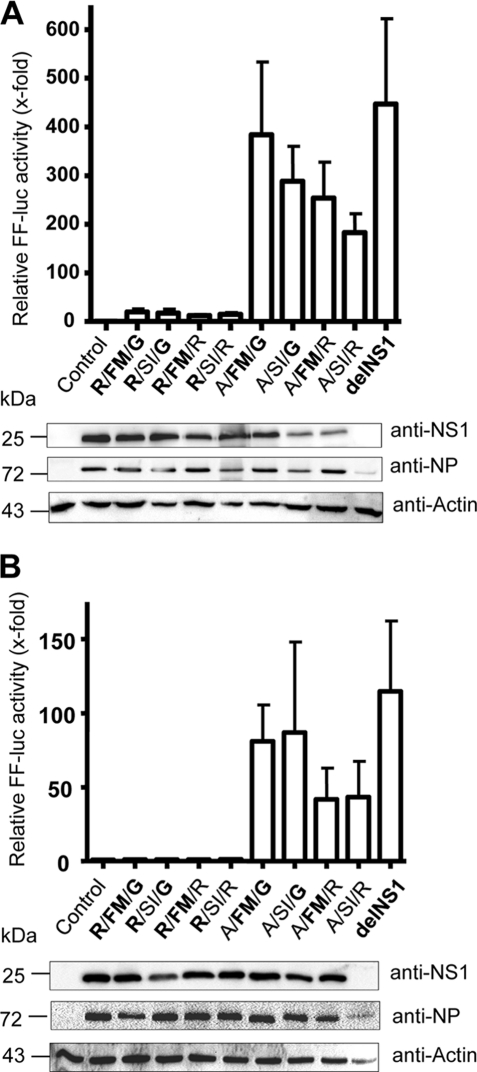
IFN-inducing capacity of recombinant A/PR/8/34 with mutations in NS1. (A) Activation of the IFN-β promoter in cell culture. MEF expressing firefly luciferase (FF-luc) under the control of the IFN-β promoter were infected at an MOI of 0.5 for 20 h. Luciferase activity of the cell lysates was determined. (B) Induction of type I IFN. A549 cells were infected at an MOI of 0.5 for 20 h. The cell culture supernatants were dialyzed against low-pH buffer to inactivate the viruses as described previously (27). 293T cells expressing firefly luciferase under the control of the Mx1 promoter (25) were then incubated with the treated supernatants for 18 h. Luciferase activity in the lysates of the indicator cells was determined. Data from three independent experiments are shown, and error bars indicate standard deviations. Viral proteins and β-actin in the whole-cell lysates of infected MEF or A549 cells were analyzed by Western blotting using specific antibodies directed against NS1, NP, and β-actin.
FIG. 4.
FIG. 4.
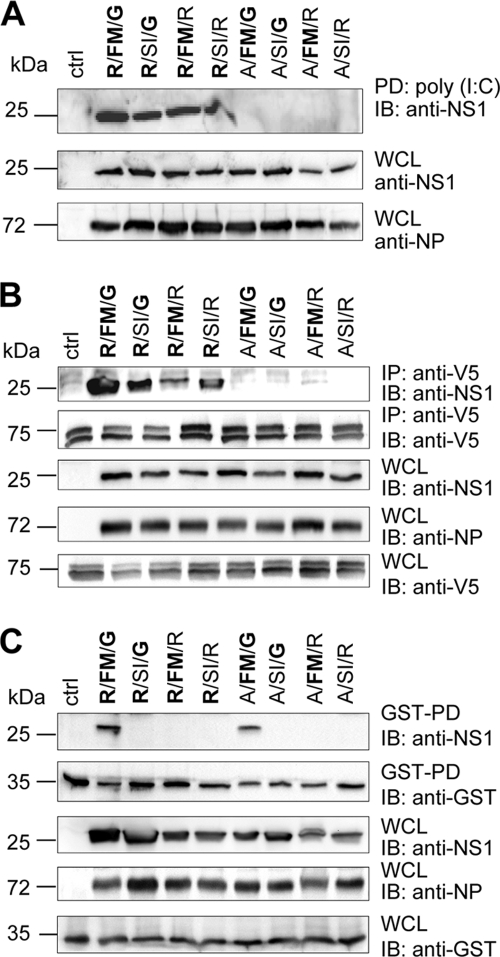
NS1 interaction with cellular factors. (A) NS1 binding to dsRNA. 293T cells were infected with the recombinant viruses at an MOI of 0.5. At 16 h p.i. cell lysates were incubated with poly(I·C) immobilized on Sepharose beads. Poly(I·C)-bound proteins were isolated and analyzed by Western blotting (IB) using antibodies directed against NS1. Whole-cell extracts (WCL) were analyzed for NS1 and NP expression using antibodies directed against NP and NS1. (B) NS1 association with TRIM25. 293T cells were transfected with an expression construct encoding V5-tagged TRIM25 and infected 30 h later with the recombinant viruses at an MOI of 2. TRIM25 was immunoprecipitated at 18 h p.i. with an antibody directed against the V5 tag, and associated NS1 was analyzed by Western blotting as described above. (C) NS1 interaction with CPSF. Cells were transfected with an expression construct encoding GST fusion protein with the F2F3 domains of CPSF. At 24 h posttransfection, the cells were infected with the recombinant viruses at an MOI of 0.5. At 20 h p.i. cell lysates were subjected to CPSF precipitation using glutathione-agarose. The precipitated proteins (GST-PD) and proteins in the whole-cell lysates (WCL) were analyzed by Western blotting using antibodies directed against NS1, NP, and the GST-tag. All results show representative data from three independent experiments.
FIG. 5.
FIG. 5.
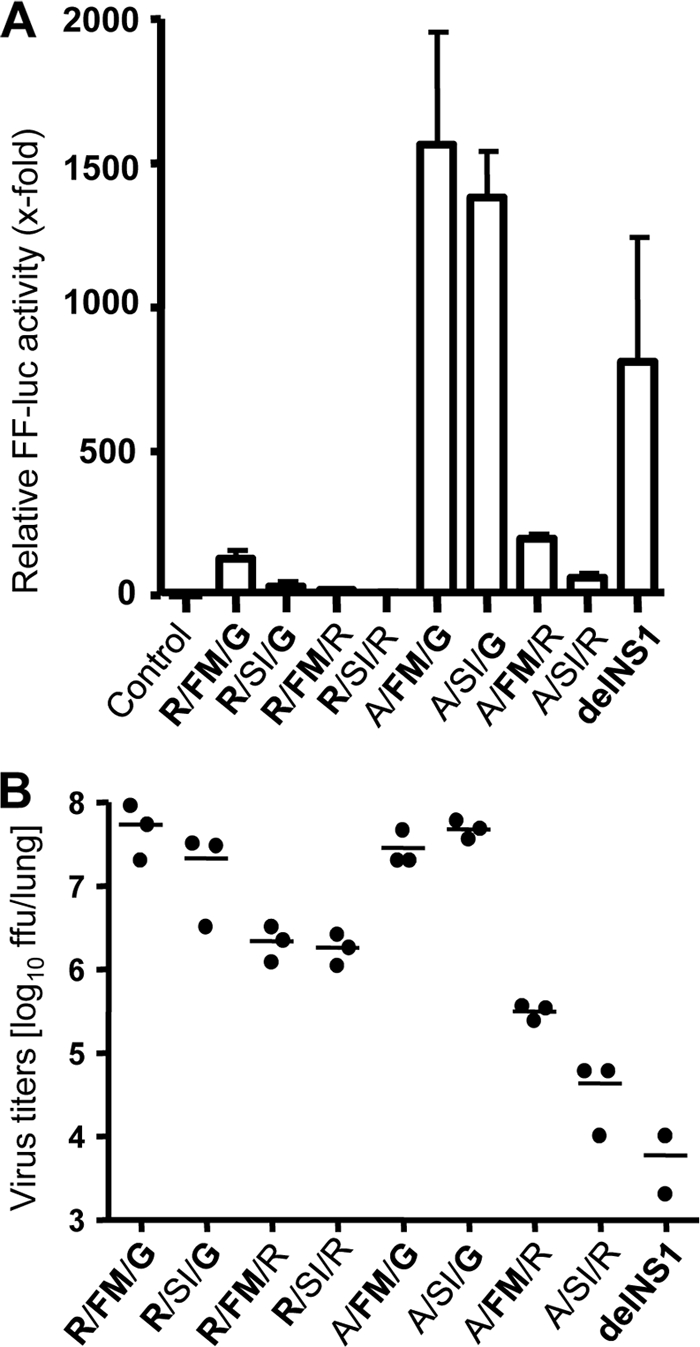
IFN-inducing capacity of recombinant A/PR/8/34 mutants in vivo. (A) Groups of reporter mice (n = 3) expressing firefly luciferase under the control of the IFN-β promoter were infected intranasally with 5 × 10⁴ FFU of the mutant viruses or their counterparts lacking NS1 (delNS1). At 24 h p.i. luciferase activity (FF-luc) in lung homogenates was determined. Error bars indicate standard deviations. (B) In addition, virus titers in lung homogenates of the reporter mice were determined.
FIG. 6.
FIG. 6.
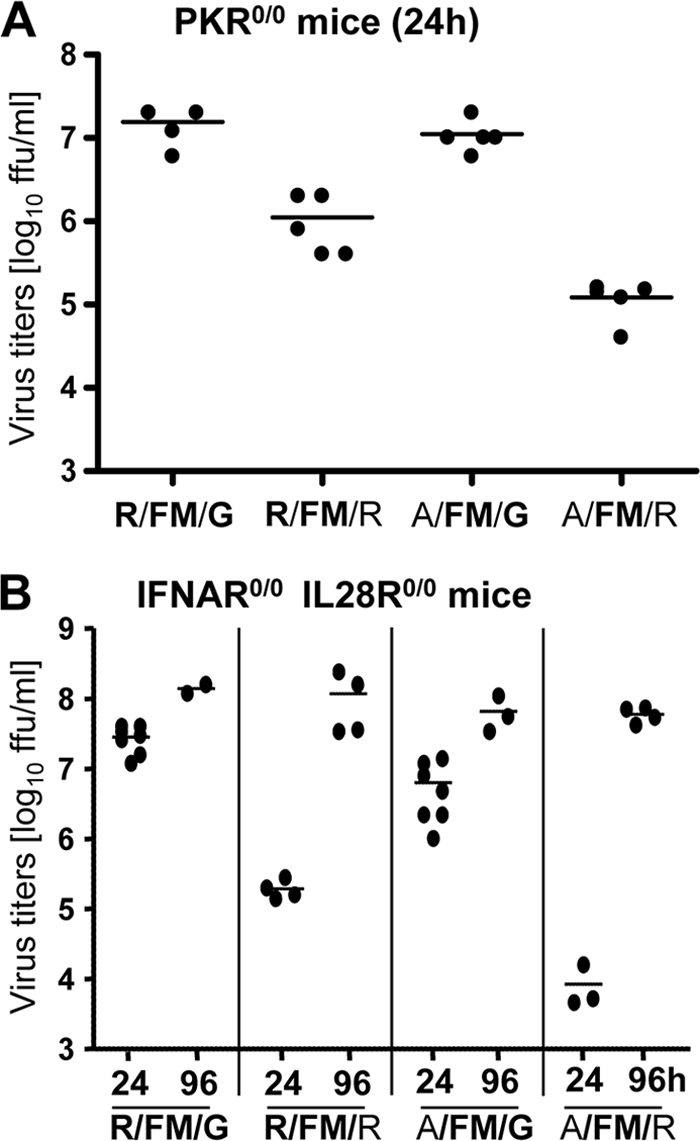
Growth of recombinant A/PR/8/34 mutants in vivo. Lung titers in PKR knockout mice (A) and IFNAR/IL28R double-knockout mice (B) are shown. Mice were infected intranasally with 1,000 FFU of the recombinant viruses. Virus titers in lung homogenates were determined at either 24 or 96 h postinfection as indicated.

References

    1. Bergmann, M., A. Garcia-Sastre, E. Carnero, H. Pehamberger, K. Wolff, P. Palese, and T. Muster. 2000. Influenza virus NS1 protein counteracts PKR-mediated inhibition of replication. J. Virol. 74:6203-6206. - PMC - PubMed
    1. Bornholdt, Z. A., and B. V. Prasad. 2008. X-ray structure of NS1 from a highly pathogenic H5N1 influenza virus. Nature 456:985-988. - PMC - PubMed
    1. Burgui, I., T. Aragon, J. Ortin, and A. Nieto. 2003. PABP1 and eIF4GI associate with influenza virus NS1 protein in viral mRNA translation initiation complexes. J. Gen. Virol. 84:3263-3274. - PubMed
    1. Cardenas, W. B., Y. M. Loo, M. Gale, Jr., A. L. Hartman, C. R. Kimberlin, L. Martinez-Sobrido, E. O. Saphire, and C. F. Basler. 2006. Ebola virus VP35 protein binds double-stranded RNA and inhibits alpha/beta interferon production induced by RIG-I signaling. J. Virol. 80:5168-5178. - PMC - PubMed
    1. Chen, Z., Y. Li, and R. M. Krug. 1999. Influenza A virus NS1 protein targets poly(A)-binding protein II of the cellular 3′-end processing machinery. EMBO J. 18:2273-2283. - PMC - PubMed

Publication types

MeSH terms