


Drug-induced deactivation of inhibitory networks predicts pathological gambling in PD
- PMID: 20926784
- PMCID: PMC3033606
- DOI: 10.1212/WNL.0b013e3181fc27fa
Drug-induced deactivation of inhibitory networks predicts pathological gambling in PD
Abstract
Objective: Some patients with Parkinson disease (PD) develop pathological gambling when treated with dopamine agonists (DAs). However, little is known about DA-induced changes in neuronal networks that may underpin this drug-induced change in behavior in vulnerable individuals. In this case-control study, we aimed to investigate DA-induced changes in brain activity that may differentiate patients with PD with DA-induced pathological gambling (gamblers) from patients with PD without such a history (controls).
Methods: Following overnight withdrawal of antiparkinsonian medication, patients were studied with H₂(15)O PET before and after administration of DA (3 mg apomorphine) to measure changes in regional cerebral blood flow as an index of regional brain activity during a card selection game with probabilistic feedback.
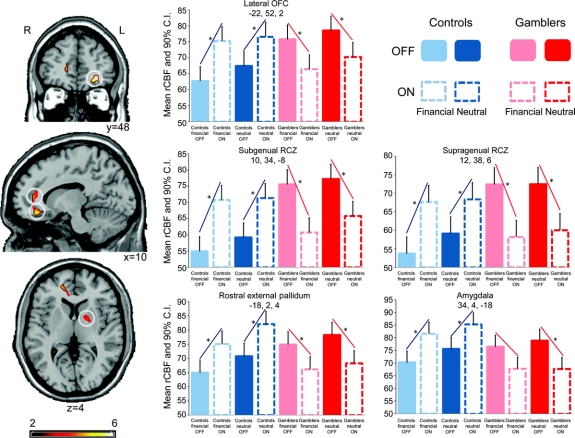
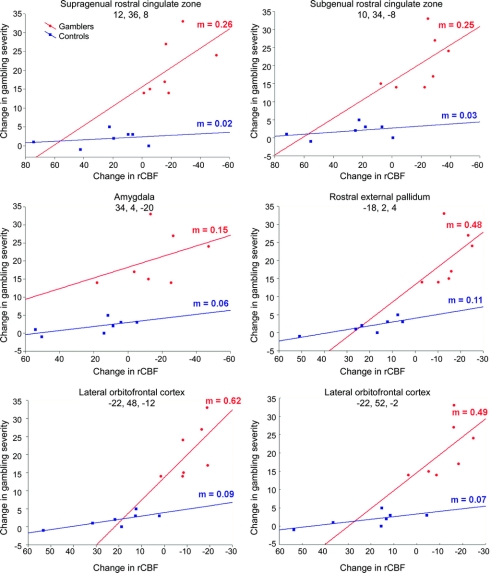
Results: We observed that the direction of DA-related activity change in brain areas that are implicated in impulse control and response inhibition (lateral orbitofrontal cortex, rostral cingulate zone, amygdala, external pallidum) distinguished gamblers from controls. DA significantly increased activity in these areas in controls, while gamblers showed a significant DA-induced reduction of activity.
Conclusions: We propose that in vulnerable patients with PD, DAs produce an abnormal neuronal pattern that resembles those found in nonparkinsonian pathological gambling and drug addiction. DA-induced disruption of inhibitory key functions--outcome monitoring (rostral cingulate zone), acquisition and retention of negative action-outcome associations (amygdala and lateral orbitofrontal cortex)--together with restricted access of those areas to executive control (external pallidum)--may well explain loss of impulse control and response inhibition in vulnerable patients with PD, thereby fostering the development of pathological gambling.
Figures
Comment in
-
Pathological gambling in PD: did the devil make me do it?Neurology. 2010 Nov 9;75(19):1668-9. doi: 10.1212/WNL.0b013e3181fc2898. Epub 2010 Oct 6. Neurology. 2010. PMID: 20926785 No abstract available.
References
Publication types
MeSH terms
Substances
Grants and funding
LinkOut - more resources
Full Text Sources
Medical
