


Controlled trials in children: quantity, methodological quality and descriptive characteristics of pediatric controlled trials published 1948-2006
- PMID: 20927344
- PMCID: PMC2948021
- DOI: 10.1371/journal.pone.0013106
Controlled trials in children: quantity, methodological quality and descriptive characteristics of pediatric controlled trials published 1948-2006
Abstract
Background: The objective of this study was to describe randomized controlled trials (RCTs) and controlled clinical trials (CCTs) in child health published between 1948 and 2006, in terms of quantity, methodological quality, and publication and trial characteristics. We used the Trials Register of the Cochrane Child Health Field for overall trends and a sample from this to explore trial characteristics in more detail.
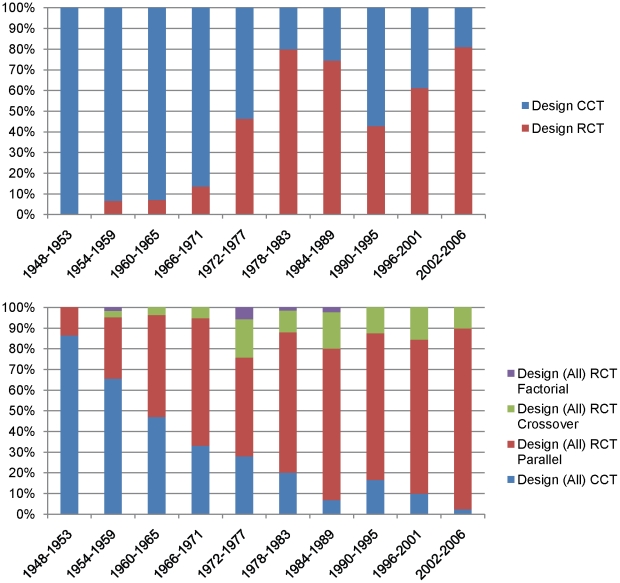
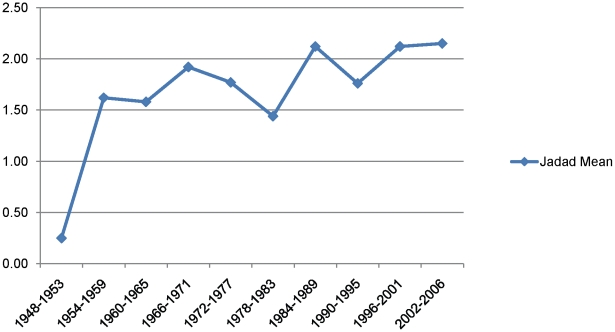
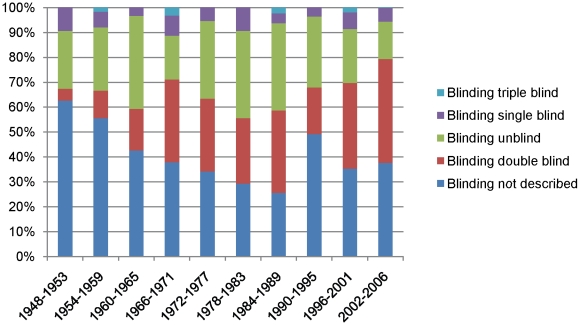
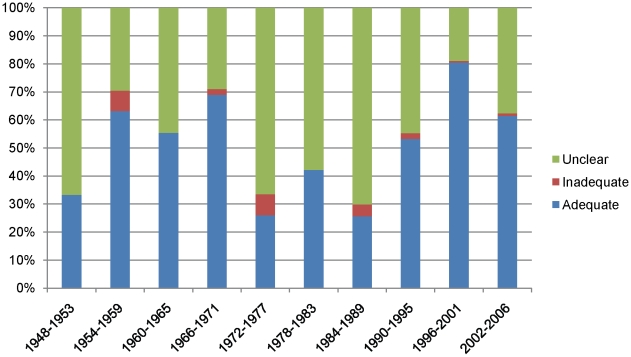
Methodology/principal findings: We extracted descriptive data on a random sample of 578 trials. Ninety-six percent of the trials were published in English; the percentage of child-only trials was 90.5%. The most frequent diagnostic categories were infectious diseases (13.2%), behavioural and psychiatric disorders (11.6%), neonatal critical care (11.4%), respiratory disorders (8.9%), non-critical neonatology (7.9%), and anaesthesia (6.5%). There were significantly fewer child-only studies (i.e., more mixed child and adult studies) over time (P = 0.0460). The proportion of RCTs to CCTs increased significantly over time (P<0.0001), as did the proportion of multicentre trials (P = 0.002). Significant increases over time were found in methodological quality (Jadad score) (P<0.0001), the proportion of double-blind studies (P<0.0001), and studies with adequate allocation concealment (P<0.0001). Additionally, we found an improvement in reporting over time: adequate description of withdrawals and losses to follow-up (P<0.0001), sample size calculations (P<0.0001), and intention-to-treat analysis (P<0.0001). However, many trials still do not describe their level of blinding, and allocation concealment was inadequately reported in the majority of studies across the entire time period. The proportion of studies with industry funding decreased slightly over time (P = 0.003), and these studies were more likely to report positive conclusions (P = 0.028).
Conclusions/significance: The quantity and quality of pediatric controlled trials has increased over time; however, much work remains to be done, particularly in improving methodological issues around conduct and reporting of trials.
Conflict of interest statement
Figures
References
-
- Francis T, Jr, Napier JA, Voight RB, Hemphill FM, Wenner HA, et al. Final report. Ann Arbor: Edwards Brothers; 1957. Evaluation of the 1954 field trial of poliomyelitis vaccine. pp. 1–563.
-
- Silverman WA, Andersen DH. A controlled clinical trial of effects of water mist on obstructive respiratory signs, death rate and necropsy findings among premature infants. Pediatrics. 1956;17:1–10. - PubMed
-
- Silverman WA, Agate FJ, Jr, Fertig JW. A sequential trial of the nonthermal effect of atmospheric humidity on survival of newborn infants of low birth weight. Pediatrics. 1963;31:719–724. - PubMed
-
- Silverman WA, Blanc WA. The effect of humidity on survival of newly born premature infants. Pediatrics. 1957;20:477–486. - PubMed
