


Genetic and molecular functional characterization of variants within TNFSF13B, a positional candidate preeclampsia susceptibility gene on 13q
- PMID: 20927378
- PMCID: PMC2947510
- DOI: 10.1371/journal.pone.0012993
Genetic and molecular functional characterization of variants within TNFSF13B, a positional candidate preeclampsia susceptibility gene on 13q
Abstract
Background: Preeclampsia is a serious pregnancy complication, demonstrating a complex pattern of inheritance. The elucidation of genetic liability to preeclampsia remains a major challenge in obstetric medicine. We have adopted a positional cloning approach to identify maternal genetic components, with linkages previously demonstrated to chromosomes 2q, 5q and 13q in an Australian/New Zealand familial cohort. The current study aimed to identify potential functional and structural variants in the positional candidate gene TNFSF13B under the 13q linkage peak and assess their association status with maternal preeclampsia genetic susceptibility.
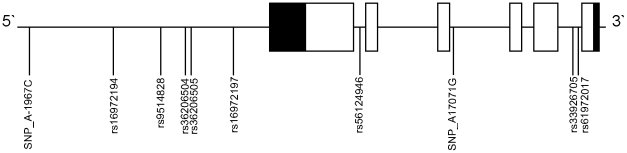
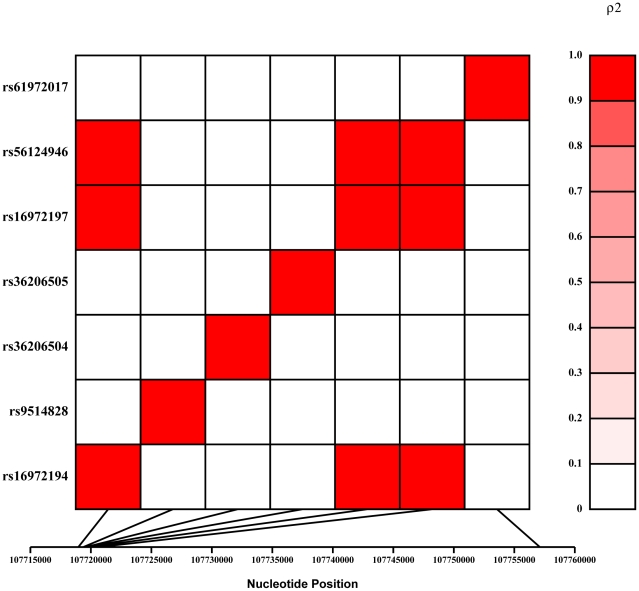
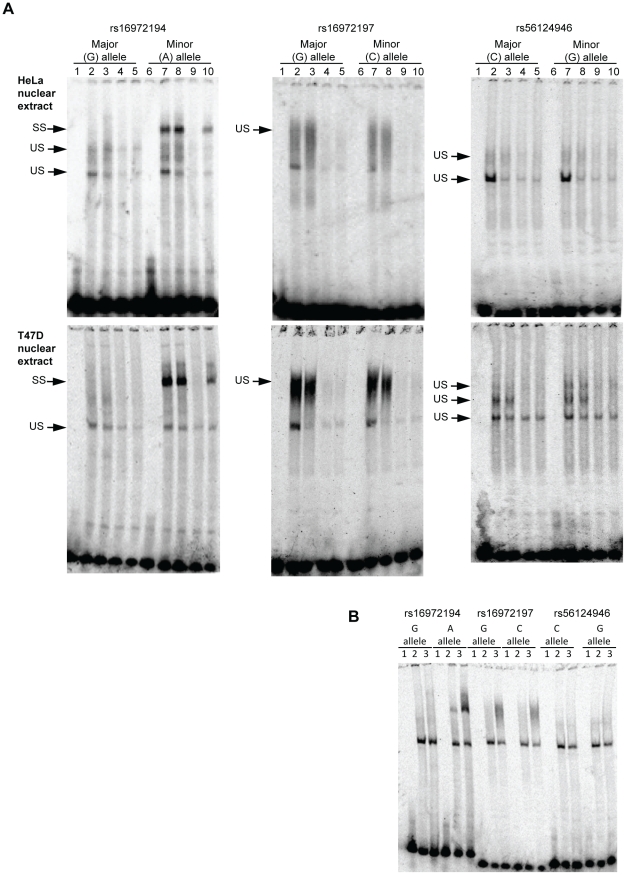
Methodology/principal findings: The proximal promoter and coding regions of the positional candidate gene TNFSF13B residing within the 13q linkage region was sequenced using 48 proband or founder individuals from Australian/New Zealand families. Ten sequence variants (nine SNPs and one single base insertion) were identified and seven SNPs were successfully genotyped in the total Australian/New Zealand family cohort (74 families/480 individuals). Borderline association to preeclampsia (p = 0.0153) was observed for three rare SNPs (rs16972194, rs16972197 and rs56124946) in strong linkage disequilibrium with each other. Functional evaluation by electrophoretic mobility shift assays showed differential nuclear factor binding to the minor allele of the rs16972194 SNP, residing upstream of the translation start site, making this a putative functional variant. The observed genetic associations were not replicated in a Norwegian case/control cohort (The Nord-Trøndelag Health Study (HUNT2), 851 preeclamptic and 1,440 non-preeclamptic women).
Conclusion/significance: TNFSF13B has previously been suggested to contribute to the normal immunological adaption crucial for a successful pregnancy. Our observations support TNFSF13B as a potential novel preeclampsia susceptibility gene. We discuss a possible role for TNFSF13B in preeclampsia pathogenesis, and propose the rs16972194 variant as a candidate for further functional evaluation.
Conflict of interest statement
Figures
References
-
- Wallis AB, Saftlas AF, Hsia J, Atrash HK. Secular trends in the rates of preeclampsia, eclampsia, and gestational hypertension, United States, 1987-2004. Am J Hypertens. 2008;21:521–526. - PubMed
-
- Ness RB, Roberts JM. Heterogeneous causes constituting the single syndrome of preeclampsia: a hypothesis and its implications. Am J Obstet Gynecol. 1996;175:1365–1370. - PubMed
-
- Roberts JM, Gammill HS. Preeclampsia: recent insights. Hypertension. 2005;46:1243–1249. - PubMed
-
- Brosens IA, Robertson WB, Dixon HG. The role of the spiral arteries in the pathogenesis of preeclampsia. Obstet Gynecol Annu. 1972;1:177–191. - PubMed
-
- Huppertz B. Placental origins of preeclampsia: challenging the current hypothesis. Hypertension. 2008;51:970–975. - PubMed
Publication types
MeSH terms
Substances
Grants and funding
LinkOut - more resources
Full Text Sources
