


Occult hepatitis B: clinical implications and treatment decisions
- PMID: 20927592
- PMCID: PMC3001399
- DOI: 10.1007/s10620-010-1413-0
Occult hepatitis B: clinical implications and treatment decisions
Abstract
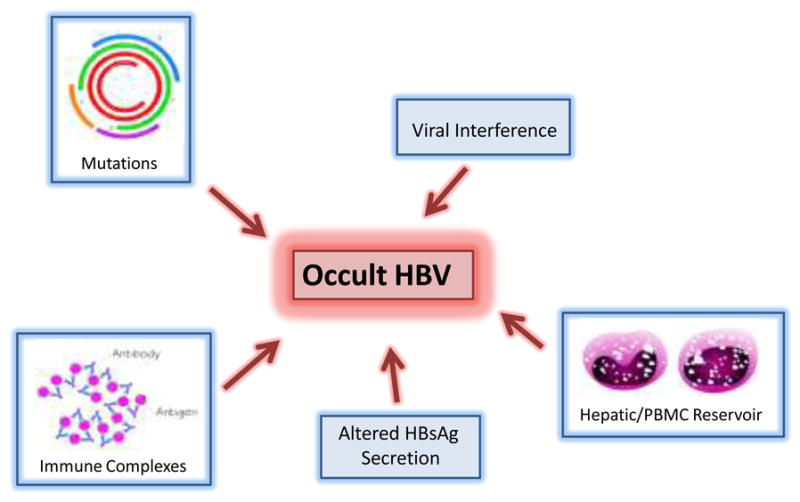
First reported in 1978, occult hepatitis B is a term used to describe the presence of hepatitis B virus (HBV) DNA without hepatitis B surface antigenemia. The prevalence of occult HBV is unclear and depends in part on the sensitivity of the hepatitis B surface antigen (HBsAg) and DNA assays used as well as the prevalence of HBV infection in the study population. The origin of occult HBV also remains in question. Several mechanisms have been hypothesized including mutations in the regulatory regions of the HBV genome, persistence of Ig-bound HBV immune complexes, viral interference, and blockage of free HBsAg secretion. Occult HBV has important clinical implications such as transmission through blood transfusion, reactivation in the setting of immunosuppression, and interference with hepatitis C treatment. To date, there is little data pertaining to the treatment of occult HBV outside of the setting of chemotherapy-induced HBV reactivation.
References
-
- Allain JP. Occult hepatitis B virus infection. Transfusion Clinique et Biologique. 2004;11:18–25. - PubMed
-
- Hoofnagle JH, Seef LB, Bales ZB, Zimmerman HJ. The type B hepatitis after transfusion with blood containing antibody to hepatitis B core antigen. N Engl J Med. 1978;298:1379–83. - PubMed
-
- Thiers V, Nakajima E, Kremsdorf D, et al. Transmission of hepatitis B from hepatitis-B-seronegative subjects. Lancet. 1988;2:1273–76. - PubMed
-
- Cacciola I, Pollicino T, Squadrito G, et al. Occult hepatitis B virus infection in patients with chronic hepatitis C liver disease. New England Journal of Medicine. 1999;341:22–26. - PubMed
Publication types
MeSH terms
Substances
Grants and funding
LinkOut - more resources
Full Text Sources
Medical
