


Role of PECAM-1 in arteriogenesis and specification of preexisting collaterals
- PMID: 20930147
- PMCID: PMC3244947
- DOI: 10.1161/CIRCRESAHA.110.229955
Role of PECAM-1 in arteriogenesis and specification of preexisting collaterals
Abstract
Rationale: Hemodynamic forces caused by the altered blood flow in response to an occlusion lead to the induction of collateral remodeling and arteriogenesis. Previous work showed that platelet endothelial cell adhesion molecule (PECAM)-1 is a component of a mechanosensory complex that mediates endothelial cell responses to shear stress.
Objective: We hypothesized that PECAM-1 plays an important role in arteriogenesis and collateral remodeling.
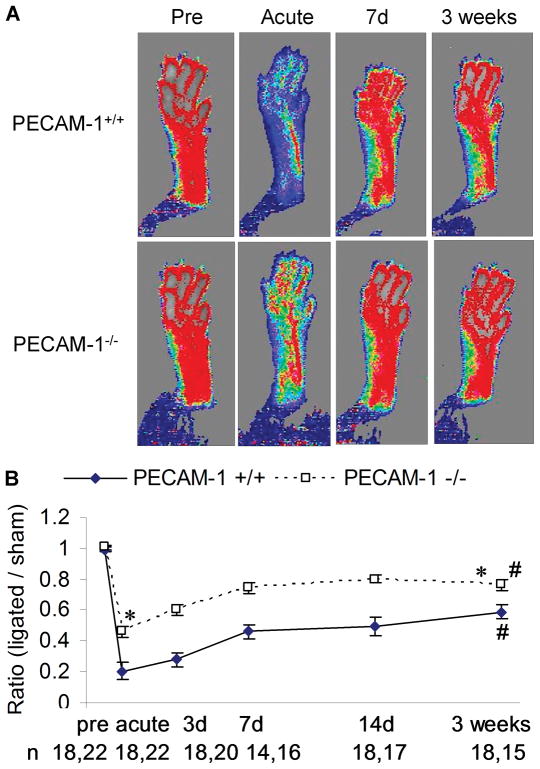
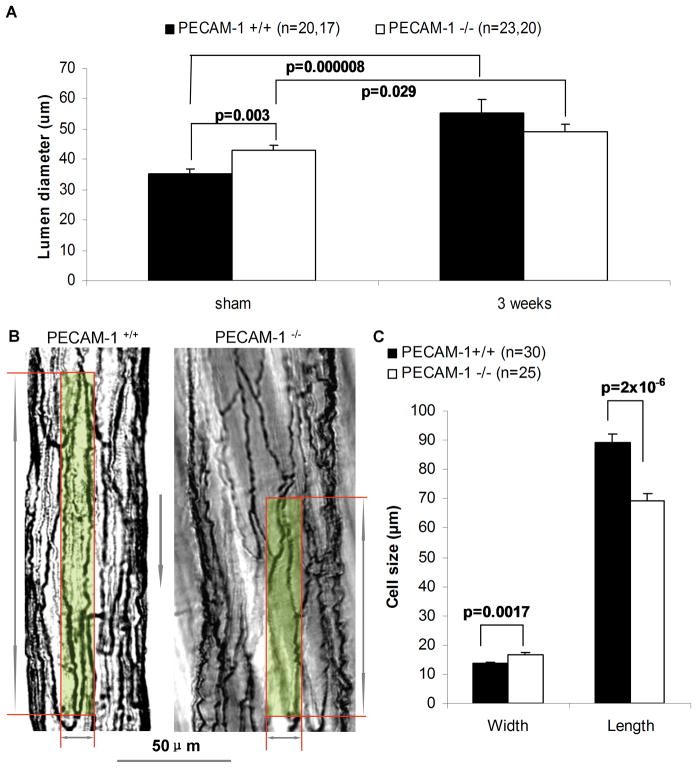
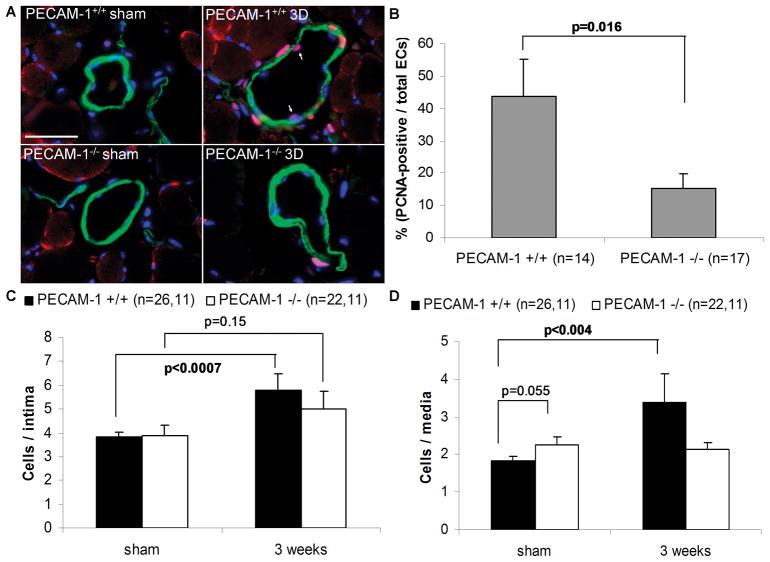
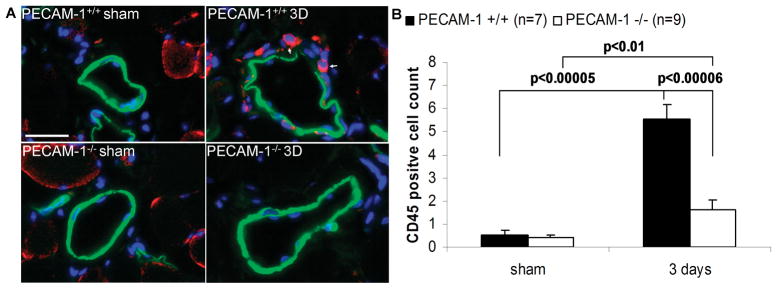
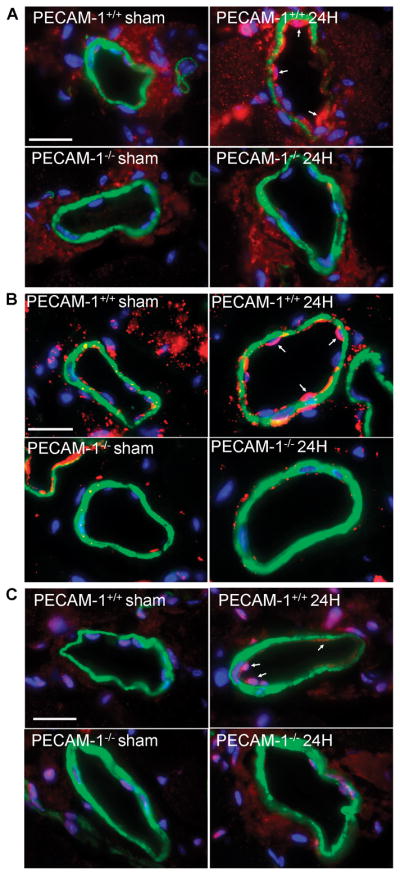
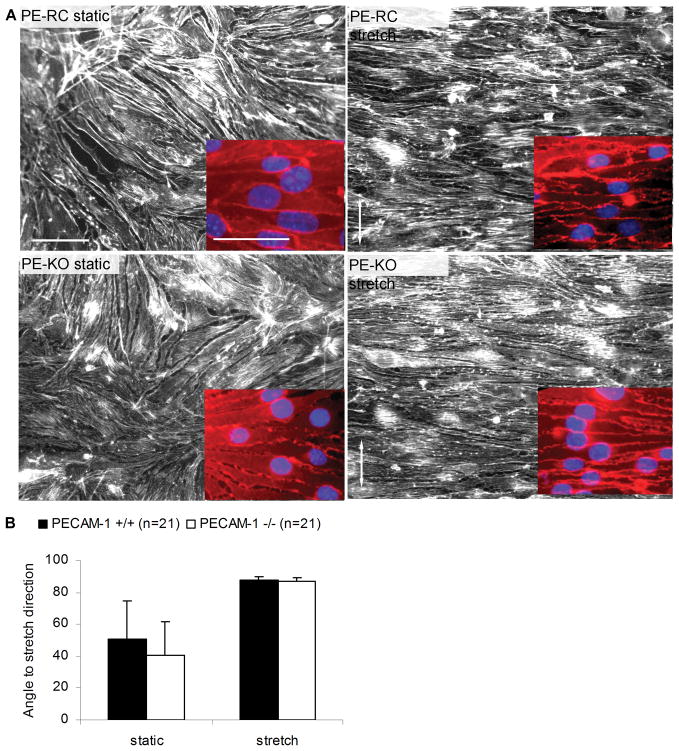
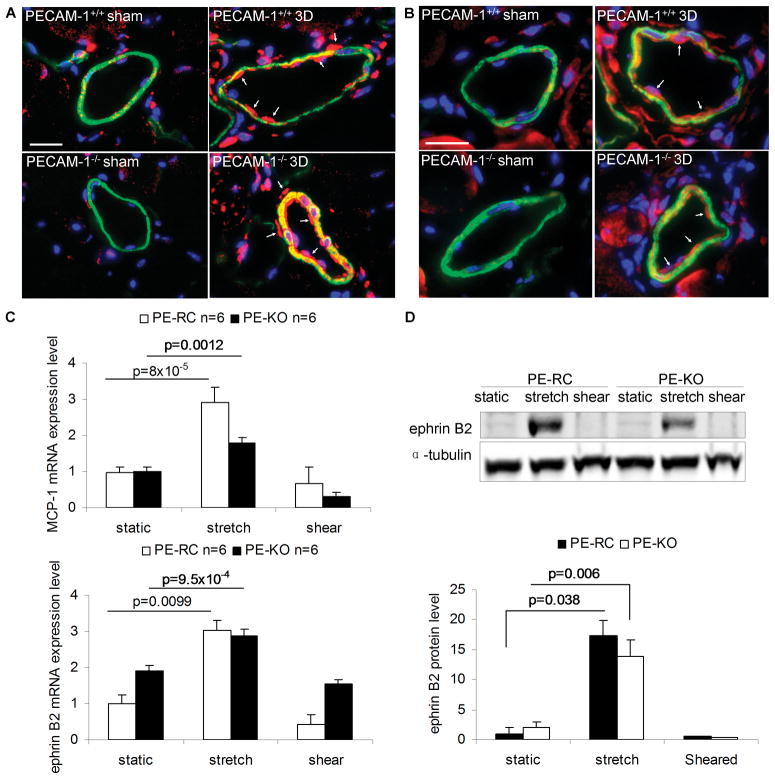
Methods and results: PECAM-1 knockout (KO) and wild-type littermates underwent femoral artery ligation. Surprisingly, tissue perfusion and collateral-dependent blood flow were significantly increased in the KO mice immediately after surgery. Histology confirmed larger caliber of preexisting collaterals in the KO mice. Additionally, KO mice showed blunted recovery of perfusion from hindlimb ischemia and reduced collateral remodeling, because of deficits in shear stress-induced signaling, including activation of the nuclear factor κB pathway and inflammatory cell accumulation. Partial recovery was associated with normal responses to circumferential wall tension in the absence of PECAM-1, as evidenced by the upregulation of ephrin B2 and monocyte chemoattractant protein-1, which are 2 stretch-induced regulators of arteriogenesis, both in vitro and in vivo.
Conclusions: Our findings suggest a novel role for PECAM-1 in arteriogenesis and collateral remodeling. Furthermore, we identify PECAM-1 as the first molecule that determines preexisting collateral diameter.
Figures
References
-
- Scholz D, Ziegelhoeffer T, Helisch A, Wagner S, Friedrich C, Podzuweit T, Schaper W. Contribution of arteriogenesis and angiogenesis to postocclusive hindlimb perfusion in mice. J Mol Cell Cardiol. 2002;34:775–87. - PubMed
-
- Helisch A, Schaper W. Arteriogenesis: the development and growth of collateral arteries. Microcirculation. 2003;10:83–97. - PubMed
-
- Helisch A, Wagner S, Khan N, Drinane M, Wolfram S, Heil M, Ziegelhoeffer T, Brandt U, Pearlman JD, Swartz HM, Schaper W. Impact of mouse strain differences in innate hindlimb collateral vasculature. Arterioscler Thromb Vasc Biol. 2006;26:520–6. - PubMed
-
- Sherman JA, Hall A, Malenka DJ, De Muinck ED, Simons M. Humoral and cellular factors responsible for coronary collateral formation. Am J Cardiol. 2006;98:1194–7. - PubMed
-
- Heil M, Schaper W. Insights into pathways of arteriogenesis. Curr Pharm Biotechnol. 2007;8:35–42. - PubMed
Publication types
MeSH terms
Substances
Grants and funding
LinkOut - more resources
Full Text Sources
Other Literature Sources
Molecular Biology Databases
Research Materials
Miscellaneous
