. 2010 Oct;16(10):843-53.
doi: 10.1016/j.cardfail.2010.05.007. Epub 2010 Jul 1.

Chronic alternate-day fasting results in reduced diastolic compliance and diminished systolic reserve in rats

Affiliations

Chronic alternate-day fasting results in reduced diastolic compliance and diminished systolic reserve in rats

Ismayil Ahmet et al. J Card Fail. 2010 Oct.

Abstract

Background: Based on animal experiments and limited data from the few human trials, alternate-day fasting (ADF) resulted in weight loss, prolonged life, reduced metabolic risk factors for diabetes and cardiovascular diseases, and reduced prevalence of age-related diseases. The present study is the first comprehensive examination of the long-term effects of ADF on general cardiovascular fitness in rats.

Methods and results: Four-month-old male Sprague-Dawley rats were started on ADF or continued on ad libitum diets and followed for 6 months with serial echocardiography. A comprehensive hemodynamic evaluation including a combined dobutamine-volume stress test was performed at the end of the study, and hearts were harvested for histological assessment. The 6-month-long ADF diet resulted in a 9% reduction (P < .01) of cardiomyocyte diameter and 3-fold increase in interstitial myocardial fibrosis. Left ventricular chamber size was not affected by ADF and ejection fraction was not reduced, but left atrial diameter was increased 16%, and the ratio of early (E) and late atrial (A) waves, in Doppler-measured mitral flow was reduced (P < .01). Pressure-volume loop analyses revealed a "stiff" heart during diastole in ADF rats, whereas combined dobutamine and volume loading showed a significant reduction in left ventricular diastolic compliance and a lack of increase in systolic pump function, indicating a diminished cardiac reserve.

Conclusion: Chronic ADF in rats results in development of diastolic dysfunction with diminished cardiac reserve. ADF is a novel and unique experimental model of diet-induced diastolic dysfunction. The deleterious effect of ADF in rats suggests that additional studies of ADF effects on cardiovascular functions in humans are warranted.


Conflict of interest statement

Disclosures

Conflict of Interest to disclosures: none.

Figures
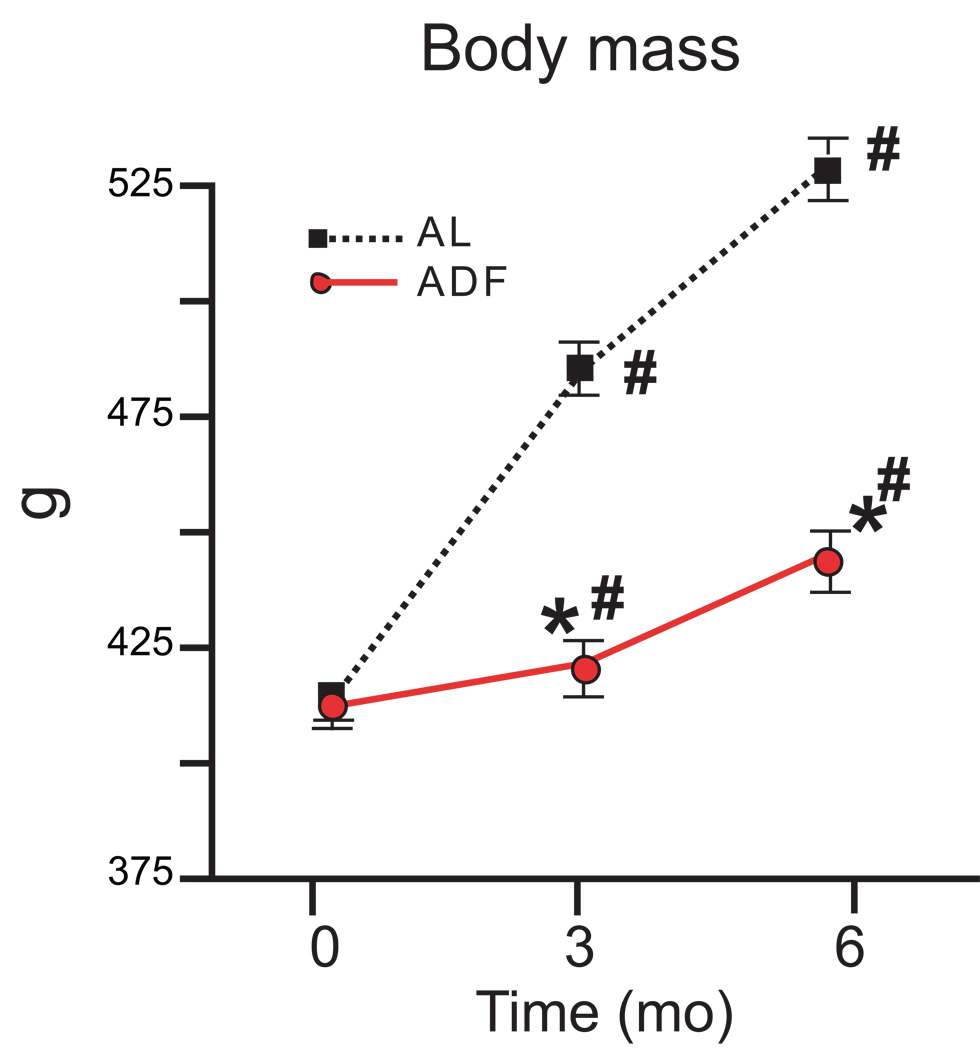
Figure 1
Figure 1
Body weights of rats during 6 months on AL and ADF dietary regimens. *p<0.05 compared to the AL value at the same time point; #p<0.05 compared to the baseline value for the same group (ANOVA with Bonferroni post hoc comparison).
Figure 2
Figure 2
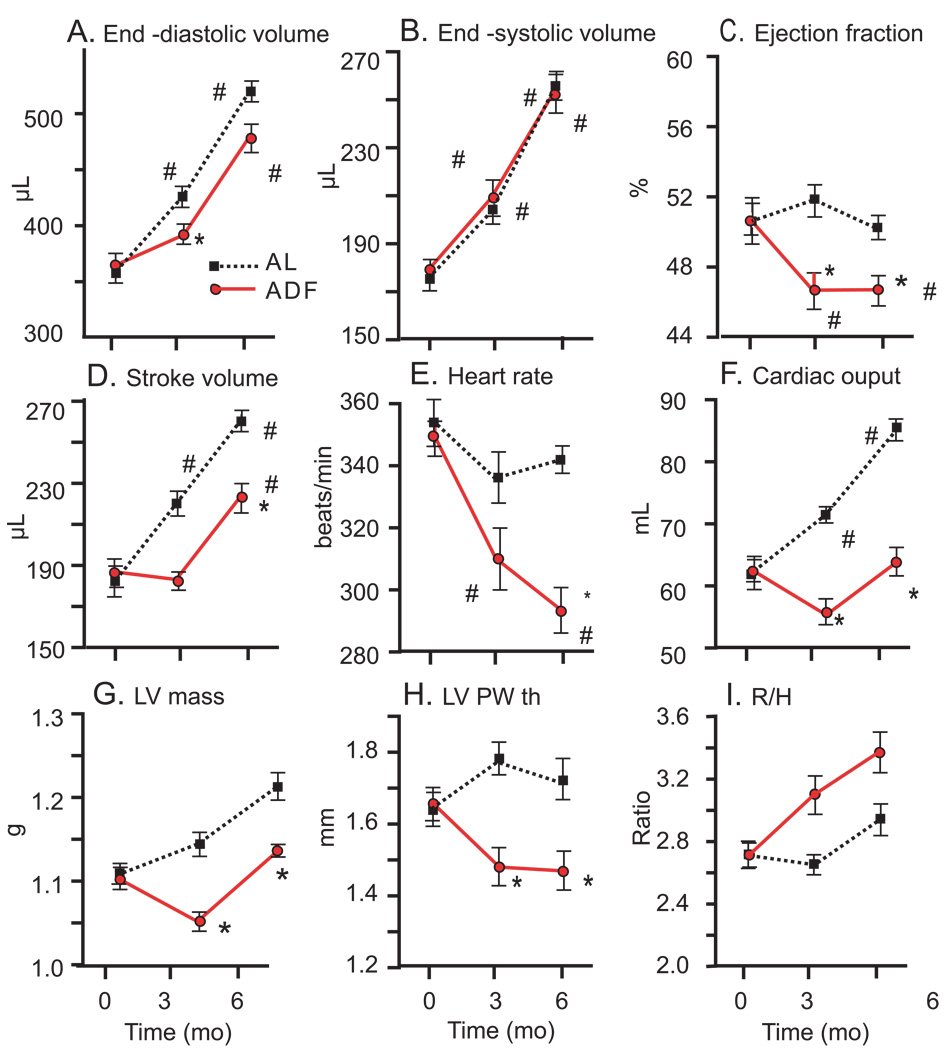
Echocardiographic Left Ventricular indices (unadjusted for body weight differences) in rats on AL and ADF diets during a 6 month period. LV end-diastolic volume (A), end-systolic volume (B), ejection fraction (C), stroke volume (D), heart rate (E), cardiac index (F), calculated LV mass (G), posterior wall thickness (H), and ratio of short axis LV radius to posterior wall thickness r/h ratio (I). Statistical symbols are same as in Figure 1.
Figure 3
Figure 3
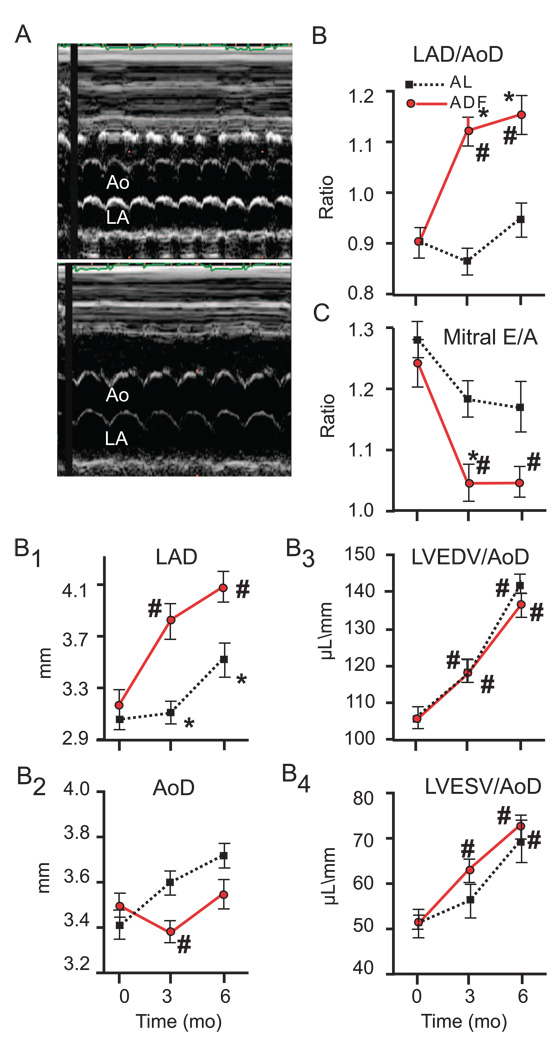
Echocardiographic indices of Left Atrial dimensions in rats on AL and ADF diets during a 6 month period. Representative M-mode Echos from rats on either the ADF or and AL diets (A), Ao – aorta, LA – left atrium; Ratio of left atral diameter (LAD) to aortic diameter (AoD) (B); LAD (B1); AoD (B2); Ratio of EDV to AoD (B3) and ESV to AoD (B4). Doppler-measured mitral flow velocity (C). Statistical symbols are same as in Figure 1.
Figure 4
Figure 4
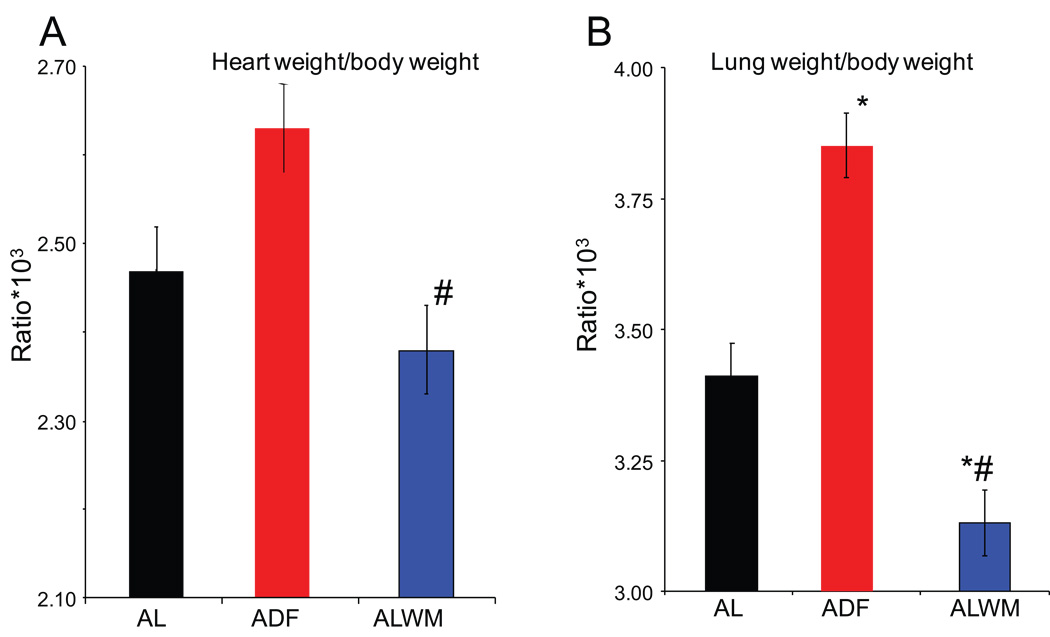
Gross pathology postmortem comparisons of rats on the AL and ADF diets. (A) Heart weight/body weight ratio of AL and ADF groups after 6 months on the respective diets, and of 4 month-old AL rats (AL weight matched control for ADF, ALWM). (B) Lung weight/body weight of the same groups. *p<0.05 vs AL; #p<0.05 compared to the ADF values (ANOVA with Bonferroni post hoc comparison).
Figure 5
Figure 5
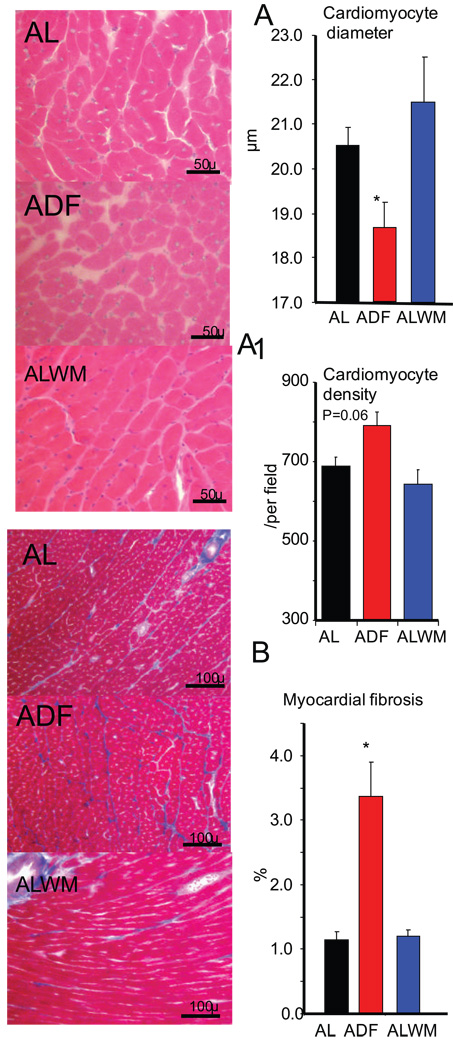
Representative histological samples and results of measurements of cardiomyocyte size and density (A, A1, H&E staining) and of myocardial fibrosis (B, Masson staining) for AL, ADF, and ALWM groups. *p<0.05 compared to the ADF and ALWM values (ANOVA with Bonferroni post hoc comparison).
Figure 6
Figure 6
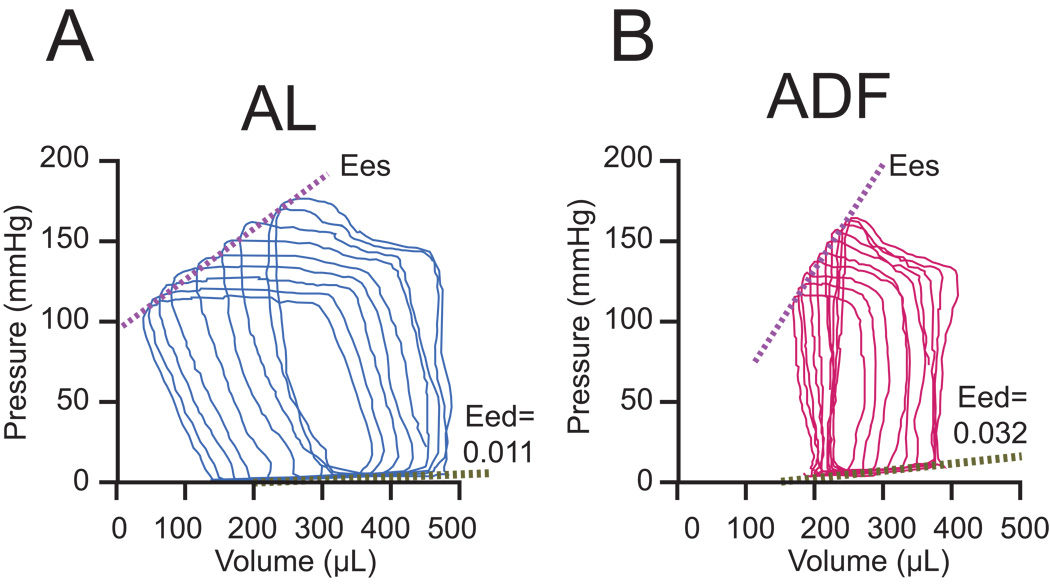
Pressure-volume loops shift during preload reduction in representative animals from AL (A) and ADF (B) groups. Eed values belong to presented animals.
Figure 7
Figure 7
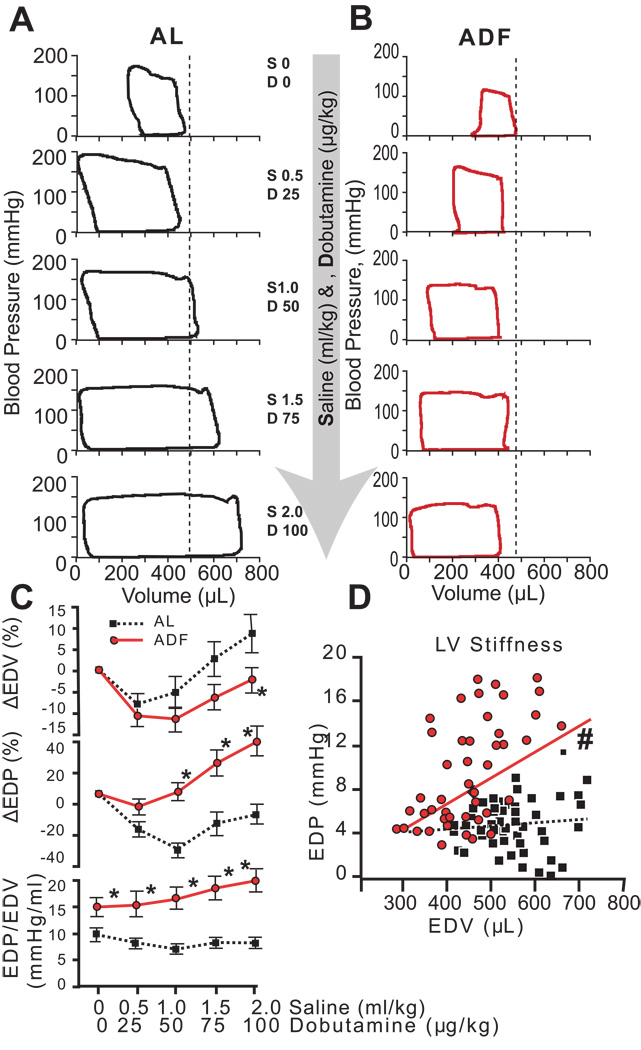
Hemodynamic measurements during dobutamine-volume stress test. Representative series of pressure-volume loops for AL (A) and ADF (B) groups. Consecutive PV loops from top to bottom represent recordings at baseline (top row) and during cumulative stages of increased stimulation from 0.5 mL/kg of saline (S) and 25 µg/kg of Dobutamine (D, second row) to 2.0 mL/kg of saline and 100 µg/kg of Dobutamine (last row). Vertical dotted lines delineate the end-diastolic volumes at baselines; C (upper and middle panels) - average enddiastolic volume and end-diastolic pressure changes relative to a baseline respectively as a function of dobutamine-volume load intensity in AL and ADF groups; C (lower panel) - average end-diastolic pressure/end-diastolic volume ratio (LV stiffness) during increasing stimulation in AL and ADF groups; D - end-diastolic pressure as a function of end-diastolic volume (LV stiffness) during stress test. Statistical symbols are same as in Figure 1.
Figure 8
Figure 8
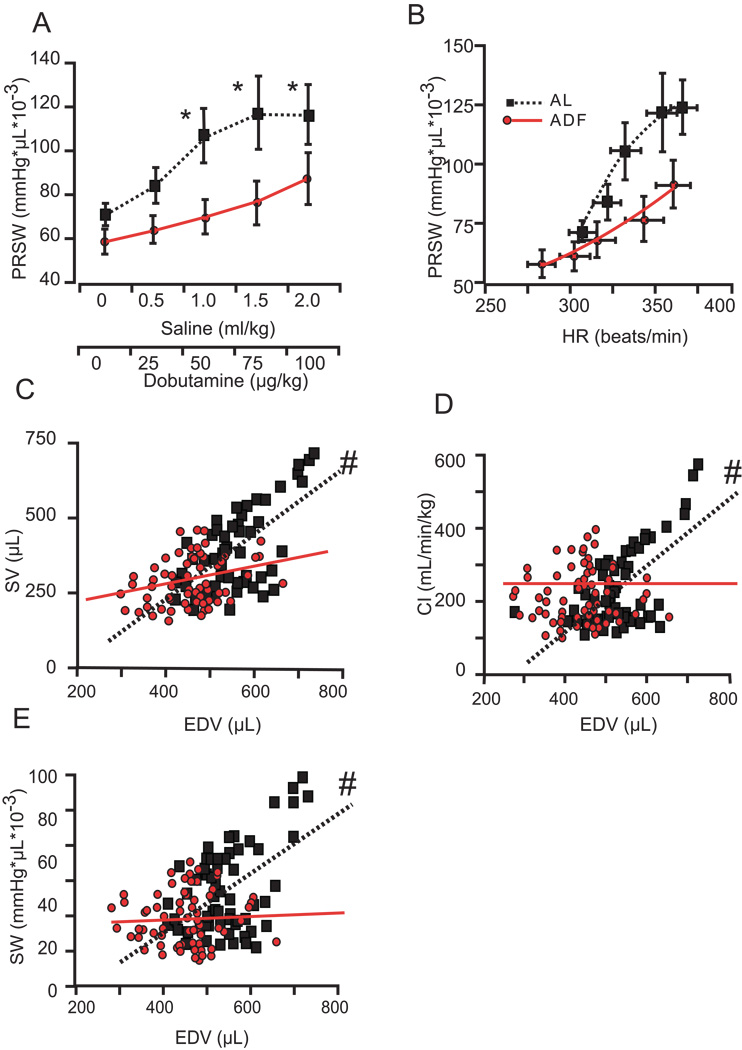
Additional hemodynamic measurements during a stress test. PRSW (load independent LV work) as a function of dobutamine-volume load intensity (A) or increased HR (B) in AL and ADF groups; C–F - CO, CI, SV, and SW respectively as a function of increased EDV in AL and ADF during the stress test. Statistical symbols are same as in Figure 1.

References

    1. Martin B, Mattson MP, Maudsley S. Caloric restriction and intermittent fasting: two potential diets for successful brain aging. Ageing Res Rev. 2006;5:332–353. Review. - PMC - PubMed
    1. Varady KA, Hellerstein MK. Alternate-day fasting and chronic disease prevention: a review of human and animal trials. Am J Clin Nutr. 2007;86:7–13. Review. - PubMed
    1. Colman RJ, Anderson RM, Johnson SC, Kastman EK, Kosmatka KJ, Beasley TM, et al. Caloric restriction delays disease onset and mortality in rhesus monkeys. Science. 2009;325(5937):201–204. - PMC - PubMed
    1. Anson RM, Guo Z, de Cabo R, Iyun T, Rios M, Hagepanos A, et al. Intermittent fasting dissociates beneficial effects of dietary restriction on glucose metabolism and neuronal resistance to injury from calorie intake. Proc Natl Acad Sci U S A. 2003;100:6216–6220. - PMC - PubMed
    1. Wan R, Camandola S, Mattson MP. Intermittent fasting and dietary supplementation with 2-deoxy-D-glucose improve functional and metabolic cardiovascular risk factors in rats. FASEB J. 2003;17:1133–1134. - PubMed

Publication types