


In utero life and epigenetic predisposition for disease
- PMID: 20933126
- PMCID: PMC3923648
- DOI: 10.1016/B978-0-12-380864-6.00003-1
In utero life and epigenetic predisposition for disease
Abstract
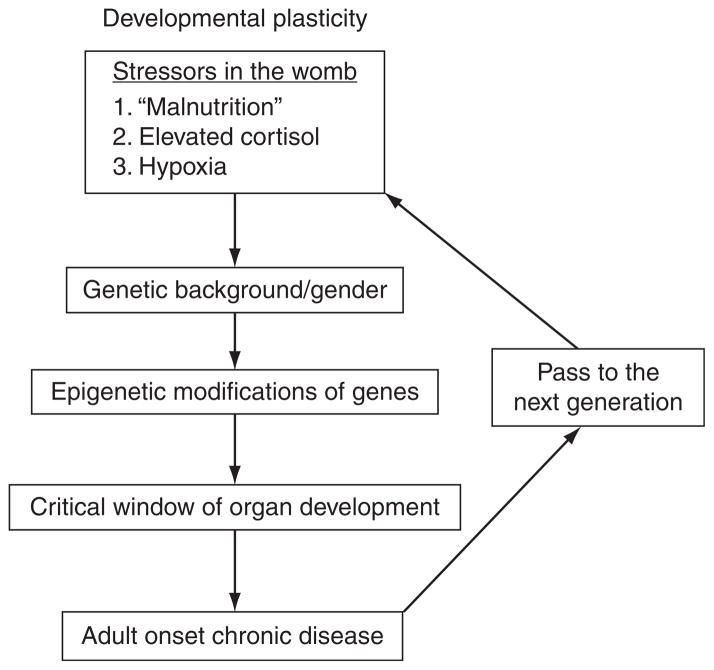
Regulatory regions of the human genome can be modified through epigenetic processes during prenatal life to make an individual more likely to suffer chronic diseases when they reach adulthood. The modification of chromatin and DNA contributes to a larger well-documented process known as "programming" whereby stressors in the womb give rise to adult onset diseases, including cancer. It is now well known that death from ischemic heart disease is related to birth weight; the lower the birth weight, the higher the risk of death from cardiovascular disease as well as type 2 diabetes and osteoporosis. Recent epidemiological data link rapid growth in the womb to metabolic disease and obesity and also to breast and lung cancers. There is increasing evidence that "marked" regions of DNA can become "unmarked" under the influence of dietary nutrients. This gives hope for reversing propensities for cancers and other diseases that were acquired in the womb. For several cancers, the size and shape of the placenta are associated with a person's cardiovascular and cancer risks as are maternal body mass index and height. The features of placental growth and nutrient transport properties that lead to adult disease have been little studied. In conclusion, several cancers have their origins in the womb, including lung and breast cancer. More research is needed to determine the epigenetic processes that underlie the programming of these diseases.
Copyright © 2010 Elsevier Inc. All rights reserved.
Figures
References
-
- Albert M, Peters AH. Genetic and epigenetic control of early mouse development. Curr Opin Genet Dev. 2009;19:113–121. - PubMed
-
- Antoniades L, MacGregor AJ, Andrew T, Spector TD. Association of birth weight with osteoporosis and osteoarthritis in adult twins. Rheumatology. 2003;42:791–796. - PubMed
-
- Baker J, Workman M, Bedrick E, Frey MA, Hurtado M, Pearson O. Brains versus brawn: An empirical test of Barker’s brain sparing model. Am J Hum Biol. 2010;22:206–215. - PubMed
-
- Balch C, Nephew KP, Huang TH, Bapat SA. Epigenetic “bivalently marked” process of cancer stem cell-driven tumorigenesis. Bioessays. 2007;29:842–845. - PubMed
Publication types
MeSH terms
Substances
Grants and funding
LinkOut - more resources
Full Text Sources
Medical
