. 2010 Nov 23;28(50):8015-25.
doi: 10.1016/j.vaccine.2010.08.106. Epub 2010 Oct 8.

NS-based live attenuated H1N1 pandemic vaccines protect mice and ferrets

Affiliations

NS-based live attenuated H1N1 pandemic vaccines protect mice and ferrets

Bin Zhou et al. Vaccine. .

Abstract

Although vaccines against influenza A virus are the most effective method to combat infection, it is clear that their production needs to be accelerated and their efficacy improved. We generated live attenuated human influenza A vaccines (LAIVs) by rationally engineering mutations directly into the genome of a pandemic-H1N1 virus. Two LAIVs (NS1-73 and NS1-126) were based on the success of LAIVs for animal influenza A viruses. A third candidate (NSΔ5) is a unique NS-mutant that has never been used as a LAIV. The vaccine potential of each LAIV was determined through analysis of attenuation, interferon production, immunogenicity, and their ability to protect mice and ferrets. This study demonstrates that NSΔ5 is an ideal LAIV candidate, provides important information on the effects that different NS mutations have on the pandemic-H1N1 virus and shows that LAIVs can be engineered directly from the genomes of emerging/circulating influenza A viruses.


Figures

Fig. 1
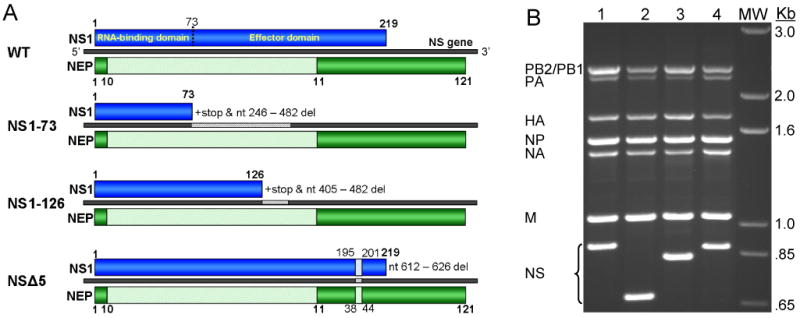
Fig. 1. Engineering NS-LAIV candidates and controls
(A) Schematic diagram NS antigenomic RNA (positive sense, cRNA) depicting the WT H1N1pdm and the attenuating NS mutations designed to create NS-LAIV candidates. NS1 protein is directly translated from the full length mRNA and is shown on the top of the gene; NEP protein is translated from spliced mRNA and is illustrated below the gene. Selected amino acid positions are labeled for NS1 and NEP. LAIV candidates NS1-73, NS1-126 express truncated NS1 but intact NEP; NSΔ5 expresses NS1 and NEP proteins each having a five amino acid in-frame deletion. (B) Genomic amplification of the WT and NS-LAIV candidates. The viral genomes were amplified by M-RTPCR and the length of the NS vRNA amplicons was examined by subsequent agarose gel electrophoresis and staining with ethidium bromide. Lane 1, WT; Lane 2, NS1-73; Lane 3, NS1-126; Lane 4, NSΔ5; lane MW, 1Kb+ DNA ladder (Invitrogen). The viral gene segment amplified is listed to the left and length of DNA marker ladder is shown on the right.
Fig. 2
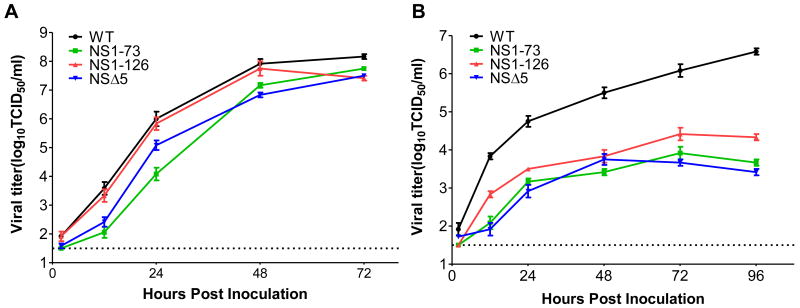
Fig. 2. Replication of NS-LAIV candidates is inhibited under IFN competent culture conditions
(A) MDCK cells were inoculated with an MOI of 0.002 TCID50/cell and the culture supernatants were collected at 2, 12, 24, 48 and 72 hpi. (B) A549 cells were inoculated with an MOI of 0.01 TCID50/cell, the culture supernatants were collected at 2, 12, 24, 48, 72 and 96 hpi. The viral titer in culture supernatants was determined by TCID50 assay using MDCK cells. The limit of detection (LOD) of these assays is indicated by the dotted line. The error bars were calculated using standard error of the mean (SEM) of triplicate assays.
Fig. 3
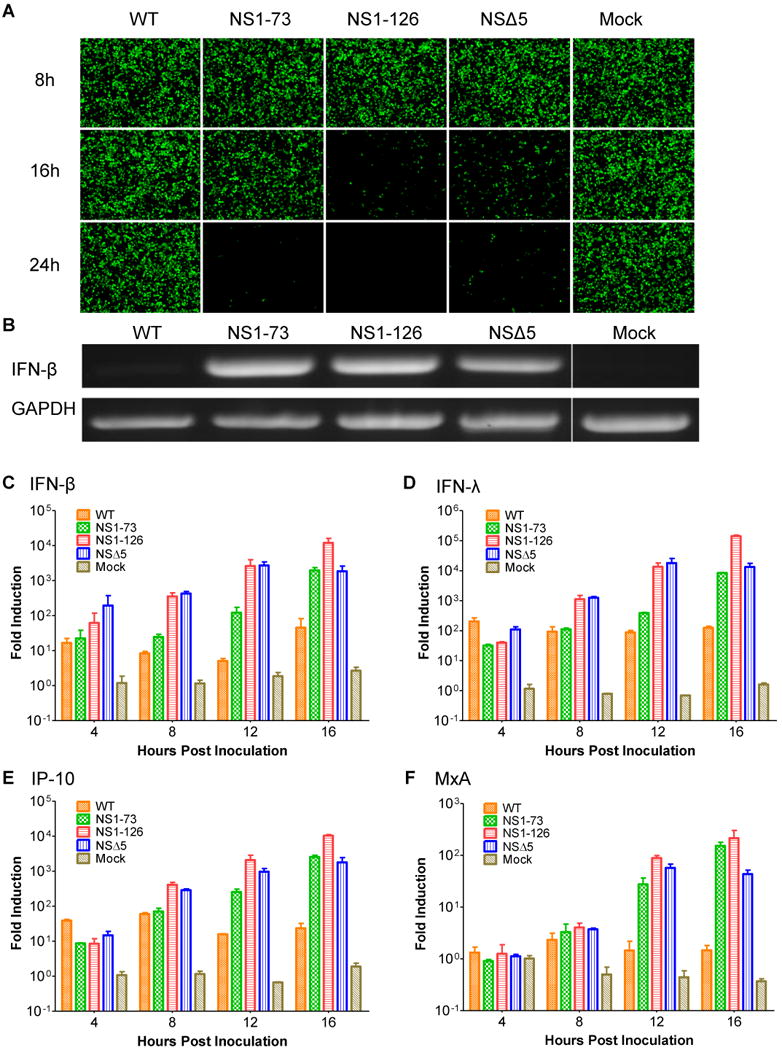
Fig. 3. NS-LAIVs Induce IFN and ISGs in Human Cells
(A) Confluent A549 cells were inoculated with the recombinant viruses at an MOI of 4 TCID50/cell. Supernatants were collected at 8, 16 and 24 hpi, UV-inactivated, transferred to naive A549 cells, and incubated for 24h. The treated A549 cells were subsequently inoculated with VSV-GFP (MOI=2) and GFP expression in cells was visualized by fluorescence microscopy at 4 hpi. (B) RT-PCR analysis of IFN-β and GAPDH mRNAs in virus infected cells at 24hpi. (C-F) Confluent A549 cells were inoculated with the recombinant viruses at MOI of 4. Total cellular RNA was extracted from the inoculated cells at 4, 8, 12, 16 hpi and the levels of IFN-β (C), IL-29 (IFN-λ (D)), IP-10 (E) and MxA (F) mRNA were determined by quantitative RT-PCR. Error bars indicate the SEM of triplicate assays.
Fig. 4
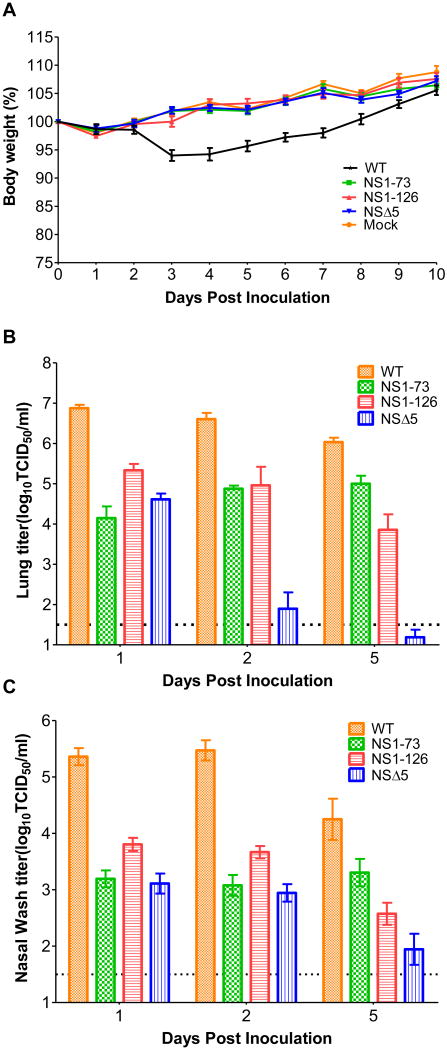
Fig. 4. NS-LAIV candidates have different levels of attenuation in mice
6 week-old female BALB/cJ mice were inoculated intranasally with 105 TCID50 of WT, the NS-LAIVs, or were mock inoculated. (A) Body weight of inoculated mice (n=12/group) was recorded daily and is represented as the percent of the animals weight on the day of inoculation (day 0). (B) Viral titers in the lung homogenates of inoculated mice (n=6/group) were determined for each mouse by TCID50 assay at 1, 2, and 5 dpi. (C) Viral titers from nasal airway of inoculated mice (n=9/group). The average of each group is shown with error bars determined by SEM, and the limit of detection for virus titration is indicated by the dotted line (B, C).
Fig 5
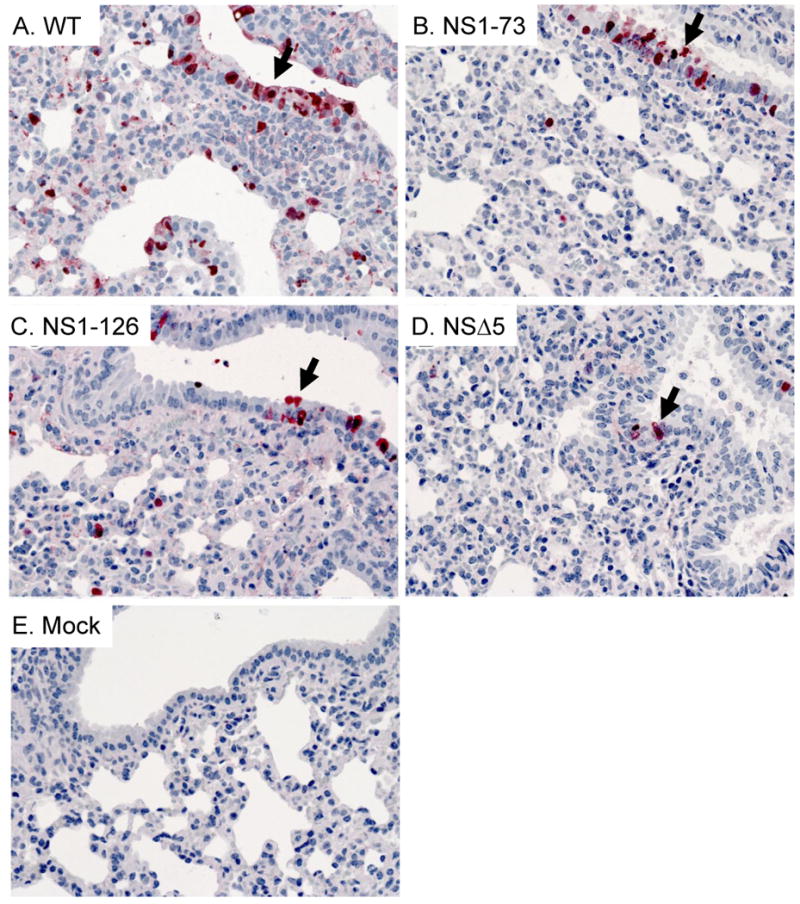
Fig 5. NS-LAIV candidates show similar cell tropism but reduced pathogenesis in mouse lungs
Viral NP antigens are detected in infected bronchiolar epithelial cells (upper right in each panel) and alveolar lining cells in mice inoculated with A) WT, B) NS1-73, C) NS1-126, D) NSΔ5, or E) mock (arrows indicate infected epithelial cells in the bronchioles) at 2 dpi. All images, except D, are representative of observations from sections obtained from multiple animals (n=3/group). NP antigen was less abundant in mice inoculated with NSΔ5, so an image (D) illustrating some antigen positive cells was selected.
Fig 6
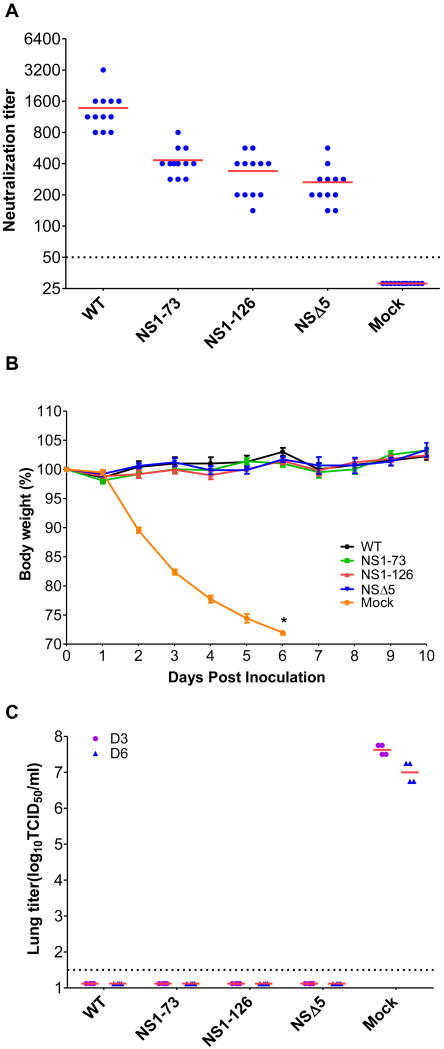
Fig 6. NS-LAIV candidates protect mice from lethal infection
Groups of mice (n=12/group) were immunized by intranasal inoculation with the wild-type (WT), the NS-LAIVs (NS1-73, NS1-126, or NSΔ5) or inoculation media alone (Mock). (A) Neutralizing antibody levels in serum collected at 21 days post-immunization were determined by microneutralization assay (each dot represents an individual mouse). (B) Mice were challenged intranasally, 30 days post-immunization, with 5×10⁴ TCID50 (∼100 LD50) of a lethal mouse adapted variant of NY1682, and their weight was monitored for 10 days post challenge, error bars represent ± SEM (days 1-3, n=12; days 4-6, n=8; days 7-10 n=4). * Only 4/8 mice remained in the mock immunized group on day 6 post challenge because 4 mice were euthanized for humane reasons on day 5, and the remaining animals were euthanized on day 6. (C) Viral titers in the lungs were determined at 3 and 6 days post challenge. Each dot represents the virus titer of an individual mouse (n=4/group). Mock indicates animals that were mock-immunized and subsequently challenged. The LOD of the assays is indicated by the dotted line (A, & C). The graphs are representative of two independent experiments.
Fig 7
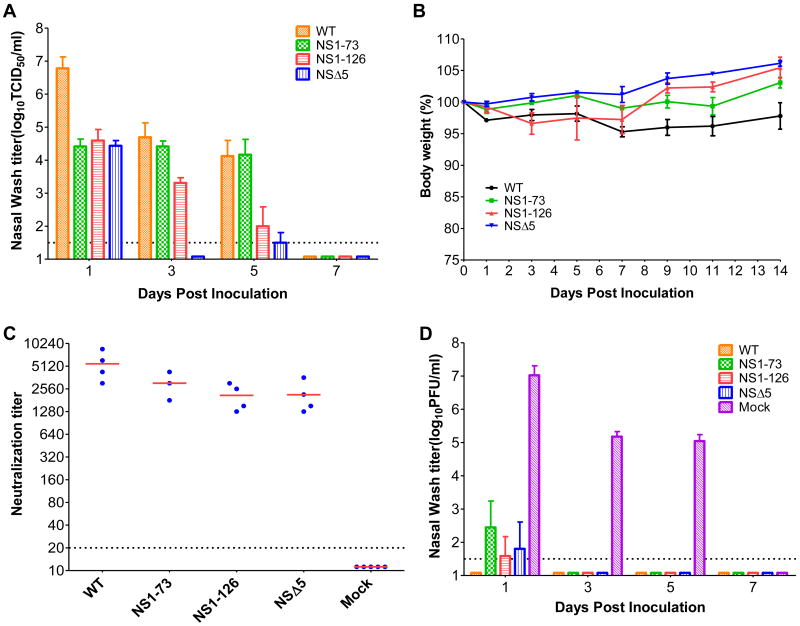
Fig 7. NS-LAIV candidates are attenuated in ferrets and protect from challenge
Ferrets were inoculated intranasally with 106.5 TCID50 of the various recombinant viruses. (A) Virus shedding from the nasal airway of the infected ferrets was determined by TCID50 assay of nasal washes collected at 1, 3, 5 and 7 dpi. (B) Body weight of the inoculated ferrets (n=3-4/group) was recorded on alternate days and is represented as the mean percent of initial body weight (day 0). (C) Neutralizing antibody levels in sera isolated 6.5 weeks post immunization was determined by micro-neutralization assay. (D) 6.5 weeks post immunization, ferrets were challenged with 106 PFU of A/Mexico/4482/2009 (H1N1pdm). Virus shedding from the nasal airway was determined by plaque assay of nasal washes collected at 1, 3, 5 and 7 dpc. The average of each group is shown and the error bars represent SEM. If virus titers were below the LOD (1.5 log10) they are shown as 1 log10, however they lack error bars (A, & D).

References

    1. World Health Organization. Influenza (Seasonal) Fact sheet 211. 2009. Apr 1, Available from: URL: http://www.who.int/mediacentre/factsheets/fs211/en/
    1. Palese P, Shaw ML. Orthomyxoviridae: The Viruses and Their Replication. In: Knipe DM, Howley PM, Griffin DE, Lamb RA, Straus SE, Martin MA, et al., editors. Fields Virology. 5. Philadelpha, PA: Lippincott Williams and Wilkins; 2007. pp. 1647–90.
    1. Wright PF, Neumann G, Kawaoka Y. Orthomyxoviruses. In: Knipe DM, Howley PM, Griffin DE, Lamb RA, Straus SE, Martin MA, et al., editors. Fields Virology. 5. Philadelpha, PA: Lippincott Williams and Wilkins; 2007. pp. 1691–740.
    1. Neumann G, Noda T, Kawaoka Y. Emergence and pandemic potential of swine-origin H1N1 influenza virus. Nature. 2009 Jun 18;459(7249):931–9. - PMC - PubMed
    1. Hancock K, Veguilla V, Lu X, et al. Cross-reactive antibody responses to the 2009 pandemic H1N1 influenza virus. N Engl J Med. 2009 Nov 12;361(20):1945–52. - PubMed

Publication types

MeSH terms