


Arachidonic acid: an evolutionarily conserved signaling molecule modulates plant stress signaling networks
- PMID: 20935246
- PMCID: PMC2990140
- DOI: 10.1105/tpc.110.073858
Arachidonic acid: an evolutionarily conserved signaling molecule modulates plant stress signaling networks
Abstract
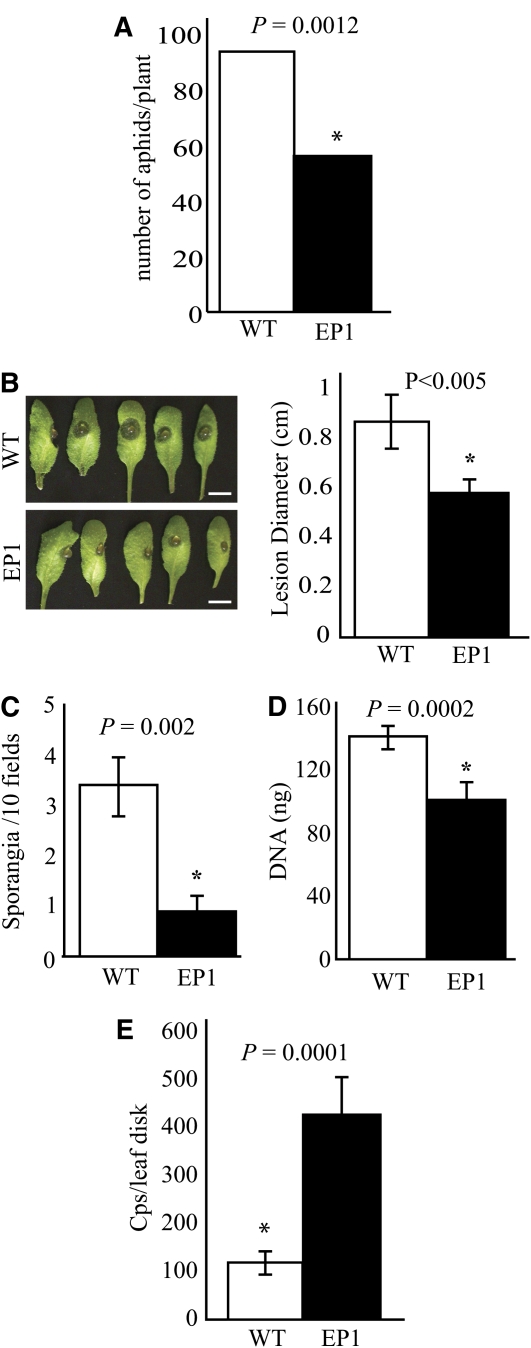
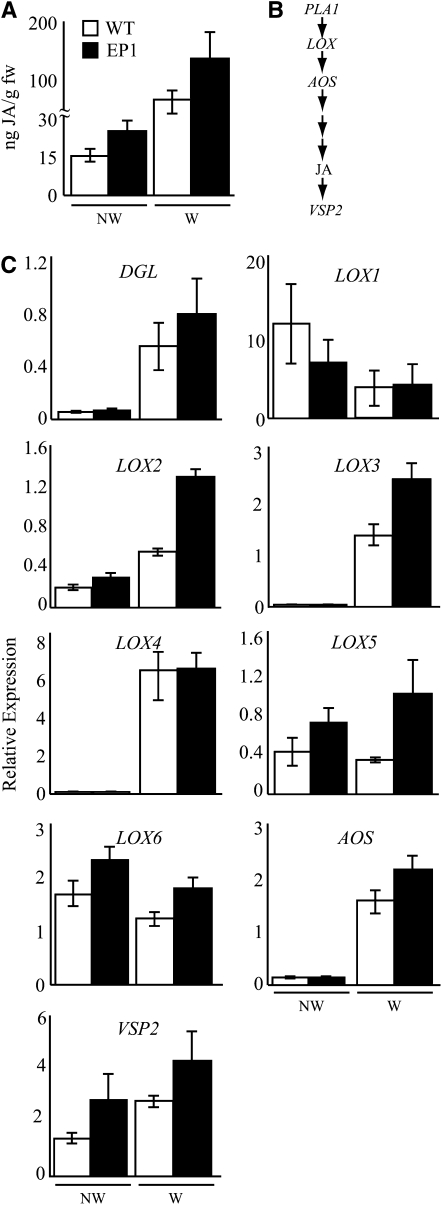
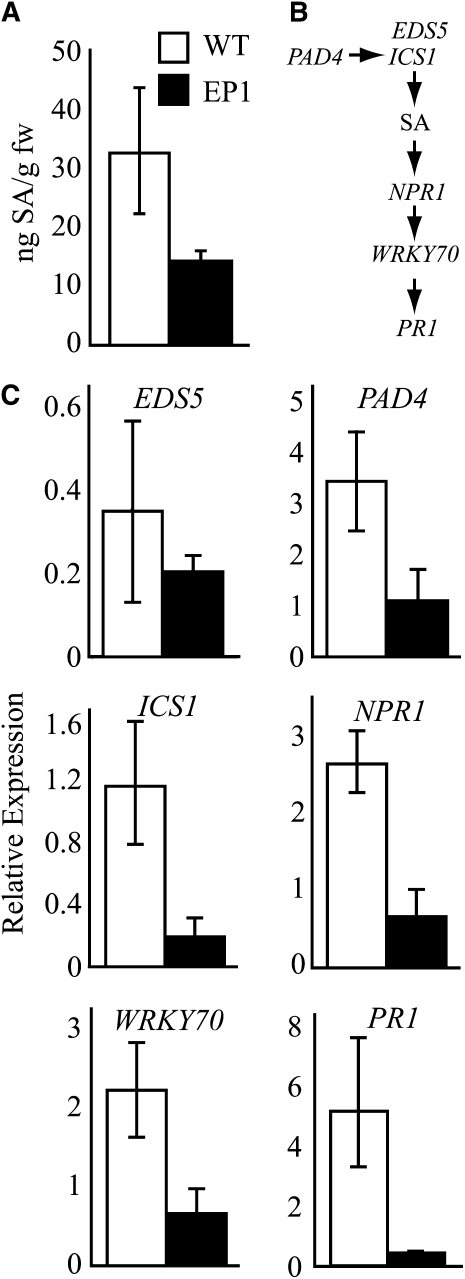
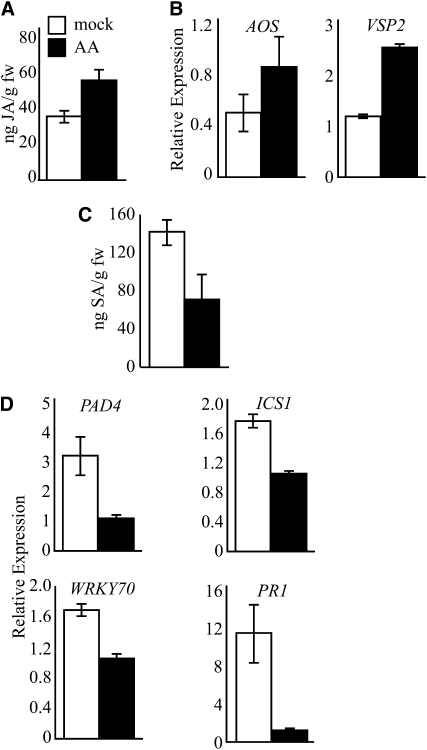
Fatty acid structure affects cellular activities through changes in membrane lipid composition and the generation of a diversity of bioactive derivatives. Eicosapolyenoic acids are released into plants upon infection by oomycete pathogens, suggesting they may elicit plant defenses. We exploited transgenic Arabidopsis thaliana plants (designated EP) producing eicosadienoic, eicosatrienoic, and arachidonic acid (AA), aimed at mimicking pathogen release of these compounds. We also examined their effect on biotic stress resistance by challenging EP plants with fungal, oomycete, and bacterial pathogens and an insect pest. EP plants exhibited enhanced resistance to all biotic challenges, except they were more susceptible to bacteria than the wild type. Levels of jasmonic acid (JA) were elevated and levels of salicylic acid (SA) were reduced in EP plants. Altered expression of JA and SA pathway genes in EP plants shows that eicosapolyenoic acids effectively modulate stress-responsive transcriptional networks. Exogenous application of various fatty acids to wild-type and JA-deficient mutants confirmed AA as the signaling molecule. Moreover, AA treatment elicited heightened expression of general stress-responsive genes. Importantly, tomato (Solanum lycopersicum) leaves treated with AA exhibited reduced susceptibility to Botrytis cinerea infection, confirming AA signaling in other plants. These studies support the role of AA, an ancient metazoan signaling molecule, in eliciting plant stress and defense signaling networks.
Figures
References
-
- Black P.N., Faergeman N.J., DiRusso C.C. (2000). Long-chain acyl-CoA-dependent regulation of gene expression in bacteria, yeast and mammals. J. Nutr. 130: 305S–309S - PubMed
-
- Blee E. (2002). Impact of phyto-oxylipins in plant defense. Trends Plant Sci. 7: 315–322 - PubMed
-
- Bostock R.M. (2005). Signal crosstalk and induced resistance: Straddling the line between cost and benefit. Annu. Rev. Phytopathol. 43: 545–580 - PubMed
-
- Bostock R.M., Kuc J.A., Laine R.A. (1981). Eicosapentaenoic and arachidonic acids from Phytophthora infestans elicit fungitoxic sesquiterpenes in the potato. Science 212: 67–69 - PubMed
-
- Bostock R.M., Schaeffer D.A., Hammerschmidt R. (1986). Comparison of elicitor activities of arachidonic acid, fatty acids and glucans from Phytophthora infestans in hypersensitivity expression in potato tuber. Physiol. Mol. Plant Pathol. 29: 349–360
Publication types
MeSH terms
Substances
LinkOut - more resources
Full Text Sources
