


Quiescent, slow-cycling stem cell populations in cancer: a review of the evidence and discussion of significance
- PMID: 20936110
- PMCID: PMC2948913
- DOI: 10.1155/2011/396076
Quiescent, slow-cycling stem cell populations in cancer: a review of the evidence and discussion of significance
Abstract
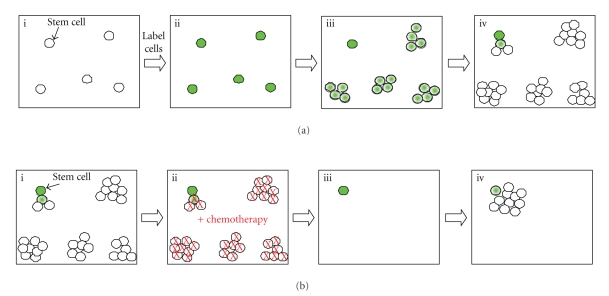
Long-lived cancer stem cells (CSCs) with indefinite proliferative potential have been identified in multiple epithelial cancer types. These cells are likely derived from transformed adult stem cells and are thought to share many characteristics with their parental population, including a quiescent slow-cycling phenotype. Various label-retaining techniques have been used to identify normal slow cycling adult stem cell populations and offer a unique methodology to functionally identify and isolate cancer stem cells. The quiescent nature of CSCs represents an inherent mechanism that at least partially explains chemotherapy resistance and recurrence in posttherapy cancer patients. Isolating and understanding the cell cycle regulatory mechanisms of quiescent cancer cells will be a key component to creation of future therapies that better target CSCs and totally eradicate tumors. Here we review the evidence for quiescent CSC populations and explore potential cell cycle regulators that may serve as future targets for elimination of these cells.
Figures
References
-
- Hanahan D, Weinberg RA. The hallmarks of cancer. Cell. 2000;100(1):57–70. - PubMed
-
- Kangsamaksin T, Heui JP, Trempus CS, Morris RJ. A perspective on murine keratinocyte stem cells as targets of chemically induced skin cancer. Molecular Carcinogenesis. 2007;46(8):579–584. - PubMed
-
- Dean M. Cancer stem cells: redefining the paradigm of cancer treatment strategies. Molecular Interventions. 2006;6(3):140–148. - PubMed
-
- Woodward WA, Chen MS, Behbod F, Rosen JM. On mammary stem cells. Journal of Cell Science. 2005;118, part 16:3585–3594. - PubMed
LinkOut - more resources
Full Text Sources
Other Literature Sources
