


Constitutively active calcineurin induces cardiac endoplasmic reticulum stress and protects against apoptosis that is mediated by alpha-crystallin-B
- PMID: 20937869
- PMCID: PMC2972971
- DOI: 10.1073/pnas.1013555107
Constitutively active calcineurin induces cardiac endoplasmic reticulum stress and protects against apoptosis that is mediated by alpha-crystallin-B
Abstract
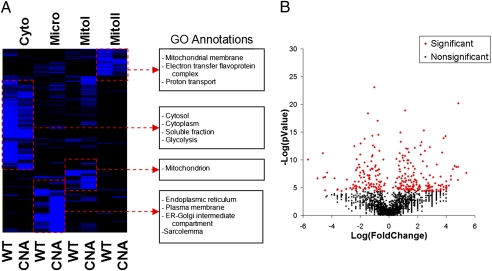
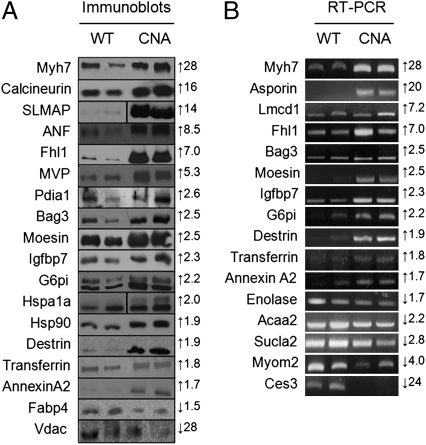
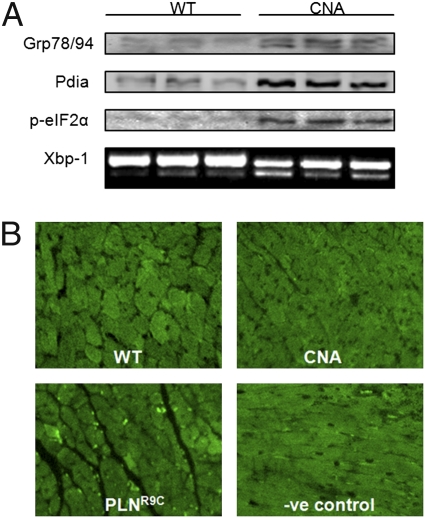
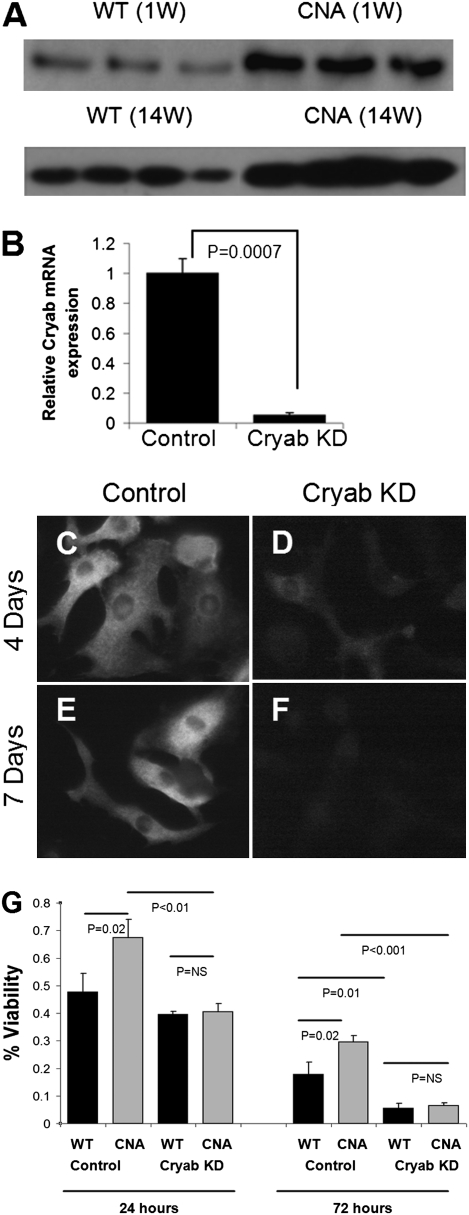
Cardiac-specific overexpression of a constitutively active form of calcineurin A (CNA) leads directly to cardiac hypertrophy in the CNA mouse model. Because cardiac hypertrophy is a prominent characteristic of many cardiomyopathies, we deduced that delineating the proteomic profile of ventricular tissue from this model might identify novel, widely applicable therapeutic targets. Proteomic analysis was carried out by subjecting fractionated cardiac samples from CNA mice and their WT littermates to gel-free liquid chromatography linked to shotgun tandem mass spectrometry. We identified 1,918 proteins with high confidence, of which 290 were differentially expressed. Microarray analysis of the same tissue provided us with alterations in the ventricular transcriptome. Because bioinformatic analyses of both the proteome and transcriptome demonstrated the up-regulation of endoplasmic reticulum stress, we validated its occurrence in adult CNA hearts through a series of immunoblots and RT-PCR analyses. Endoplasmic reticulum stress often leads to increased apoptosis, but apoptosis was minimal in CNA hearts, suggesting that activated calcineurin might protect against apoptosis. Indeed, the viability of cultured neonatal mouse cardiomyocytes (NCMs) from CNA mice was higher than WT after serum starvation, an apoptotic trigger. Proteomic data identified α-crystallin B (Cryab) as a potential mediator of this protective effect and we showed that silencing of Cryab via lentivector-mediated transduction of shRNAs in NCMs led to a significant reduction in NCM viability and loss of protection against apoptosis. The identification of Cryab as a downstream effector of calcineurin-induced protection against apoptosis will permit elucidation of its role in cardiac apoptosis and its potential as a therapeutic target.
Conflict of interest statement
The authors declare no conflict of interest.
Figures
References
-
- Kung H-C, Hoyert DL, Xu J, Murphy SL. Deaths: Final data for 2005. Natl Vital Stat Rep. 2008;56(10):1–120. - PubMed
-
- Rosamond W, et al. American Heart Association Statistics Committee and Stroke Statistics Subcommittee Heart disease and stroke statistics—2008 update: A report from the American Heart Association Statistics Committee and Stroke Statistics Subcommittee. Circulation. 2008;117:e25–e146. - PubMed
-
- MacLennan DH, Kranias EG. Phospholamban: A crucial regulator of cardiac contractility. Nat Rev Mol Cell Biol. 2003;4:566–577. - PubMed
-
- Gramolini AO, et al. Comparative proteomics profiling of a phospholamban mutant mouse model of dilated cardiomyopathy reveals progressive intracellular stress responses. Mol Cell Proteomics. 2008;7:519–533. - PubMed
Publication types
MeSH terms
Substances
Grants and funding
LinkOut - more resources
Full Text Sources
Molecular Biology Databases
Research Materials
