Dopamine activity in the lateral anterior hypothalamus modulates AAS-induced aggression through D2 but not D5 receptors
- PMID: 20939664
- PMCID: PMC3131052
- DOI: 10.1037/a0020899
Dopamine activity in the lateral anterior hypothalamus modulates AAS-induced aggression through D2 but not D5 receptors
Abstract
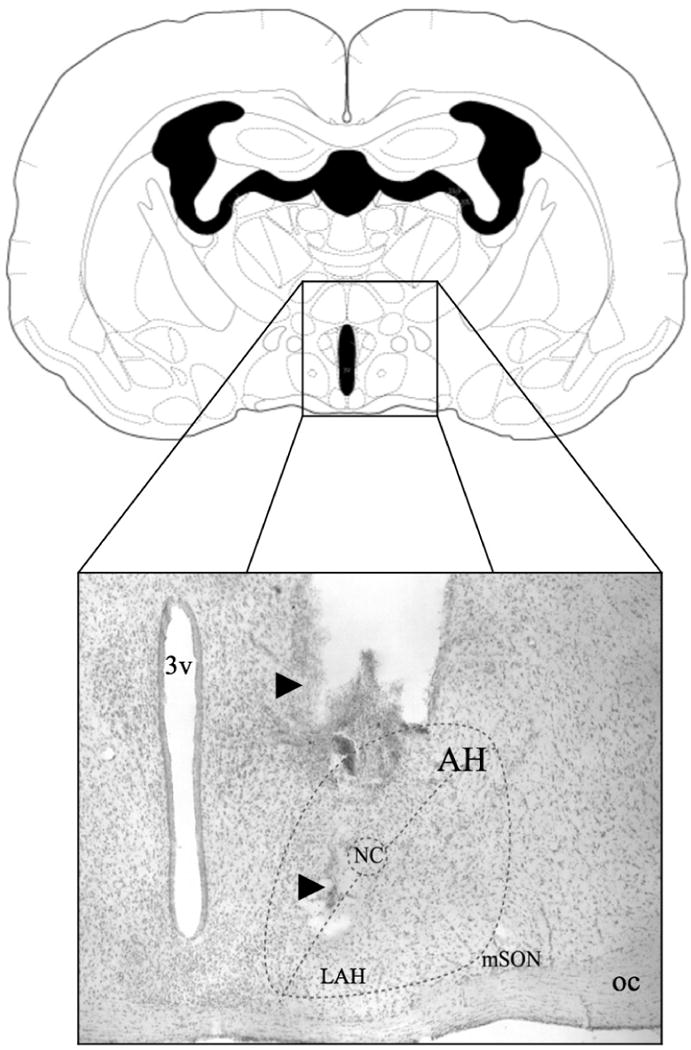
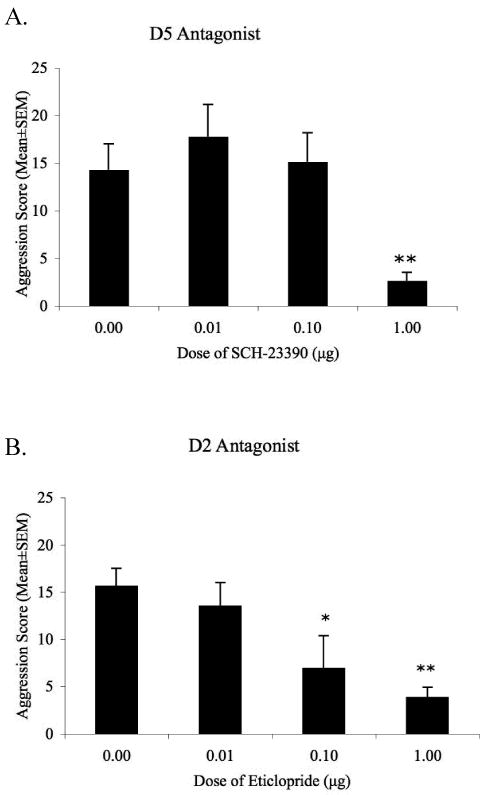
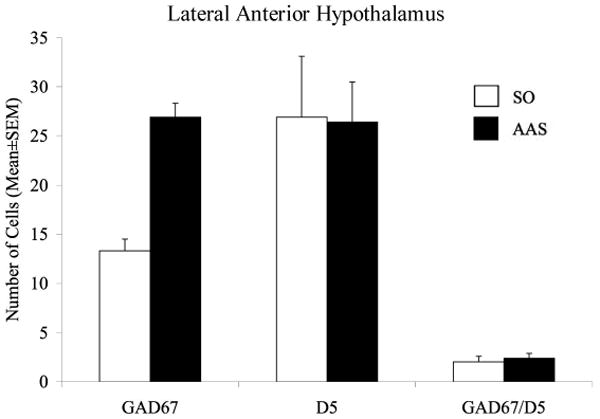
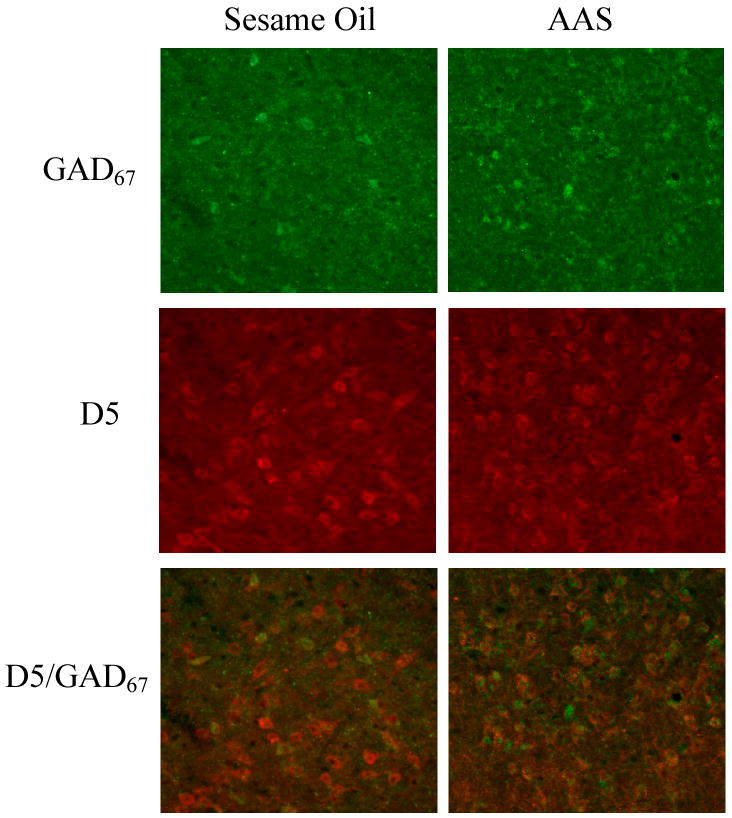
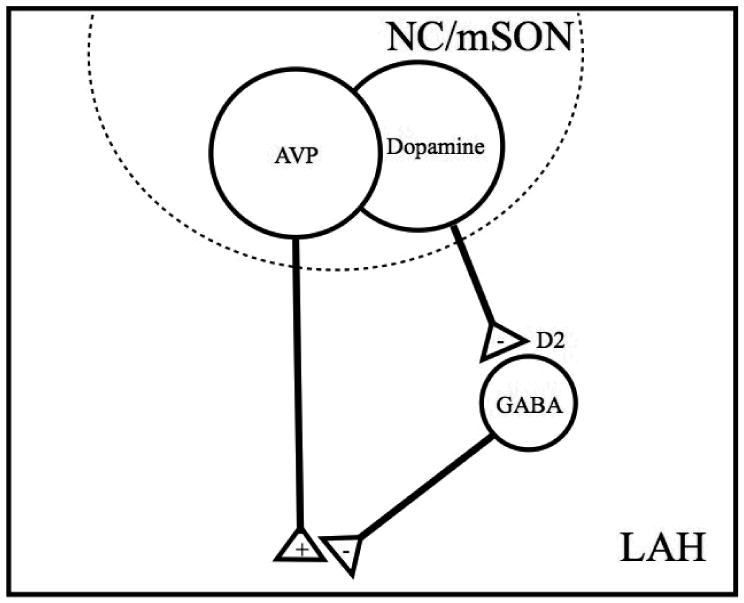
Treatment with anabolic-androgenic steroids (AAS) throughout adolescence facilitates offensive aggression in Syrian hamsters. In the anterior hypothalamus (AH), the dopaminergic neural system undergoes alterations after repeated exposure to AAS, producing elevated aggression. Previously, systemic administration of selective dopamine receptor antagonists has been shown to reduce aggression in various species and animal models. However, these reductions in aggression occur with concomitant alterations in general arousal and mobility. Therefore, to control for these systemic effects, the current studies utilized microinjection techniques to determine the effects of local antagonism of D2 and D5 receptors in the AH on adolescent AAS-induced aggression. Male Syrian hamsters were treated with AAS throughout adolescence and tested for aggression after local infusion of the D2 antagonist eticlopride, or the D5 antagonist SCH-23390, into the AH. Treatment with eticlopride showed dose-dependent suppression of aggressive behavior in the absence of changes in mobility. Conversely, while injection of SCH-23390 suppressed aggressive behavior, these reductions were met with alterations in social interest and locomotor behavior. To elucidate a plausible mechanism for the observed D5 receptor mediation of AAS-induced aggression, brains of AAS and sesame oil-treated animals were processed for double-label immunofluorescence of GAD₆₇ (a marker for GABA production) and D5 receptors in the lateral subdivision of the AH (LAH). Results indicate a sparse distribution of GAD₆₇ neurons colocalized with D5 receptors in the LAH. Together, these results indicate that D5 receptors in the LAH modulate non-GABAergic pathways that indirectly influence aggression control, while D2 receptors have a direct influence on AAS-induced aggression.
(PsycINFO Database Record (c) 2010 APA, all rights reserved).
Figures
References
-
- Arregui A, Azpiroz A, Brain PF, Simon V. Effects of two selective dopaminergic antagonists on ethologically-assessed encounters in male mice. Gen Pharmacol. 1993;24(2):353–356. - PubMed
-
- Bari AA, Pierce RC. D1-like and D2 dopamine receptor antagonists administered into the shell subregion of the rat nucleus accumbens decrease cocaine, but not food, reinforcement. Neuroscience. 2005;135(3):959–968. - PubMed
-
- Birgner C, Kindlundh-Hogberg AM, Alsio J, Lindblom J, Schioth HB, Bergstrom L. The anabolic androgenic steroid nandrolone decanoate affects mRNA expression of dopaminergic but not serotonergic receptors. Brain Res. 2008;1240:221–228. - PubMed
-
- Bondar NP, Kudryavtseva NN. The effects of the D1 receptor antagonist SCH-23390 on individual and aggressive behavior in male mice with different experience of aggression. Neurosci Behav Physiol. 2005;35(2):221–227. - PubMed
Publication types
MeSH terms
Substances
Grants and funding
LinkOut - more resources
Full Text Sources
Miscellaneous