


Reconstitution of gloeobacter rhodopsin with echinenone: role of the 4-keto group
- PMID: 20942439
- PMCID: PMC2995442
- DOI: 10.1021/bi1014166
Reconstitution of gloeobacter rhodopsin with echinenone: role of the 4-keto group
Abstract
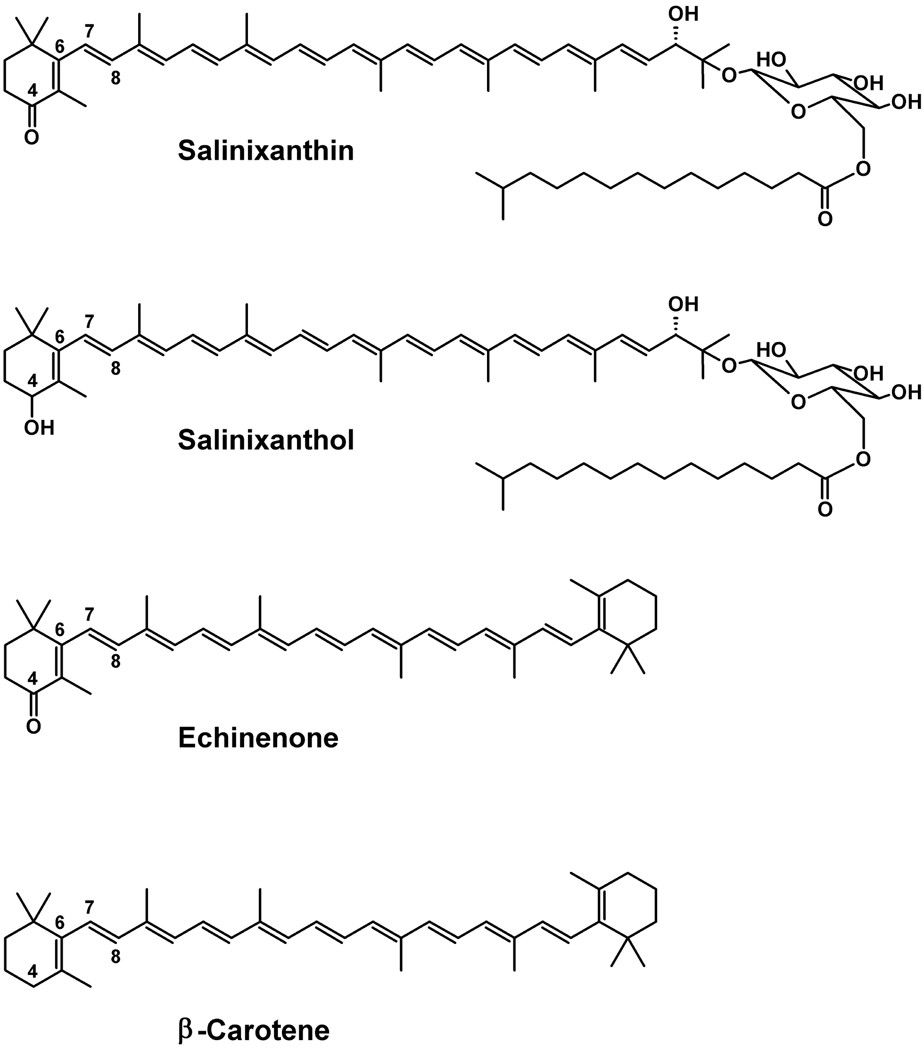
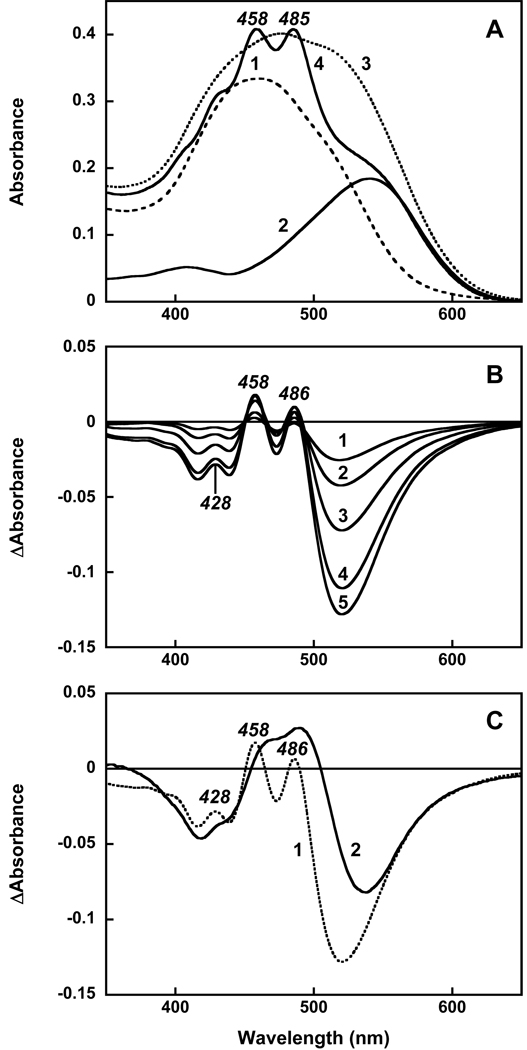
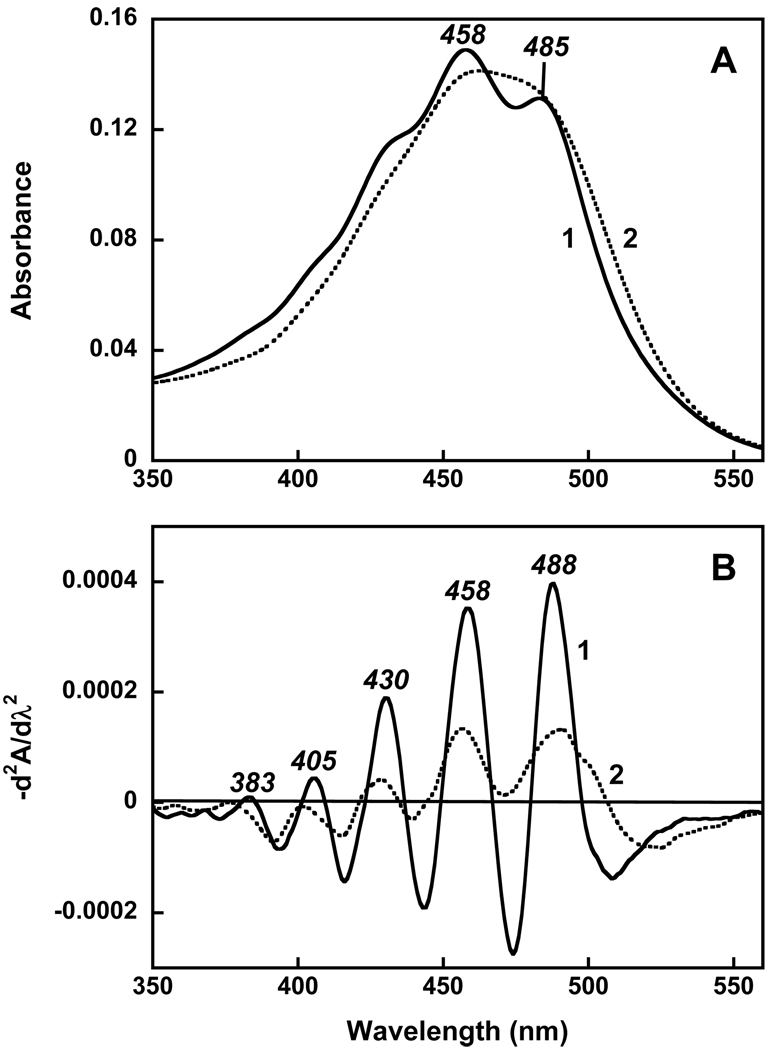
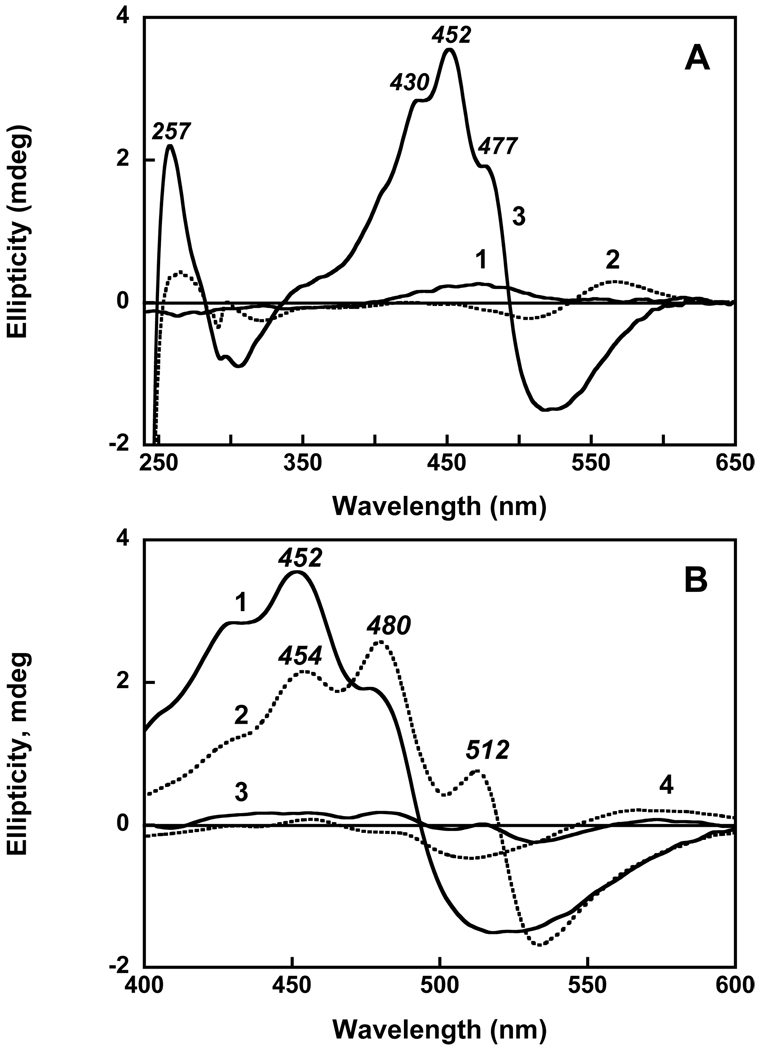
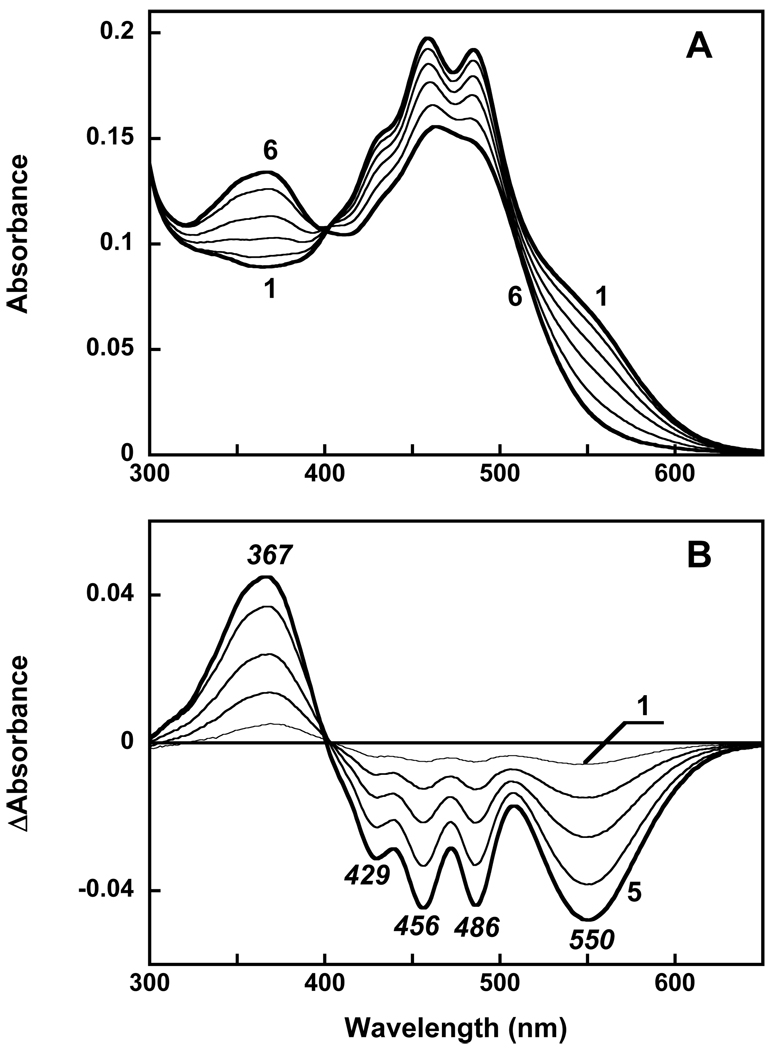
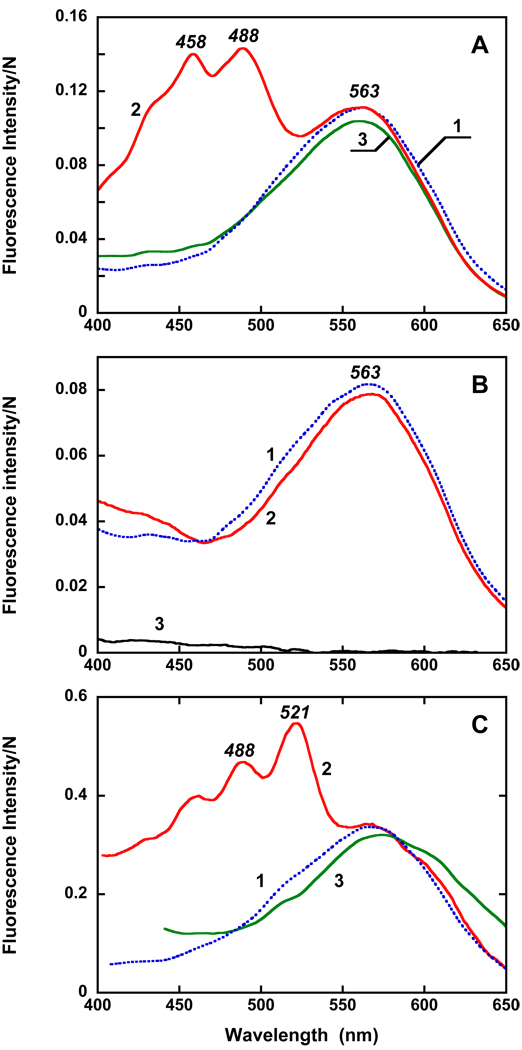
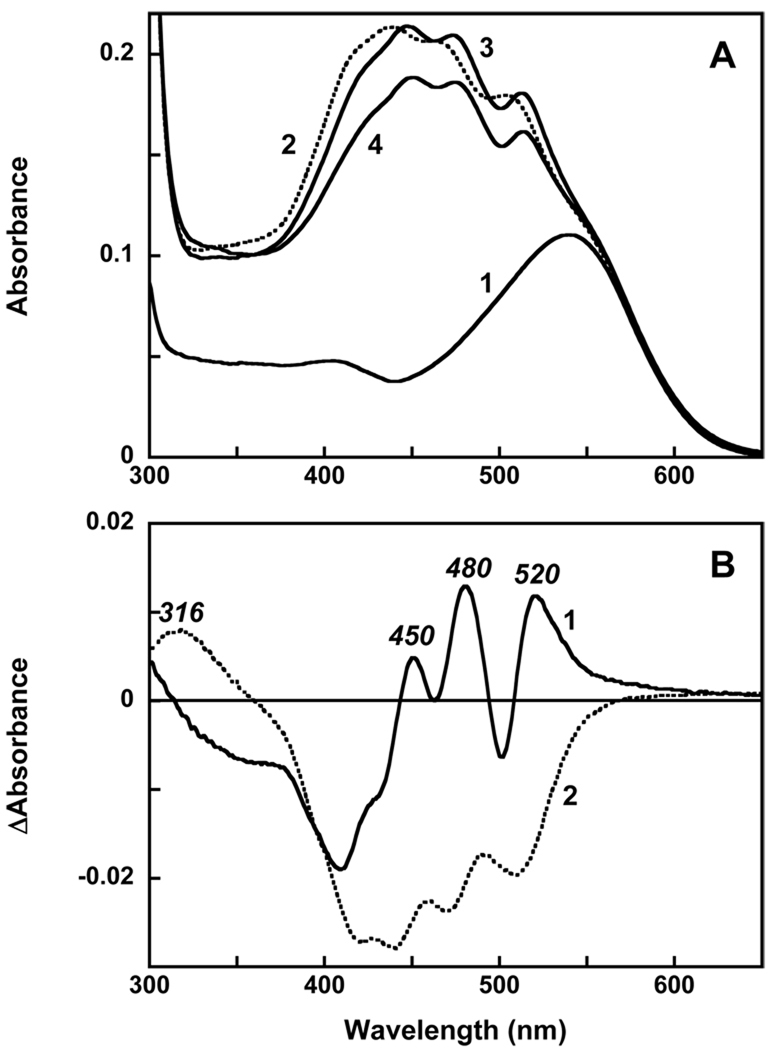
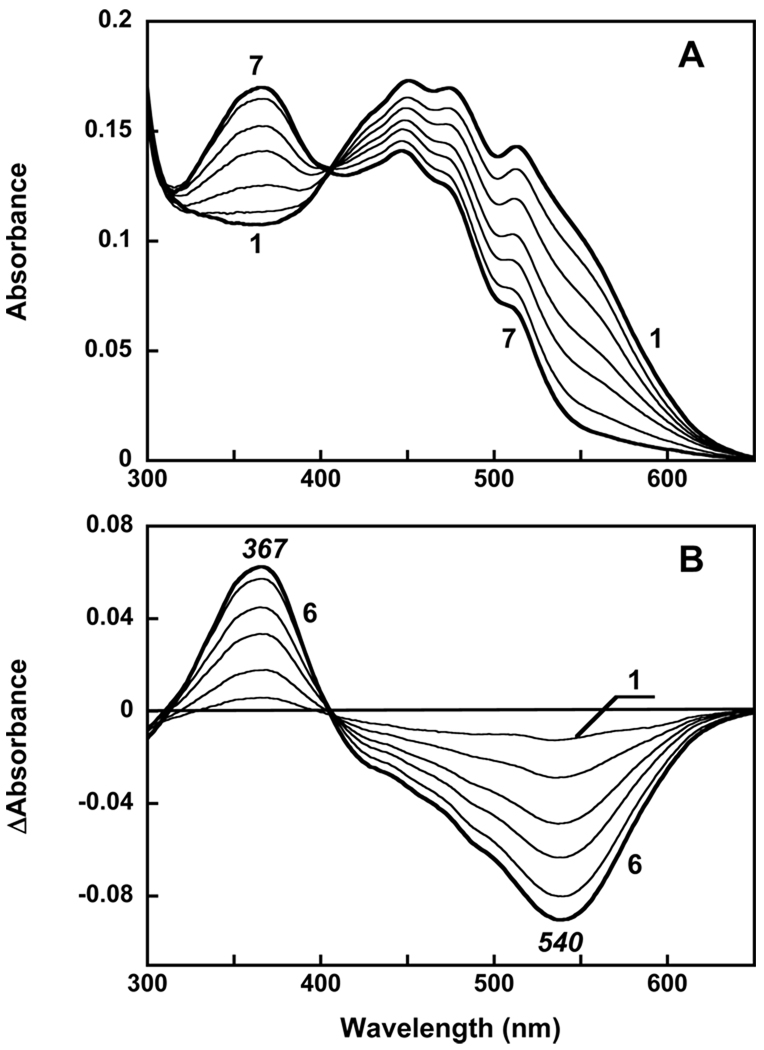
In previous work, we reconstituted salinixanthin, the C(40)-carotenoid acyl glycoside that serves as a light-harvesting antenna to the light-driven proton pump xanthorhodopsin, into a different protein, gloeobacter rhodopsin expressed in Escherichia coli, and demonstrated that it transfers energy to the retinal chromophore [Imasheva, E. S., et al. (2009) Biochemistry 48, 10948]. The key to binding of salinixanthin was the accommodation of its ring near the retinal β-ionone ring. Here we examine two questions. Do any of the native Gloeobacter carotenoids bind to gloeobacter rhodopsin, and does the 4-keto group of the ring play a role in binding? There is no salinixanthin in Gloeobacter violaceous, but a simpler carotenoid, echinenone, also with a 4-keto group but lacking the acyl glycoside, is present in addition to β-carotene and oscillol. We show that β-carotene does not bind to gloeobacter rhodopsin, but its 4-keto derivative, echinenone, does and functions as a light-harvesting antenna. This indicates that the 4-keto group is critical for carotenoid binding. Further evidence of this is the fact that salinixanthol, an analogue of salinixanthin in which the 4-keto group is reduced to hydroxyl, does not bind and is not engaged in energy transfer. According to the crystal structure of xanthorhodopsin, the ring of salinixanthin in the binding site is turned out of the plane of the polyene conjugated chain. A similar conformation is expected for echinenone in the gloeobacter rhodopsin. We suggest that the 4-keto group in salinixanthin and echinenone allows for the twisted conformation of the ring around the C6-C7 bond and probably is engaged in an interaction that locks the carotenoid in the binding site.
Figures
References
-
- Lanyi JK. Proton transfers in the bacteriorhodopsin photocycle. Biochim. Biophys. Acta. 2006;1757:1012–1018. - PubMed
-
- Béjà O, Aravind L, Koonin EV, Suzuki MT, Hadd A, Nguyen LP, Jovanovich SB, Gates CM, Feldman RA, Spudich JL, Spudich EN, DeLong EF. Bacterial rhodopsin: Evidence for a new type of phototrophy in the sea. Science. 2000;289:1902–1906. - PubMed
-
- Drachev LA, Frolov VN, Kaulen AD, Liberman EA, Ostroumov SA, Plakunova GV, Semenov AY, Skulachev VP. Reconstitution of biological molecular generators of electric current. Bacteriorhodopsin. J. Biol. Chem. 1976;251:7059–7065. - PubMed
-
- Michel H, Oesterhelt D. Light-induced changes of the pH gradient and the membrane potential in Halobacterium halobium. FEBS Lett. 1980;65:175–178. - PubMed
Publication types
MeSH terms
Substances
Grants and funding
LinkOut - more resources
Full Text Sources
Other Literature Sources
Miscellaneous
