


Elevated seawater temperature causes a microbial shift on crustose coralline algae with implications for the recruitment of coral larvae
- PMID: 20944682
- PMCID: PMC3105747
- DOI: 10.1038/ismej.2010.152
Elevated seawater temperature causes a microbial shift on crustose coralline algae with implications for the recruitment of coral larvae
Abstract
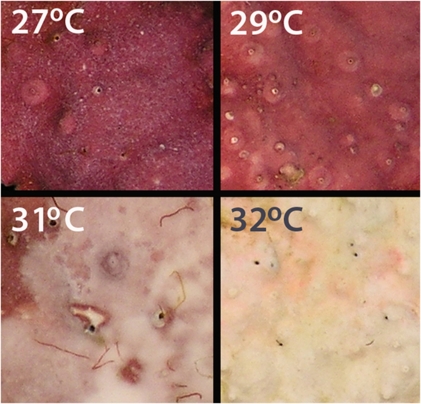
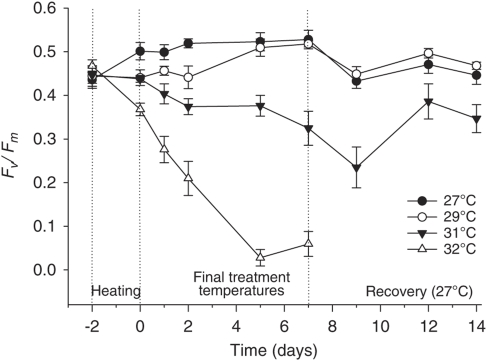
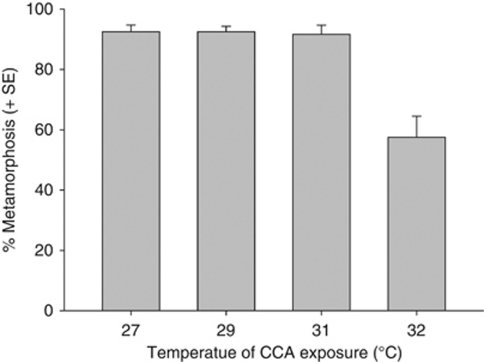
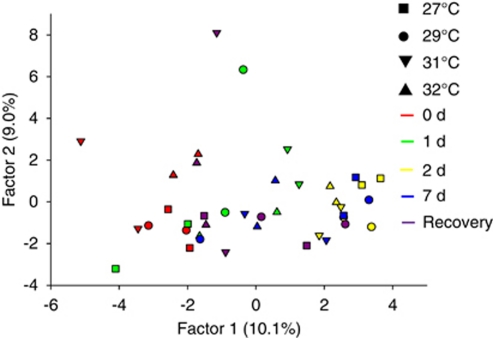
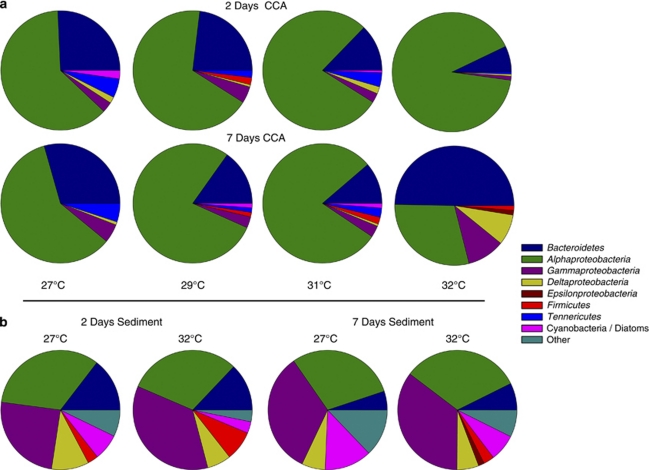
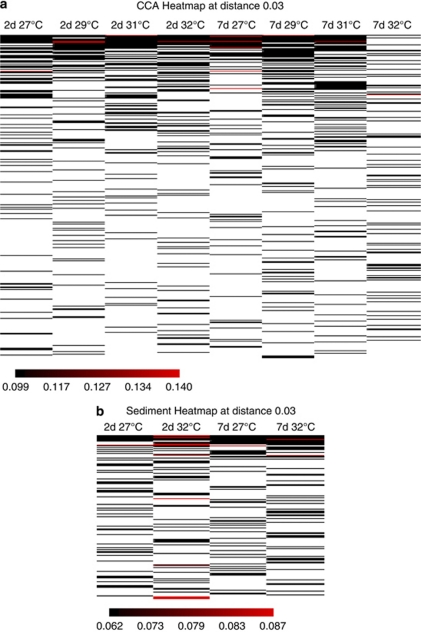
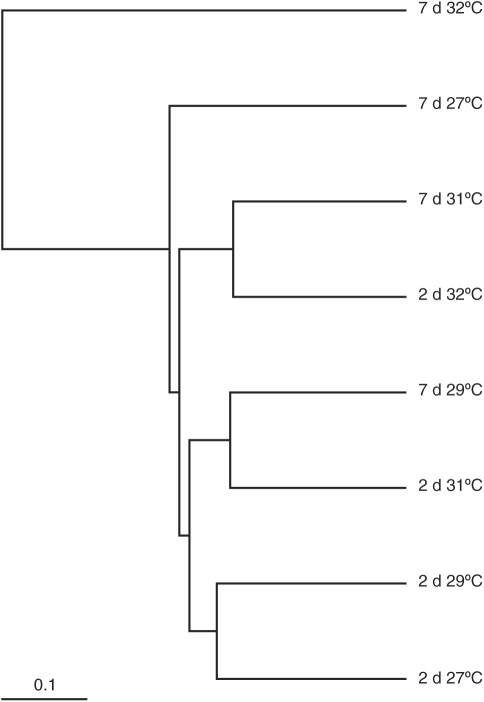
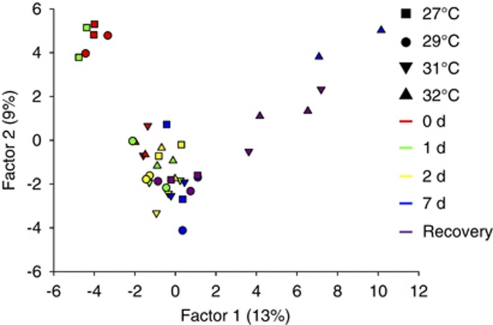
Crustose coralline algae (CCA) are key reef-building primary producers that are known to induce the metamorphosis and recruitment of many species of coral larvae. Reef biofilms (particularly microorganisms associated with CCA) are also important as settlement cues for a variety of marine invertebrates, including corals. If rising sea surface temperatures (SSTs) affect CCA and/or their associated biofilms, this may in turn affect recruitment on coral reefs. Herein, we report that the CCA Neogoniolithon fosliei, and its associated microbial communities do not tolerate SSTs of 32 °C, only 2-4 °C above the mean maximum annual SST. After 7 days at 32 °C, the CCA exhibited clear signs of stress, including bleaching, a reduction in maximum quantum yield (F(v)/F(m)) and a large shift in microbial community structure. This shift at 32 °C involved an increase in Bacteroidetes and a reduction in Alphaproteobacteria, including the loss of the primary strain (with high-sequence similarity to a described coral symbiont). A recovery in F(v)/F(m) was observed in CCA exposed to 31 °C following 7 days of recovery (at 27 °C); however, CCA exposed to 32 °C did not recover during this time as evidenced by the rapid growth of endolithic green algae. A 50% reduction in the ability of N. fosliei to induce coral larval metamorphosis at 32 °C accompanied the changes in microbiology, pigmentation and photophysiology of the CCA. This is the first experimental evidence to demonstrate how thermal stress influences microbial associations on CCA with subsequent downstream impacts on coral recruitment, which is critical for reef regeneration and recovery from climate-related mortality events.
Figures
References
-
- Berkelmans R, Willis BL. Seasonal and local spatial patterns in the upper thermal limits of corals on the inshore Central Great Barrier Reef. Coral Reefs. 1999;18:219–228.
-
- Cooney RP, Pantos O, Le Tissier MD, Barer MR, O'Donnell AG, Bythell JC. Characterization of the bacterial consortium associated with black band disease in coral using molecular microbiological techniques. Environ Microbiol. 2002;4:401–413. - PubMed
MeSH terms
LinkOut - more resources
Full Text Sources
Molecular Biology Databases
