Pathogenesis of two strains of avian paramyxovirus serotype 2, Yucaipa and Bangor, in chickens and turkeys
- PMID: 20945787
- PMCID: PMC3428046
- DOI: 10.1637/9380-041910-Reg.1
Pathogenesis of two strains of avian paramyxovirus serotype 2, Yucaipa and Bangor, in chickens and turkeys
Abstract
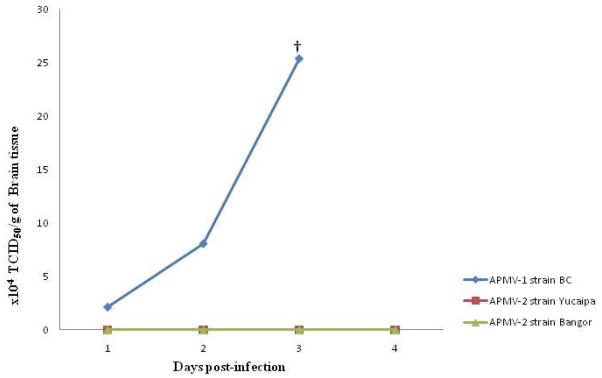
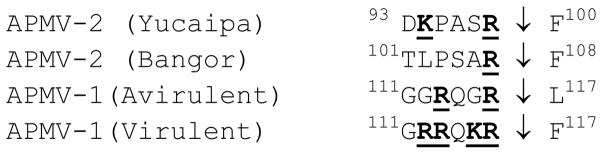
Nine serologic types of avian paramyxovirus (APMV) have been recognized. Newcastle disease virus (APMV-1) is the most extensively characterized virus, while relatively little information is available for the other APMV serotypes. In the present study, we examined the pathogenicity of two strains of APMV-2, Yucaipa and Bangor, in 9-day-old embryonated chicken eggs, 1-day-old specific-pathogen-free (SPF) chicks, and 4-wk-old SPF chickens and turkeys. The mean death time in 9-day-old embryonated chicken eggs was more than 168 hr for both strains, and their intracerebral pathogenicity index (ICPI) was zero, indicating that these viruses are nonpathogenic in chickens. When inoculated intracerebrally in 1-day-old chicks, neither strain caused disease or replicated detectably in the brain. This suggests that the zero ICPI value of APMV-2 reflects the inability of the virus to grow in neural cells. Groups of twelve 4-wk-old SPF chickens and turkeys were inoculated oculonasally with either strain, and three birds per group were euthanatized on days 2, 4, 6, and 14 postinoculation for analysis. There were no overt clinical signs of illnesses, although all birds seroconverted by day 6. The viruses were isolated predominantly from the respiratory and alimentary tracts. Immunohistochemistry studies also showed the presence of a large amount of viral antigens in epithelial linings of respiratory and alimentary tracts. There also was evidence of systemic spread even though the cleavage site of the viral fusion glycoprotein does not contain the canonical furin protease cleavage site.
Figures

References
-
- Alexander DJ. Avain paramyxoviruses—other than Newcastle disease virus. World’s Poul Sci J. 1982;38:97–104.
-
- Alexander DJ. Newcastle disease. In: Purchase HG, Arp LH, Domermuth CH, Pearson JE, editors. A laboratory manual for the isolation and identification of avian pathogens. 3. The American Association of Avian Pathologists, Kendall/Hunt Publishing Company; Dubuque, IA: 1989. pp. 114–120.
-
- Alexander DJ. Newcastle disease and other avian paramyxoviridae infections. In: Calnek BW, editor. Diseases of Poultry. Iowa State University Press; Ames: 1997. pp. 541–569.
-
- Alexander DJ. Avian paramyxoviruses 2–9. In: Saif YM, editor. Diseases of Poultry. 11. Iowa State University Press; Ames: 2003. pp. 88–92.
-
- Alexander DJ, Collins MS. Pathogenecity of PMV-3/parakeet/Netherland/449/75 for chickens. Avian Pathol. 1982;11:179–185. - PubMed
Publication types
MeSH terms
Grants and funding
LinkOut - more resources
Full Text Sources
Other Literature Sources