


A genetic screen for attenuated growth identifies genes crucial for intraerythrocytic development of Plasmodium falciparum
- PMID: 20949012
- PMCID: PMC2952599
- DOI: 10.1371/journal.pone.0013282
A genetic screen for attenuated growth identifies genes crucial for intraerythrocytic development of Plasmodium falciparum
Abstract
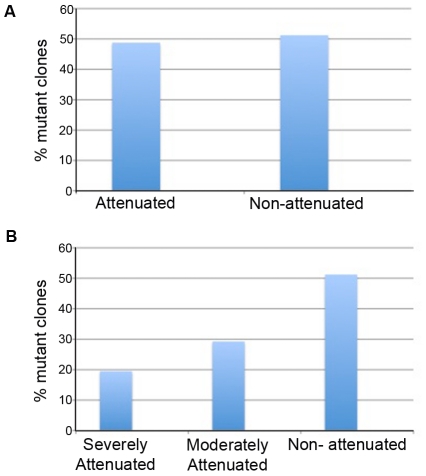
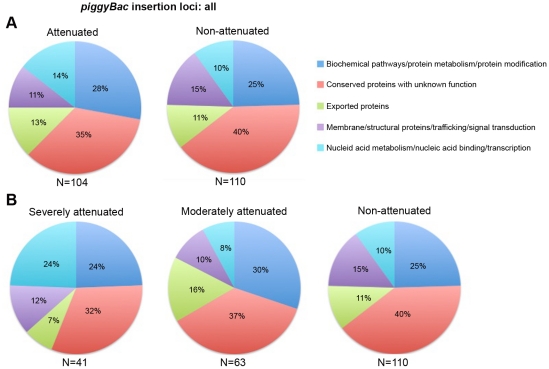
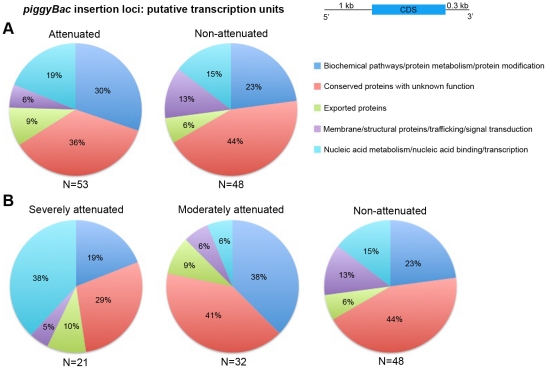
A majority of the Plasmodium falciparum genome codes for genes with unknown functions, which presents a major challenge to understanding the parasite's biology. Large-scale functional analysis of the parasite genome is essential to pave the way for novel therapeutic intervention strategies against the disease and yet difficulties in genetic manipulation of this deadly human malaria parasite have been a major hindrance for functional analysis of its genome. Here, we used a forward functional genomic approach to study P. falciparum and identify genes important for optimal parasite development in the disease-causing, intraerythrocytic stages. We analyzed 123 piggyBac insertion mutants of P. falciparum for proliferation efficiency in the intraerythrocytic stages, in vitro. Almost 50% of the analyzed mutants showed significant reduction in proliferation efficiency, with 20% displaying severe defects. Functional categorization of genes in the severely attenuated mutants revealed significant enrichment for RNA binding proteins, suggesting the significance of post-transcriptional gene regulation in parasite development and emphasizing its importance as an antimalarial target. This study demonstrates the feasibility of much needed forward genetics approaches for P. falciparum to better characterize its genome and accelerate drug and vaccine development.
Conflict of interest statement
Figures
References
-
- Florens L, Washburn MP, Raine JD, Anthony RM, Grainger M, et al. A proteomic view of the Plasmodium falciparum life cycle. Nature. 2002;419:520–526. - PubMed
-
- Le Roch KG, Zhou Y, Blair PL, Grainger M, Moch JK, et al. Discovery of gene function by expression profiling of the malaria parasite life cycle. Science. 2003;301:1503–1508. - PubMed
-
- Lasonder E, Ishihama Y, Andersen JS, Vermunt AM, Pain A, et al. Analysis of the Plasmodium falciparum proteome by high-accuracy mass spectrometry. Nature. 2002;419:537–542. - PubMed
Publication types
MeSH terms
Grants and funding
LinkOut - more resources
Full Text Sources
Other Literature Sources
Molecular Biology Databases
