


Epigenetic regulation of germ cell differentiation
- PMID: 20951019
- PMCID: PMC2993805
- DOI: 10.1016/j.ceb.2010.09.004
Epigenetic regulation of germ cell differentiation
Abstract
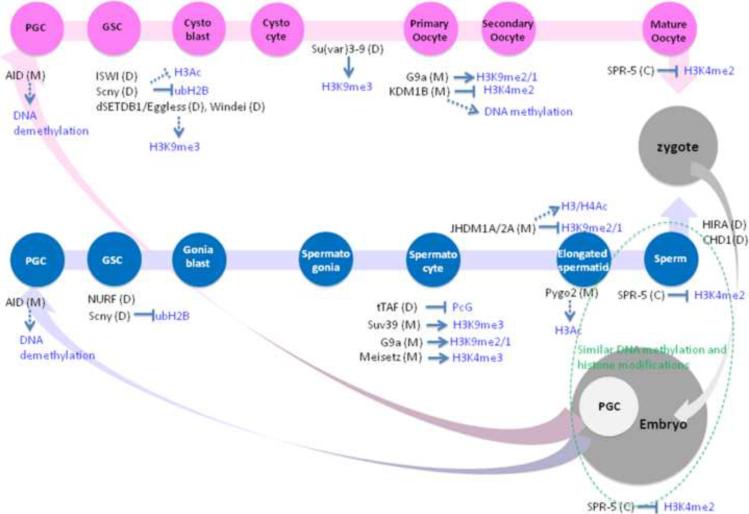
Germ cells and somatic cells have the identical genome. However, unlike the mortal fate of somatic cells, germ cells have the unique ability to differentiate into gametes that retain totipotency and produce an entire organism upon fertilization. The processes by which germ cells differentiate into gametes, and those by which gametes become embryos, involve dramatic cellular differentiation accompanied by drastic changes in gene expression, which are tightly regulated by genetic circuitries as well as epigenetic mechanisms. Epigenetic regulation refers to heritable changes in gene expression that are not due to changes in primary DNA sequence. The past decade has witnessed an ever-increasing understanding of epigenetic regulation in many different cell types/tissues during embryonic development and adult homeostasis. In this review, we focus on recent discoveries of epigenetic regulation of germ cell differentiation in various metazoan model organisms, including worms, flies, and mammals.
Copyright © 2010 Elsevier Ltd. All rights reserved.
Figures
References
-
- Cinalli RM, Rangan P, Lehmann R. Germ cells are forever. Cell. 2008;132:559–562. - PubMed
-
- Chong S, Whitelaw E. Epigenetic germline inheritance. Curr Opin Genet Dev. 2004;14:692–696. - PubMed
-
- Kimmins S, Sassone-Corsi P. Chromatin remodelling and epigenetic features of germ cells. Nature. 2005;434:583–589. - PubMed
-
- Ringrose L, Paro R. Epigenetic regulation of cellular memory by the Polycomb and Trithorax group proteins. Annu Rev Genet. 2004;38:413–443. - PubMed
-
- Jacobs JJ, van Lohuizen M. Polycomb repression: from cellular memory to cellular proliferation and cancer. Biochim Biophys Acta. 2002;1602:151–161. - PubMed
Publication types
MeSH terms
Grants and funding
LinkOut - more resources
Full Text Sources
Miscellaneous
