


Persistent anxiolytic affects after chronic administration of the CRF₁ receptor antagonist R121919 in rats
- PMID: 20951149
- PMCID: PMC3079005
- DOI: 10.1016/j.neuropharm.2010.10.004
Persistent anxiolytic affects after chronic administration of the CRF₁ receptor antagonist R121919 in rats
Abstract
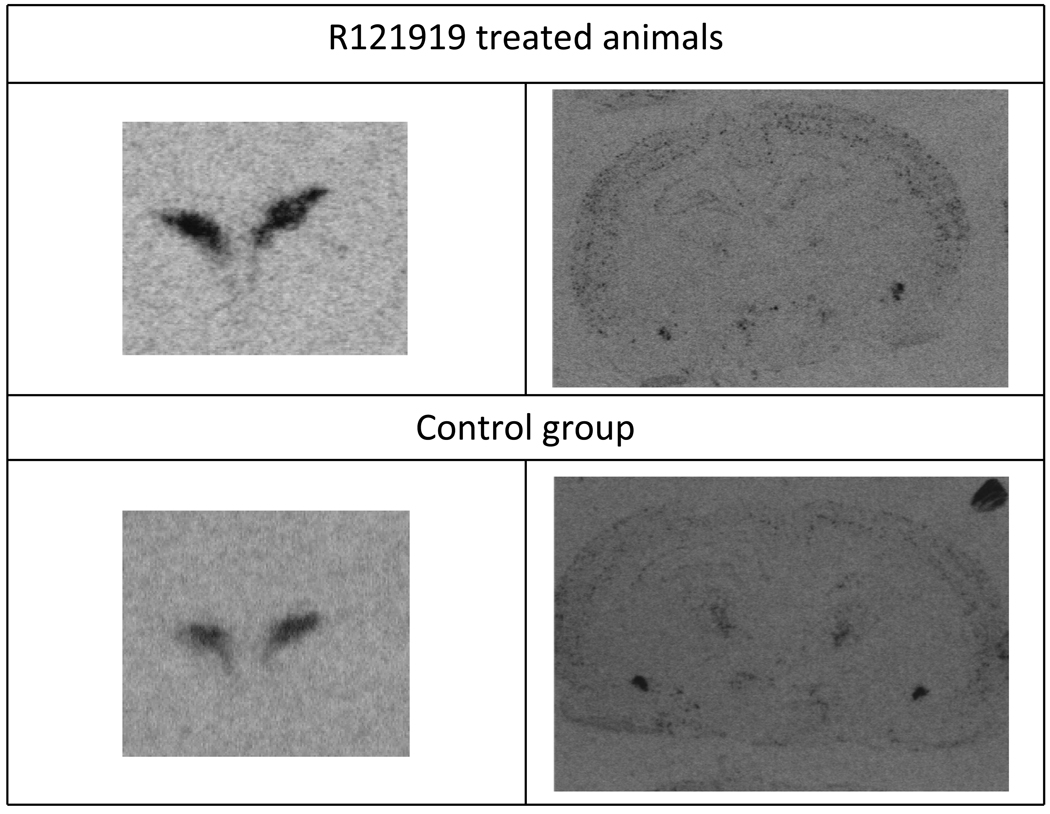
Corticotropin-releasing factor (CRF) functions as one of the major mediators of the mammalian stress response and appears to play a key role in the pathophysiology of mood and anxiety disorders. Small molecule CRF₁ receptor antagonists may represent a novel form of pharmacotherapy for these disorders. The therapeutic success of CRF₁ receptor antagonists will depend, in part, upon whether tolerance develops to the actions of these compounds and whether appropriate patterns of HPA axis function is maintained. This study evaluated the effects of long term (~4 week) treatment with the CRF₁ receptor antagonist R121919, on CRF receptor function, HPA axis activity, behavioral measures, adrenal gland size, and body weight gain. Animals treated with 20 mg/kg/day of R121919 spent significantly more time in the open field in a defensive withdrawal test (138±36s for R121919 vs 52±12s for vehicle, p=0.01). No significant effect of chronic CRF₁ receptor blockade on basal ACTH or corticosterone concentrations were detected, nor were significant changes detected in an elevated plus maze test. Both vehicle- and R121919- treated rats showed increases in AUC and peak ACTH and corticosterone concentrations following air puff startle stress, without any overall group differences, although a clear but non-significant attenuation in HPA axis response was observable in R121919 treated animals. Chronic CRF₁ receptor blockade increased CRF peptide mRNA expression in the PVN and decreased CRF peptide mRNA expression in the central nucleus of the amygdala. Overall our results suggest that anxiolytic effects of chronic CRF₁ receptor antagonism persist following chronic administration without significant attenuation of the HPA axis's ability to mount a stress response. This article is part of a Special Issue entitled 'Trends in neuropharmacology: in memory of Erminio Costa'.
Copyright © 2010 Elsevier Ltd. All rights reserved.
Figures


References
-
- Arato M, Banki CM, Bissette G, Nemeroff CB. Elevated CSF CRF in suicide victims. Biol Psychiatry. 1989;25:355–359. - PubMed
-
- Arborelius L, Owens MJ, Plotsky PM, Nemeroff CB. The role of corticotropin-releasing factor in depression and anxiety disorders. Journal of Endocrinology. 1999;160:1–12. - PubMed
-
- Arborelius L, Skelton KH, Thrivikraman KV, Plotsky PM, Schulz DW, Owens MJ. Chronic administration of the selective corticotropin-releasing factor 1 receptor antagonist CP-154,526: behavioral, endocrine and neurochemical effects in the rat. Journal of Pharmacology and Experimental Therapeutics. 2000;294:588–597. - PubMed
-
- Bao AM, Meynen G, Swaab DF. The stress system in depression and neurodegeneration: Focus on the human hypothalamus. Brain Res Rev. 2007 - PubMed
-
- Binneman B, Feltner D, Kolluri S, Shi Y, Qiu R, Stiger T. A 6-week randomized, placebo-controlled trial of CP-316,311 (a selective CRH1 antagonist) in the treatment of major depression. Am J Psychiatry. 2008;165:617–620. - PubMed
Publication types
MeSH terms
Substances
Grants and funding
LinkOut - more resources
Full Text Sources
