


A combined ecological and epidemiologic investigation of metal exposures amongst Indigenous peoples near the Marlin Mine in Western Guatemala
- PMID: 20952048
- PMCID: PMC4761224
- DOI: 10.1016/j.scitotenv.2010.09.041
A combined ecological and epidemiologic investigation of metal exposures amongst Indigenous peoples near the Marlin Mine in Western Guatemala
Abstract
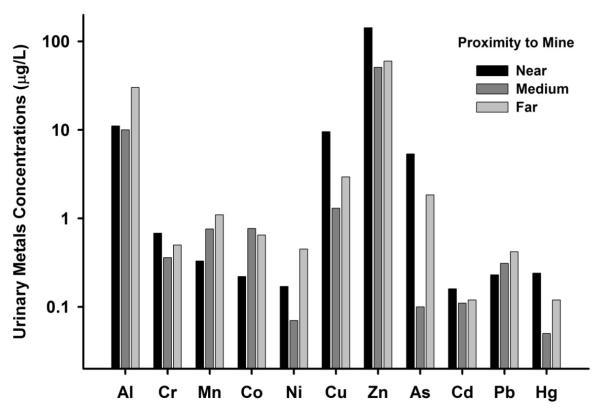
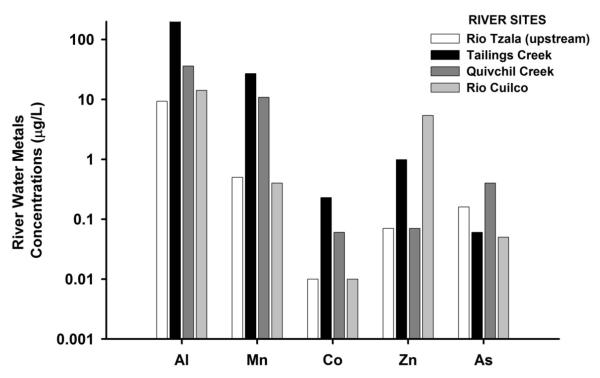
In August 2009 a combined epidemiological and ecological pilot study was conducted to investigate allegations of human rights abuses in the form of exposures to toxic metals experienced by mine workers and Indigenous Mam Mayan near the Marlin Mine in Guatemala. In the human study there were no differences in blood and urine metals when comparing five mine workers with eighteen non-mine workers, and there were no discernible relationships between metal exposures and self-reported health measures in any study group. On the other hand, individuals residing closest to the mine had significantly higher levels of certain metals (urinary mercury, copper, arsenic, and zinc) when compared to those living further away. The levels of blood aluminum, manganese, and cobalt were elevated in comparison to established normal ranges in many individuals; however, there was no apparent relationship to proximity to the mine or occupation, and thus are of unclear significance. In the ecological study, several metals (aluminum, manganese, and cobalt) were found significantly elevated in the river water and sediment sites directly below the mine when compared to sites elsewhere. When the human and ecological results are combined, they suggest that exposures to certain metals may be elevated in sites near the mine but it is not clear if the current magnitude of these elevations poses a significant threat to health. The authors conclude that more robust studies are needed while parallel efforts to minimize the ecological and human impacts of mining proceed. This is critical particularly as the impact of the exposures found could be greatly magnified by expected increases in mining activity over time, synergistic toxicity between metals, and susceptibility for the young and those with pre-existing disease.
Copyright © 2010 Elsevier B.V. All rights reserved.
Figures
References
-
- ATSDR . Toxicological Profile for Cyanide. Agency for Toxic Substances and Disease Registry; Atlanta, GA: 2006. - PubMed
-
- Banza CL, Nawrot TS, Haufroid V, Decree S, De Putter T, Smolders E, et al. High human exposure to cobalt and other metals in Katanga, a mining area of the Democratic Republic of Congo. Environ Res. 2009;109:745–752. - PubMed
-
- Basu N, Hu H. Mining and Possible Health Impacts on Indigenous Peoples in Western Guatemala. Physicians for Human Rights; Cambridge, MA: 2010. p. 51.
-
- Basu N, Scheuhammer AM, Sonne C, Letcher RJ, Born EW, Dietz R. Is dietary mercury of neurotoxicological concern to polar bears (Ursus maritimus)? Environ Toxicol Chem. 2009;28:133–140. - PubMed
Publication types
MeSH terms
Substances
Grants and funding
LinkOut - more resources
Full Text Sources
