


Non-genetic contributions of the sperm nucleus to embryonic development
- PMID: 20953203
- PMCID: PMC3015006
- DOI: 10.1038/aja.2010.75
Non-genetic contributions of the sperm nucleus to embryonic development
Abstract
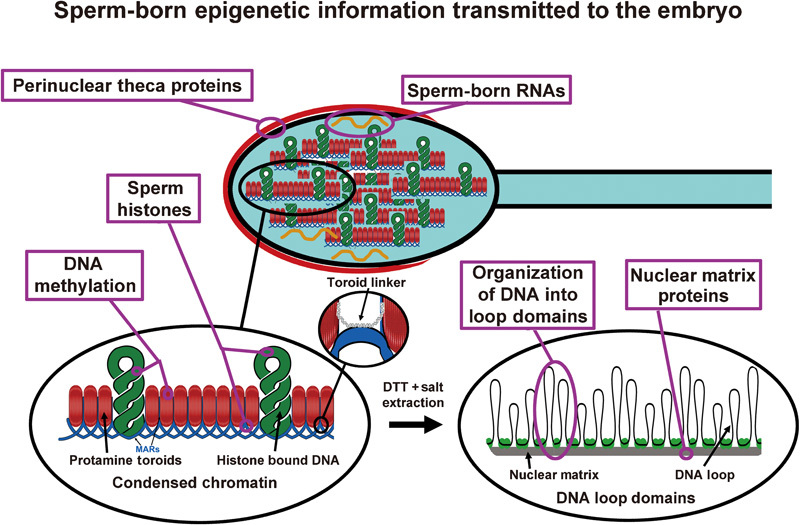
Recent data from several laboratories have provided evidence that the newly fertilized oocyte inherits epigenetic signals from the sperm chromatin that are required for proper embryonic development. For the purposes of this review, the term epigenetic is used to describe all types of molecular information that are transmitted from the sperm cell to the embryo. There are at least six different forms of epigenetic information that have already been established as being required for proper embryogenesis in mammals or for which there is evidence that it may do so. These are (i) DNA methylation; (ii) sperm-specific histones, (iii) other chromatin-associated proteins; (iv) the perinuclear theca proteins; (v) sperm-born RNAs and, the focus of this review; and (vi) the DNA loop domain organization by the sperm nuclear matrix. These epigenetic signals should be considered when designing protocols for the manipulation and cryopreservation of spermatozoa for assisted reproductive technology as necessary components for effective fertilization and subsequent embryo development.
Figures
References
-
- Harland RM, Laskey RA. Regulated replication of DNA microinjected into eggs of Xenopus laevis. Cell. 1980;21:761–71. - PubMed
-
- Blow JJ, Laskey RA. Initiation of DNA replication in nuclei and purified DNA by a cell-free extract of Xenopus eggs. Cell. 1986;47:577–87. - PubMed
-
- Newport J. Nuclear reconstitution in vitro: stages of assembly around protein-free DNA. Cell. 1987;48:205–17. - PubMed
-
- Shaman JA, Yamauchi Y, Ward WS. Function of the sperm nuclear matrix. Arch Androl. 2007;53:135–40. - PubMed
Publication types
MeSH terms
Substances
Grants and funding
LinkOut - more resources
Full Text Sources
