


Mesotherapy versus Systemic Therapy in the Treatment of Acute Low Back Pain: A Randomized Trial
- PMID: 20953425
- PMCID: PMC2952299
- DOI: 10.1155/2011/317183
Mesotherapy versus Systemic Therapy in the Treatment of Acute Low Back Pain: A Randomized Trial
Abstract
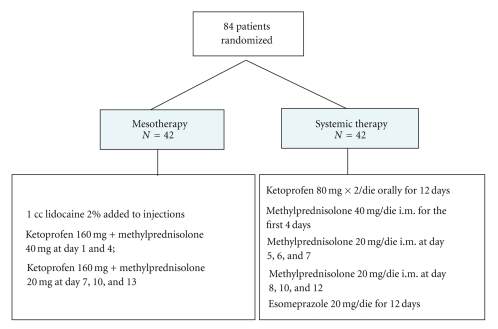
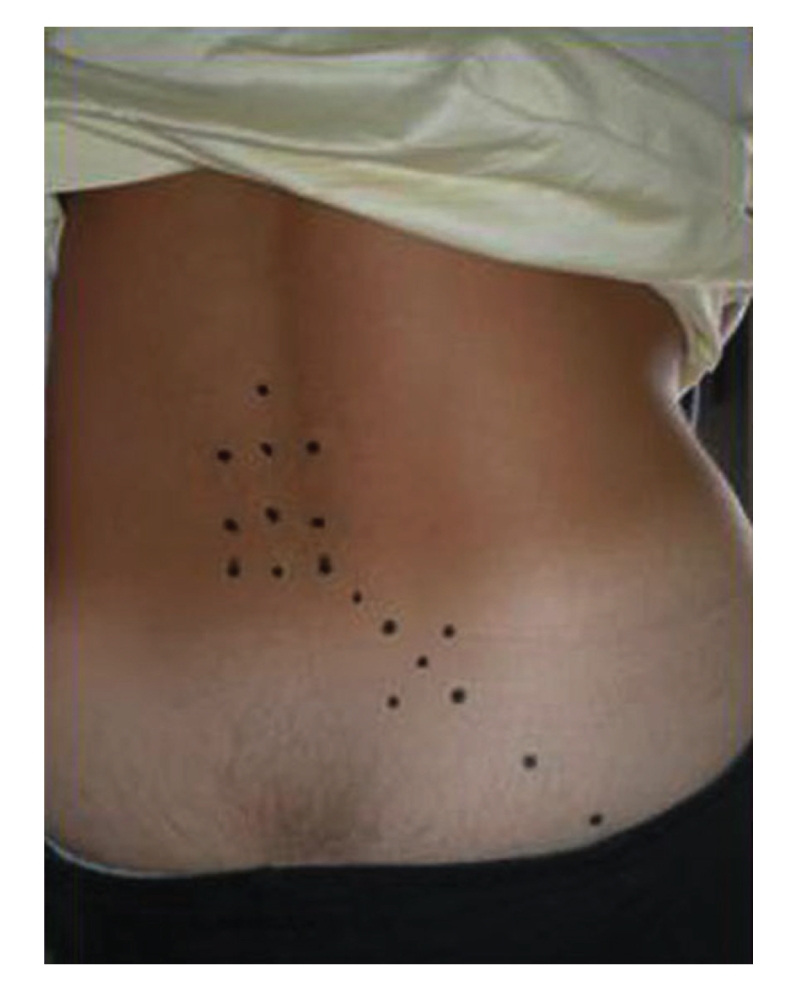
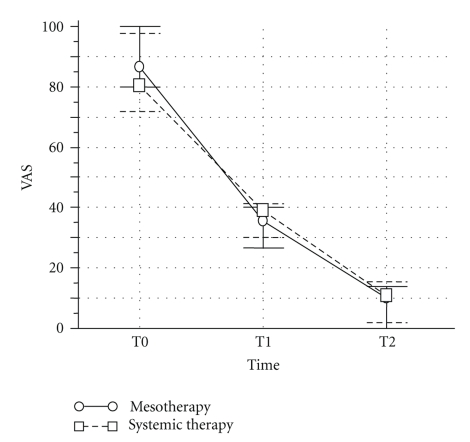
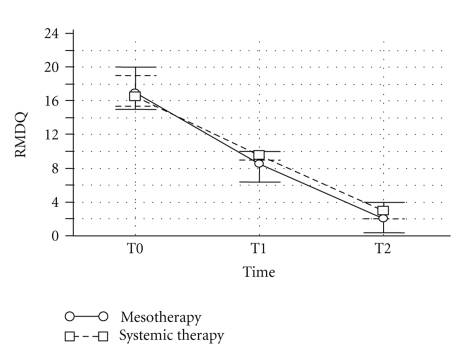
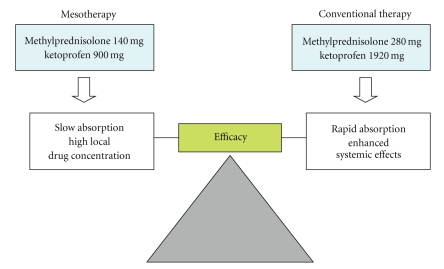
Pharmacological therapy of back pain with analgesics and anti-inflammatory drugs is frequently associated with adverse effects, particularly in the elderly. Aim of this study was to compare mesotherapic versus conventional systemic administration of nonsteroidal anti-inflammatory drugs (NSAIDs) and corticosteroids in patients with acute low back pain. Eighty-four patients were randomized to receive anti-inflammatory therapy according to the following protocols: (a) mesotherapy group received the 1st and 4th day 2% lidocaine (1 mL) + ketoprofen 160 mg (1 mL) + methylprednisolone 40 mg (1 mL), then on 7th, 10th, and 13th day, 2% lidocaine (1 mL) + ketoprofen 160 mg (1 mL) + methylprednisolone 20 mg (1 mL) (b) conventional therapy group received ketoprofen 80 mg × 2/die and esomeprazole 20 mg/die orally for 12 days, methylprednisolone 40 mg/die intramuscularly for 4 days, followed by methylprednisolone 20 mg/die for 3 days, and thereafter, methylprednisolone 20 mg/die at alternate days. Pain intensity and functional disability were assessed at baseline (T0), at the end of treatment (T1), and 6 months thereafter (T2) by using visual analogic scale (VAS) and Roland-Morris disability questionnaire (RMDQ). In both groups, VAS and RMDQ values were significantly reduced at the end of drug treatment and after 6 months, in comparison with baseline. No significant differences were found between the two groups. This suggests that mesotherapy may be a valid alternative to conventional therapy in the treatment of acute low back pain with corticosteroids and NSAIDs.
Figures
References
-
- Liddle SD, Baxter GD, Gracey JH. Chronic low back pain: patients’ experiences, opinions and expectations for clinical management. Disability and Rehabilitation. 2007;29(24):1899–1909. - PubMed
-
- Frymoyer JW. Back pain and sciatica. New England Journal of Medicine. 1988;318(5):291–300. - PubMed
-
- Sostres C, Gargallo CJ, Arroyo MT, Lanas A. Adverse effects of non-steroidal anti-inflammatory drugs (NSAIDs, aspirin and coxibs) on upper gastrointestinal tract. Best Practice and Research: Clinical Gastroenterology. 2010;24(2):121–132. - PubMed
-
- Whittle BJR. Gastrointestinal effects of nonsteroidal anti-inflammatory drugs. Fundamental and Clinical Pharmacology. 2003;17(3):301–313. - PubMed
-
- Dajani EZ, Islam K. Cardiovascular and gastrointestinal toxicity of selective cyclo-oxygenase-2 inhibitors in man. Journal of Physiology and Pharmacology. 2008;59(2):117–133. - PubMed
LinkOut - more resources
Full Text Sources
Medical
