


Dietary phenethyl isothiocyanate alters gene expression in human breast cancer cells
- PMID: 20953429
- PMCID: PMC2952307
- DOI: 10.1155/2011/462525
Dietary phenethyl isothiocyanate alters gene expression in human breast cancer cells
Abstract
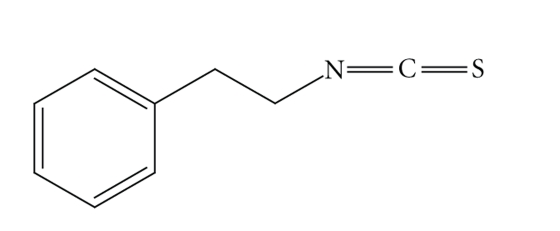
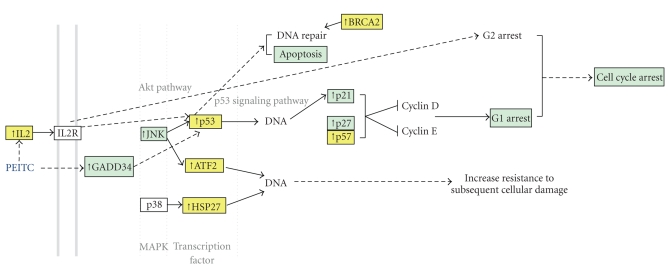
Phenethyl isothiocyanate (PEITC), a component in cruciferous vegetables, can block chemical carcinogenesis in animal models. Our objective was to determine the effect of treatment with PEITC on gene expression changes in MCF-7 human breast cancer cells in order to evaluate potential mechanisms involved in its chemopreventive effects. MCF-7 cells were treated for 48 hours with either PEITC (3 μM) or the vehicle. Total RNA was extracted from cell membrane preparations, and labeled cDNA's representing the mRNA pool were reverse-transcribed directly from total RNA isolated for use in the microarray hybridizations. Two specific human GE Array Kits (Superarray Inc.) that both contain 23 marker genes, related to signal transduction pathways or cancer/tumor suppression, plus 2 housekeeping genes (β-actin and GAPDH), were utilized. Arrays from treated and control cells (n = 4 per group) were evaluated using a Student's t-test. Gene expression was significantly induced for tumor protein p53 (p53), cyclin-dependent kinase inhibitor 1C (p57 Kip2), breast cancer Type 2 early onset (BRCA2), cAMP responsive element binding protein 2 (ATF-2), interleukin 2 (IL-2), heat shock 27 KD protein (hsp27), and CYP19 (aromatase). Induction of p57 Kip2, p53, BRCA2, IL-2, and ATF-2 would be expected to decrease cellular proliferation and increase tumor suppression and/or apoptosis. PEITC treatment produced significant alterations in some genes involved in tumor suppression and cellular proliferation/apoptosis that may be important in explaining the chemopreventive effects of PEITC.
Figures
References
-
- Fenwick GR, Heaney RK, Mullin WJ. Glucosinolates and their breakdown products in food and food plants. Critical Reviews in Food Science and Nutrition. 1983;18(2):123–201. - PubMed
-
- Getahun SM, Chung F-L. Conversion of glucosinolates to isothiocyanates in humans after ingestion of cooked watercress. Cancer Epidemiology Biomarkers and Prevention. 1999;8(5):447–451. - PubMed
-
- Hecht SS. Chemoprevention of cancer by isothiocyanates, modifiers of carcinogen metabolism. Journal of Nutrition. 1999;129(3):768S–774S. - PubMed
-
- Bresnick E, Birt DF, Wolterman K, Wheeler M, Markin RS. Reduction in mammary tumorigenesis in the rat by cabbage and cabbage residue. Carcinogenesis. 1990;11(7):1159–1163. - PubMed
-
- Stoewsand GS, Anderson JL, Munson L. Protective effect of dietary brussels sprouts against mammary carcinogenesis in Sprague-Dawley rats. Cancer Letters. 1988;39(2):199–207. - PubMed
Grants and funding
LinkOut - more resources
Full Text Sources
Other Literature Sources
Research Materials
Miscellaneous
