


Increasingly heterogeneous ages at first birth by education in Southern European and Anglo-American family-policy regimes: A seven-country comparison by birth cohort
- PMID: 20954097
- PMCID: PMC2989427
- DOI: 10.1080/00324728.2010.512392
Increasingly heterogeneous ages at first birth by education in Southern European and Anglo-American family-policy regimes: A seven-country comparison by birth cohort
Abstract
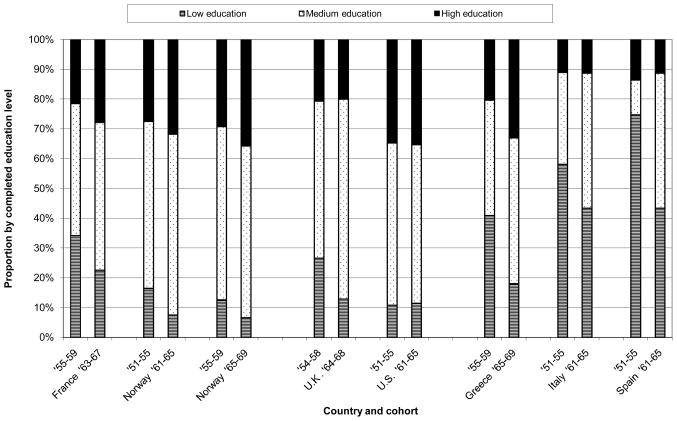
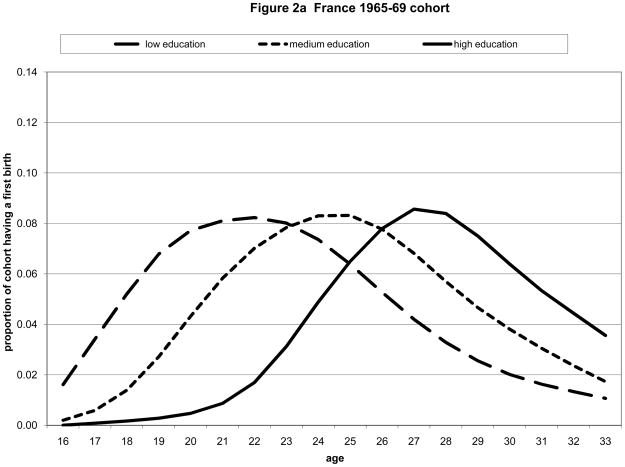
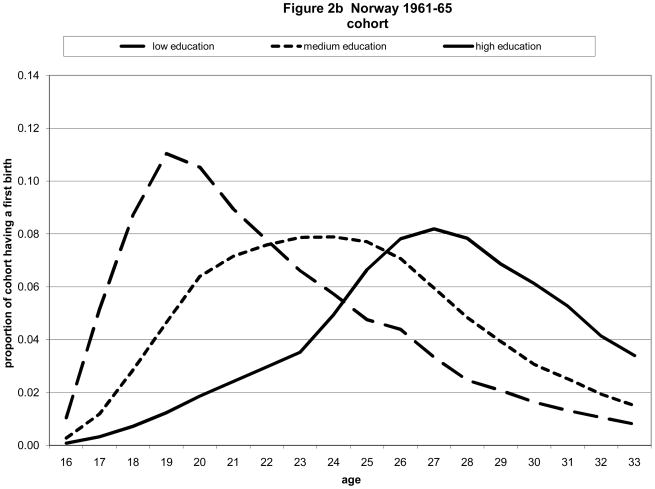
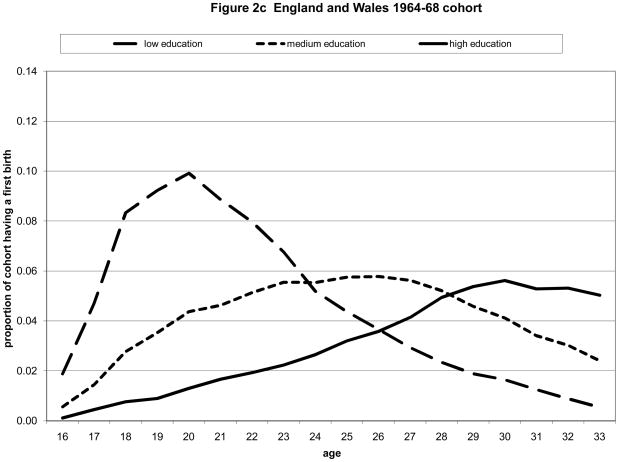
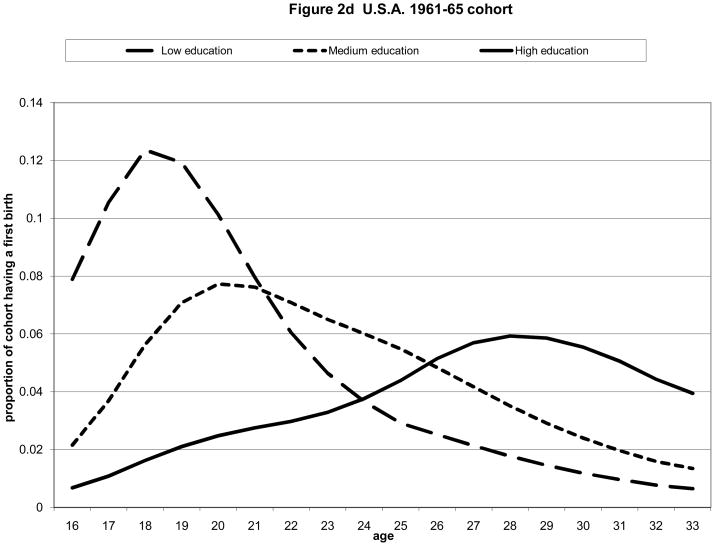
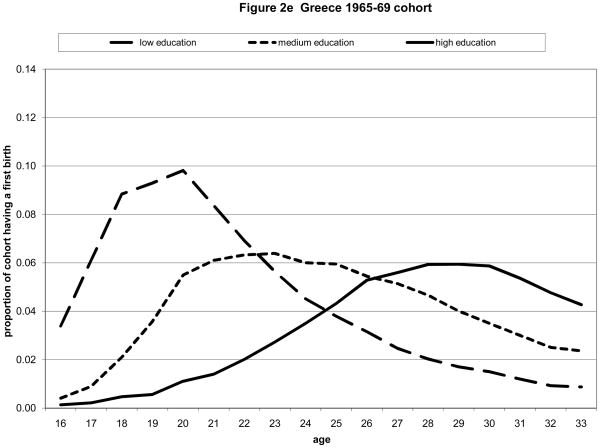
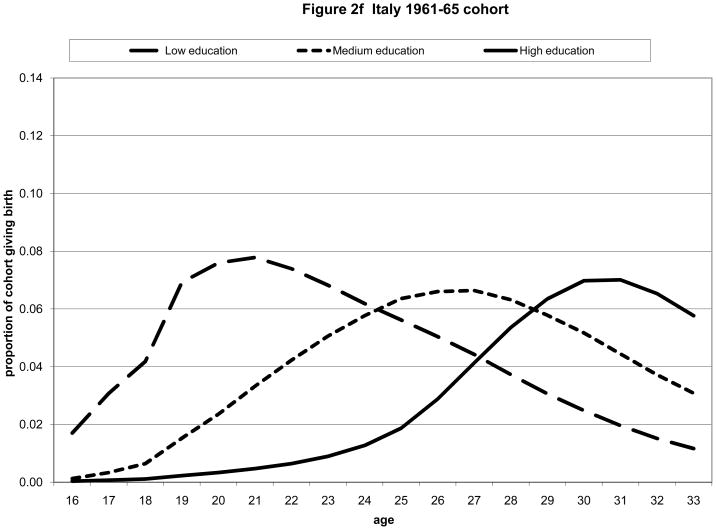
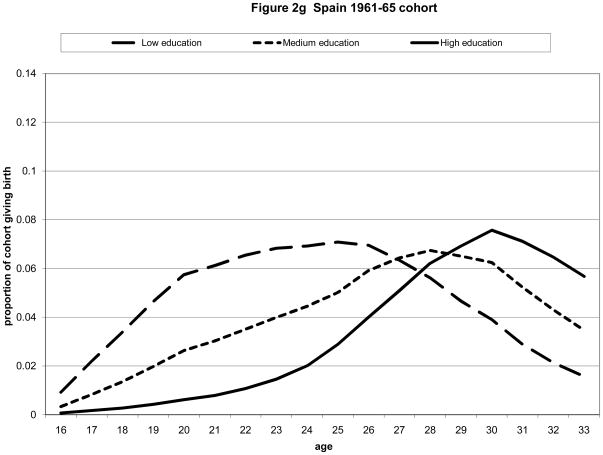
According to the 'reproductive polarization' hypothesis, family-policy regimes unfavourable to the combination of employment with motherhood generate greater socio-economic differentials in fertility than other regimes. This hypothesis has been tested mainly for 'liberal' Anglo-American regimes. To investigate the effects elsewhere, we compared education differentials in age at first birth among native-born women of 1950s and 1960s birth cohorts in seven countries representing three regime types. Women with low educational attainment have continued to have first births early, not only in Britain and the USA but also in Greece, Italy, and Spain. Women at all other levels of education have experienced a shift towards later first births, a shift that has been largest in Southern Europe. Unlike the educationally heterogeneous changes in age pattern at first birth seen under the Southern European and Anglo-American family-policy regimes, the changes across birth cohorts in the study's two 'universalistic' countries, Norway and France, have been educationally homogeneous.
Figures
References
-
- Aassve A, Billari FC, Spéder Z. Societal transition, policy changes and family formation: Evidence from Hungary. European Journal of Population. 2006;22:127–152.
-
- Aassve A, Iacovou M, Mencarini L. Youth poverty and transition to adulthood in Europe. Demographic Research. 2006;15(2):21–50.
-
- Adam P. Mothers in an insider-outsider economy: The puzzle of Spain. Journal of Population Economics. 1996;9:301–323. - PubMed
-
- Adsera A. Changing fertility rates in developed countries: The impact of labor market institutions. Journal of Population Economics. 2004;17:17–43.
-
- Ahn N, Mira P. A note on the changing relationship between fertility and female employment rates in developed countries. Journal of Population Economics. 2002;15(4):667–682.
Publication types
MeSH terms
Grants and funding
LinkOut - more resources
Full Text Sources
Medical