Differential callosal contributions to bimanual control in young and older adults
- PMID: 20954936
- PMCID: PMC3809031
- DOI: 10.1162/jocn.2010.21600
Differential callosal contributions to bimanual control in young and older adults
Abstract
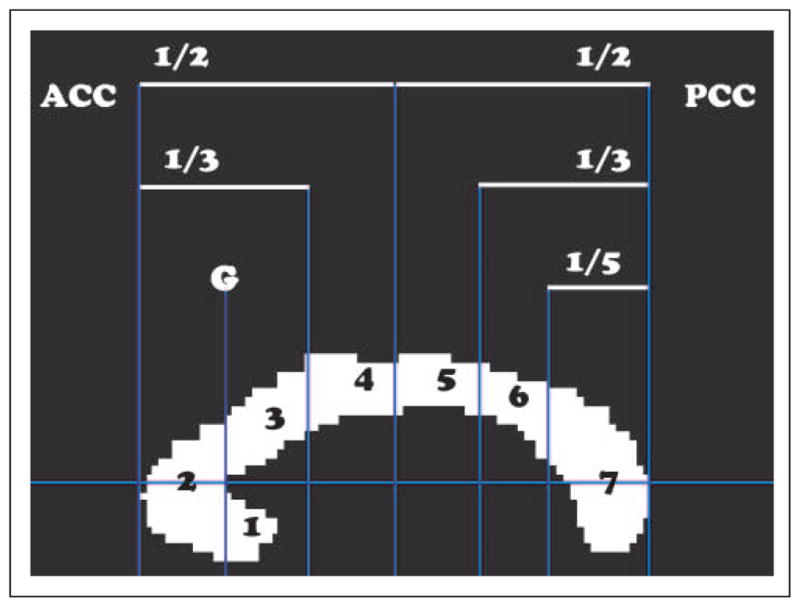
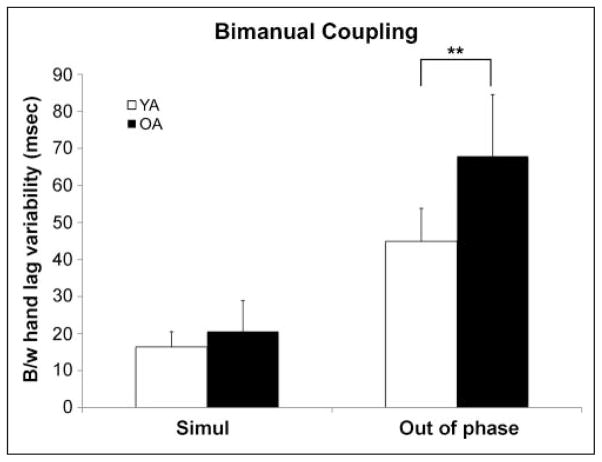
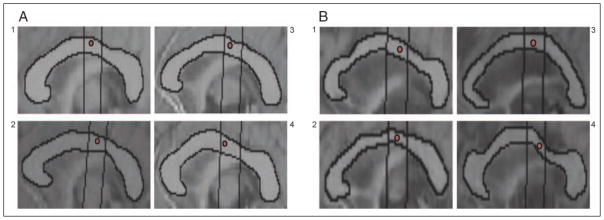
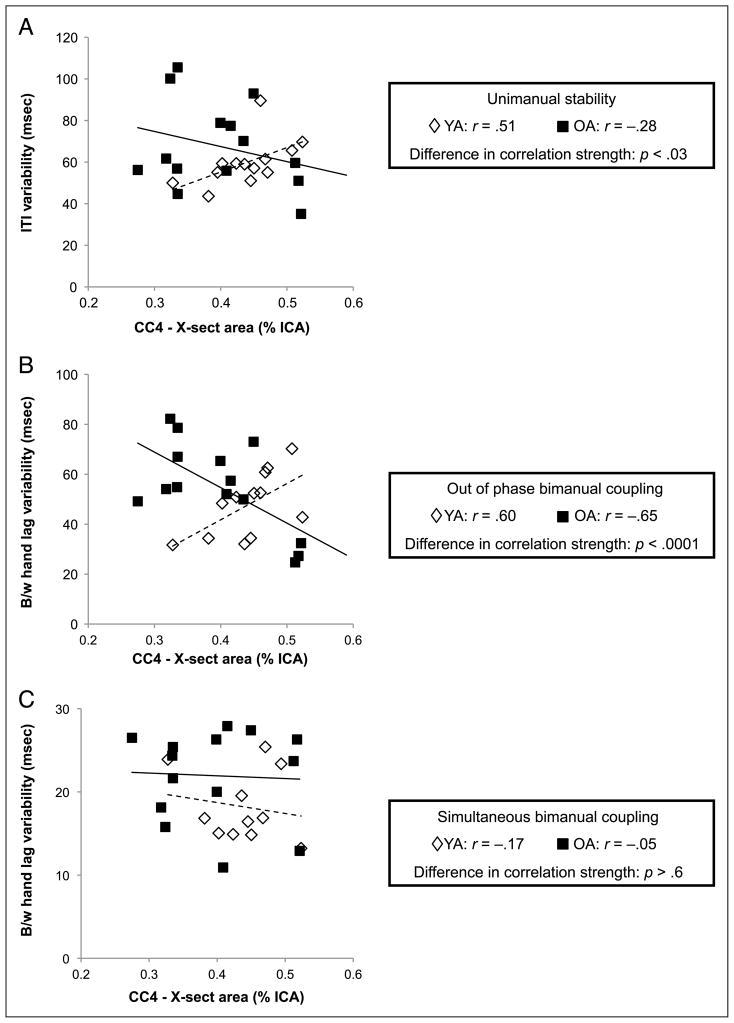
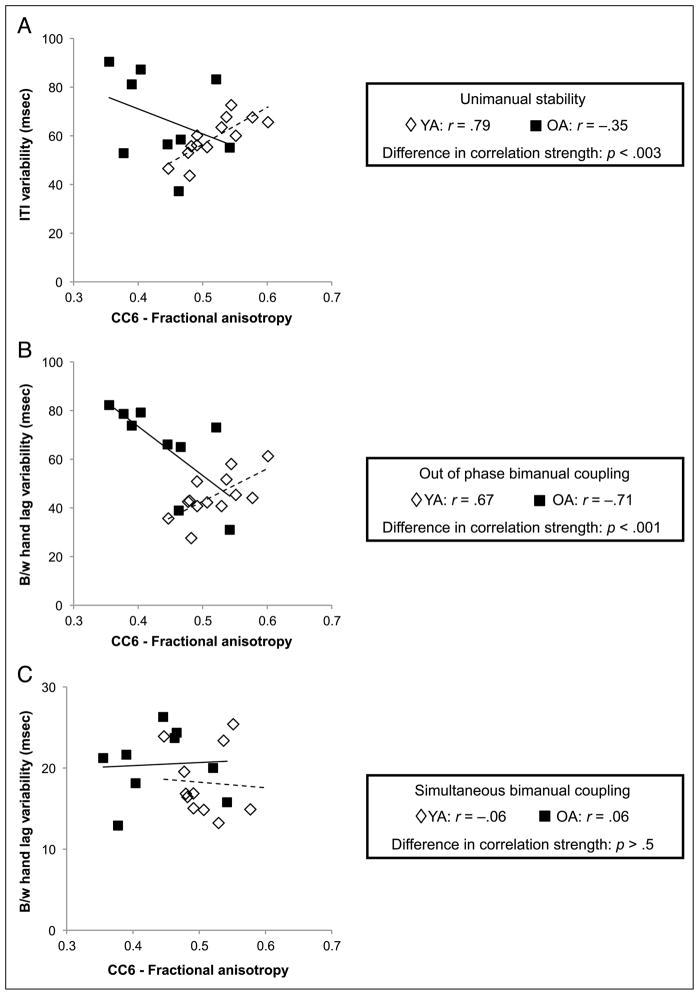
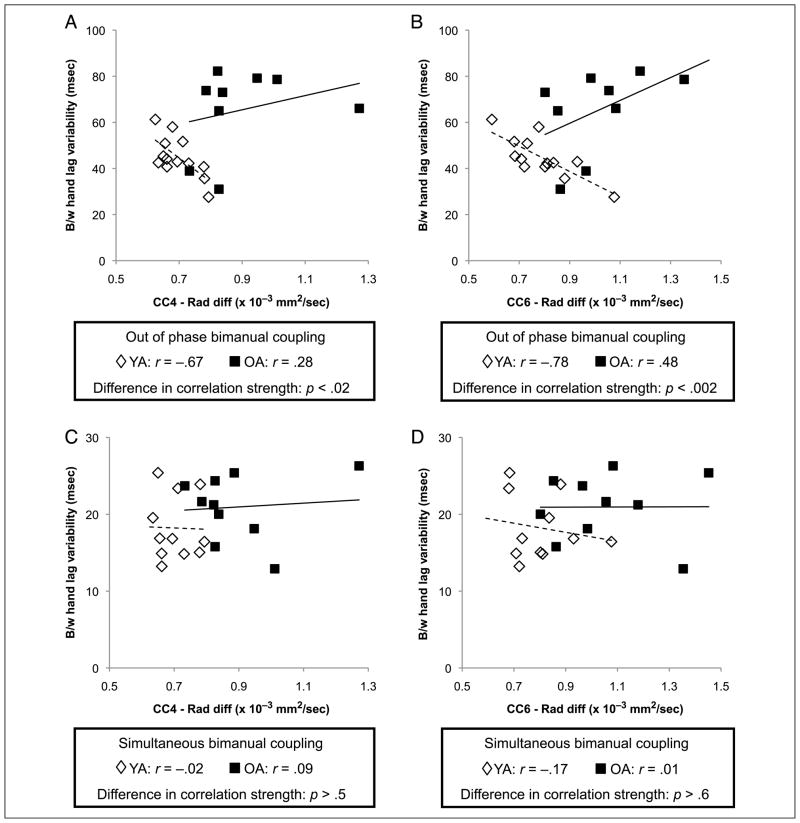
Our recent work has shown that older adults are disproportionately impaired at bimanual tasks when the two hands are moving out of phase with each other [Bangert, A. S., Reuter-Lorenz, P. A., Walsh, C. M., Schachter, A. B., & Seidler, R. D. Bimanual coordination and aging: Neurobehavioral implications. Neuropsychologia, 48, 1165-1170, 2010]. Interhemispheric interactions play a key role during such bimanual movements to prevent interference from the opposite hemisphere. Declines in corpus callosum (CC) size and microstructure with advancing age have been well documented, but their contributions to age deficits in bimanual function have not been identified. In the current study, we used structural magnetic resonance and diffusion tensor imaging to investigate age-related changes in the relationships between callosal macrostructure, microstructure, and motor performance on tapping tasks requiring differing degrees of interhemispheric interaction. We found that older adults demonstrated disproportionately poorer performance on out-of-phase bimanual control, replicating our previous results. In addition, older adults had smaller anterior CC size and poorer white matter integrity in the callosal midbody than their younger counterparts. Surprisingly, larger CC size and better integrity of callosal microstructure in regions connecting sensorimotor cortices were associated with poorer motor performance on tasks requiring high levels of interhemispheric interaction in young adults. Conversely, in older adults, better performance on these tasks was associated with larger size and better CC microstructure integrity within the same callosal regions. These findings implicate age-related declines in callosal size and integrity as a key contributor to bimanual control deficits. Further, the differential age-related involvement of transcallosal pathways reported here raises new questions about the role of the CC in bimanual control.
Figures

References
-
- Aboitiz F, Scheibel AB, Fisher RS, Zaidel E. Fiber composition of the human corpus callosum. Brain Research. 1992;598:143–153. - PubMed
-
- Barnea-Goraly N, Menon V, Eckert M, Tamm L, Bammer R, Karchemskiy A, et al. White matter development during childhood and adolescence: A cross-sectional diffusion tensor imaging study. Cerebral Cortex. 2005;15:1848–1854. - PubMed
-
- Basser PJ, Pierpaoli C. Microstructural and physiological features of tissues elucidated by quantitative-diffusion-tensor MRI. Journal of Magnetic Resonance, Series B. 1996;111:209–219. - PubMed
-
- Basser PJ, Pierpaoli C. A simplified method to measure the diffusion tensor from seven MR images. Magnetic Resonance in Medicine. 1998;39:928–934. - PubMed
Publication types
MeSH terms
Grants and funding
LinkOut - more resources
Full Text Sources
Medical