


Understanding the temporal codes of intra-cellular signals
- PMID: 20956081
- PMCID: PMC2982931
- DOI: 10.1016/j.gde.2010.09.007
Understanding the temporal codes of intra-cellular signals
Abstract
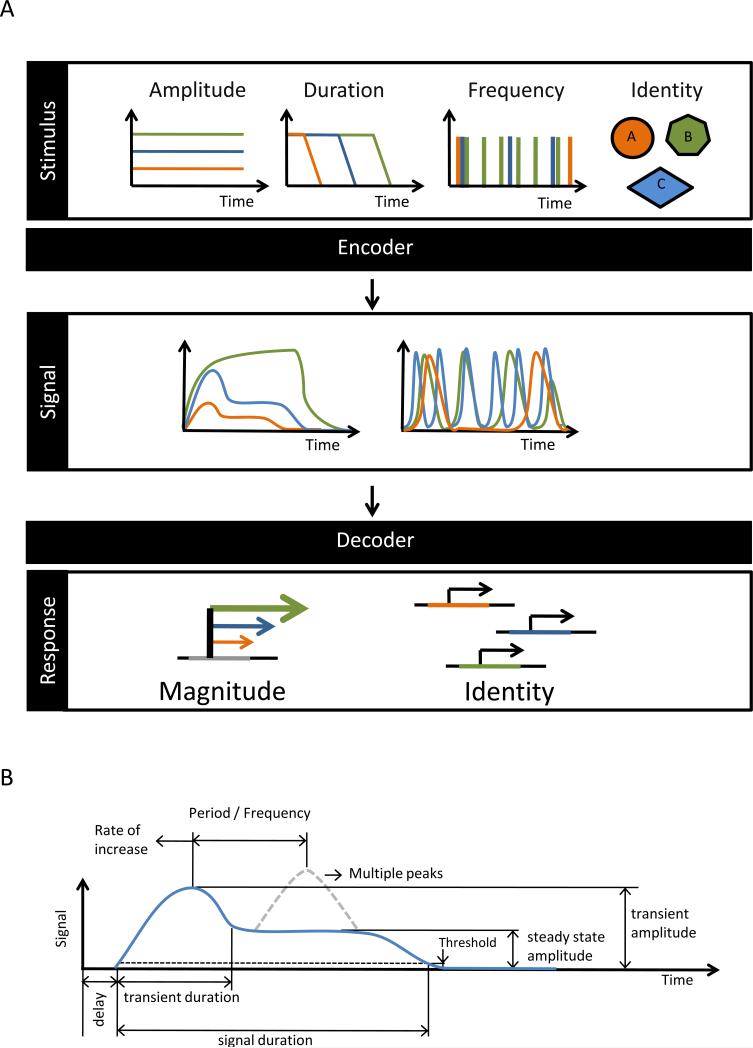
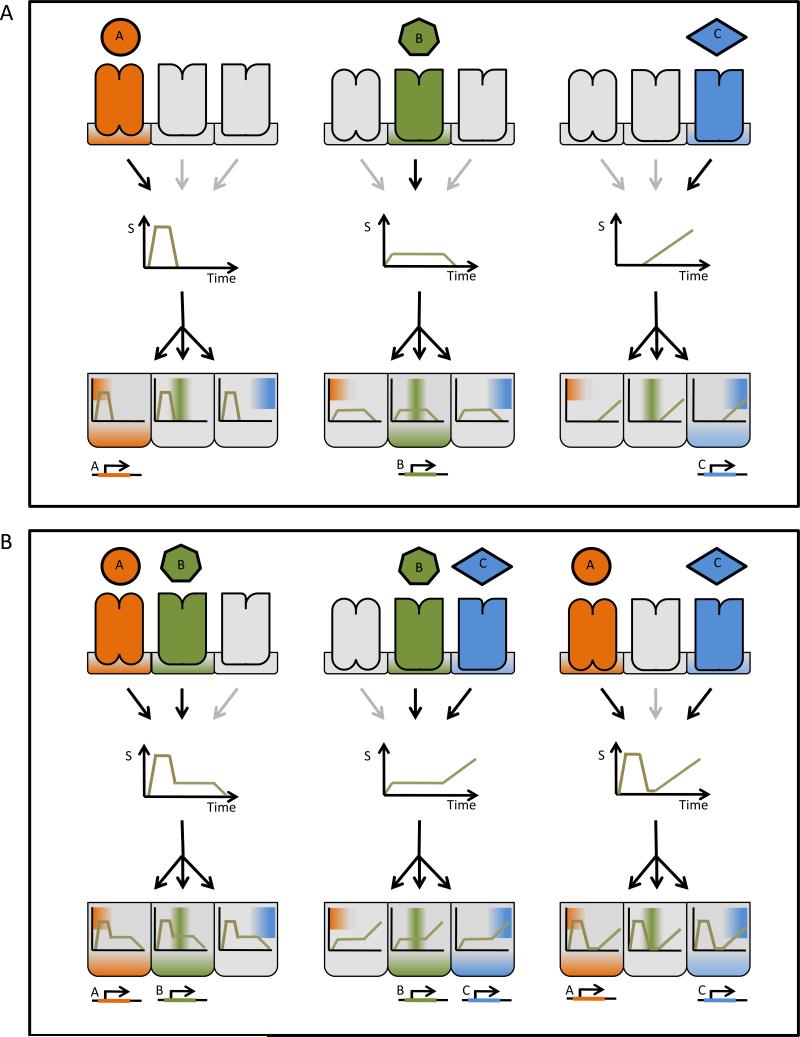
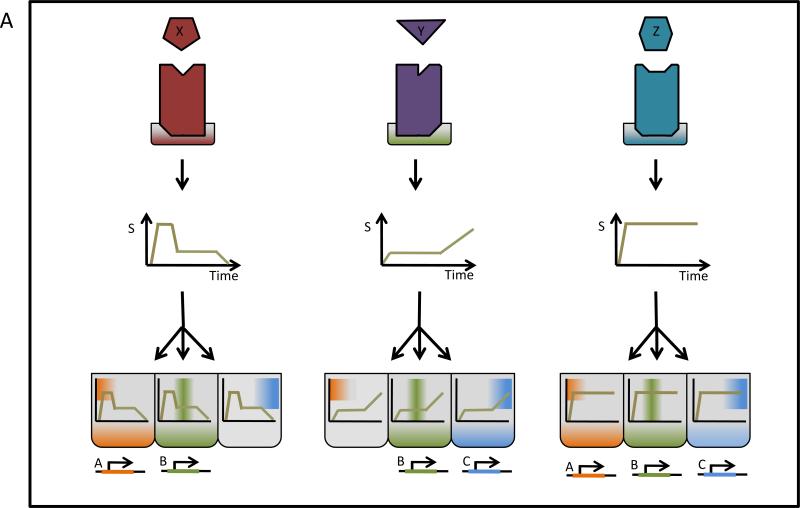
The health of organisms and cells depends on appropriate responses to diverse internal and external cues, stimuli, or challenges, such as changes in hormone or cytokine levels, or exposure to a pathogen. Cellular responses must be tailored to the identity and intensity of the stimulus and therefore intra-cellular signals must carry information about both. However, signaling mediators often form intricate networks that react to multiple stimuli yet manage to produce stimulus-specific responses. The multi-functionality ('functional pleiotropism') of signaling nodes suggests that biological networks have evolved ways of passing physiologically relevant stimulus information through shared channels. Increasing evidence supports the notion that this is achieved in part through temporal regulation of signaling mediators' activities. The present challenge is to identify the features of temporal activity profile that represent information about a given stimulus and understand how cells read the temporal codes to control their responses.
Copyright © 2010 Elsevier Ltd. All rights reserved.
Figures
References
-
- Brent R. Cell signaling: what is the signal and what information does it carry? FEBS Lett. 2009;583:4019–4024. - PubMed
-
- Hao N, Behar M, Parnell SC, Torres MP, Borchers CH, Elston TC, Dohlman HG. A systems-biology analysis of feedback inhibition in the sho1 osmotic-stress-response pathway. Curr Biol. 2007;17:659–667. - PubMed
-
- Klipp E, Nordlander B, Kruger R, Gennemark P, Hohmann S. Integrative model of the response of yeast to osmotic shock. Nat Biotechnol. 2005;23:975–982. - PubMed
-
- Hoffmann A, Levchenko A, Scott ML, Baltimore D. The IkappaB-NF-kappaB signaling module: temporal control and selective gene activation. Science. 2002;298:1241–1245. [Experimenatl and computational modeling study of the roles of IkB proteins in tempral control of NFkB activity. Makes the case for duration encoding in NFkB pathway and that apparent oscillatory control of NFkB is a byproduct of potent negative feedback whose primary function is to ensure prompt signal termination upon stimulus removal] - PubMed
Publication types
MeSH terms
Grants and funding
LinkOut - more resources
Full Text Sources
