


The metabolic actions of glucagon revisited
- PMID: 20957001
- PMCID: PMC3563428
- DOI: 10.1038/nrendo.2010.187
The metabolic actions of glucagon revisited
Abstract
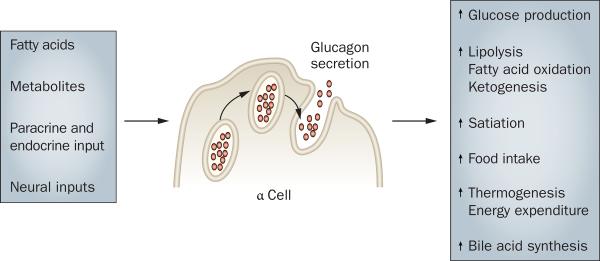
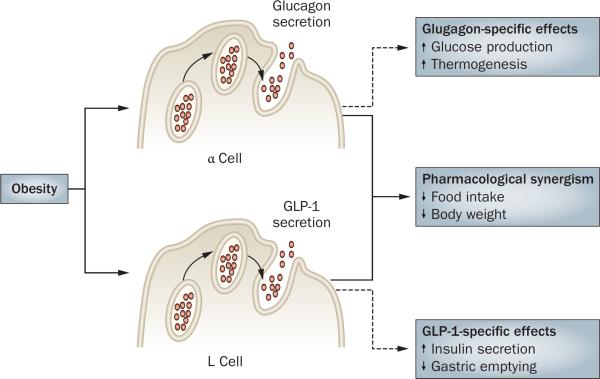
The initial identification of glucagon as a counter-regulatory hormone to insulin revealed this hormone to be of largely singular physiological and pharmacological purpose. Glucagon agonism, however, has also been shown to exert effects on lipid metabolism, energy balance, body adipose tissue mass and food intake. The ability of glucagon to stimulate energy expenditure, along with its hypolipidemic and satiating effects, in particular, make this hormone an attractive pharmaceutical agent for the treatment of dyslipidemia and obesity. Studies that describe novel preclinical applications of glucagon, alone and in concert with glucagon-like peptide 1 agonism, have revealed potential benefits of glucagon agonism in the treatment of the metabolic syndrome. Collectively, these observations challenge us to thoroughly investigate the physiology and therapeutic potential of insulin's long-known opponent.
Figures
References
-
- Banting FG, Best CH. The internal secretion of the pancreas. J. Lab. Clin. Med. 1922;7:251–266. - PubMed
-
- Murlin JR, Clough HD, Gibbs CBF, Stokes AM. Aqueous extracts of the pancreas. I. Influence on the carbohydrate metabolism of depancreatized animals. J. Biol. Chem. 1923;56:253–296.
-
- Exton JH, Park CR. The role of cyclic AMP in the control of liver metabolism. Adv. Enzyme Regul. 1968;6:391–407. - PubMed
-
- Robison GA, Butcher RW, Sutherland EW. Cyclic AMP. Annu. Rev. Biochem. 1968;37:149–174. - PubMed
-
- Gu W, et al. Long-term inhibition of the glucagon receptor with a monoclonal antibody in mice causes sustained improvement in glycemic control, with reversible alpha-cell hyperplasia and hyperglucagonemia. J. Pharmacol. Exp. Ther. 2009;331:871–881. - PubMed
Publication types
MeSH terms
Substances
Grants and funding
LinkOut - more resources
Full Text Sources
Other Literature Sources
