


A rapid murine coma and behavior scale for quantitative assessment of murine cerebral malaria
- PMID: 20957049
- PMCID: PMC2948515
- DOI: 10.1371/journal.pone.0013124
A rapid murine coma and behavior scale for quantitative assessment of murine cerebral malaria
Abstract
Background: Cerebral malaria (CM) is a neurological syndrome that includes coma and seizures following malaria parasite infection. The pathophysiology is not fully understood and cannot be accounted for by infection alone: patients still succumb to CM, even if the underlying parasite infection has resolved. To that effect, there is no known adjuvant therapy for CM. Current murine CM (MCM) models do not allow for rapid clinical identification of affected animals following infection. An animal model that more closely mimics the clinical features of human CM would be helpful in elucidating potential mechanisms of disease pathogenesis and evaluating new adjuvant therapies.
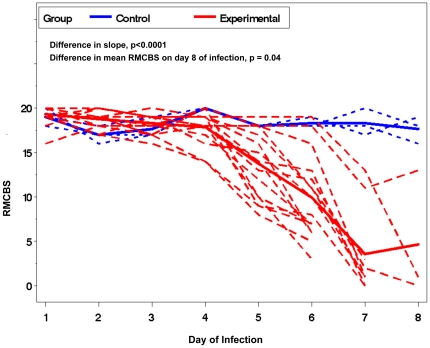
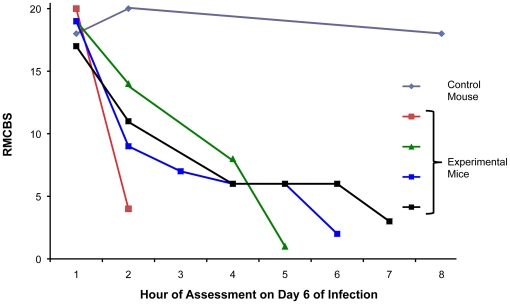
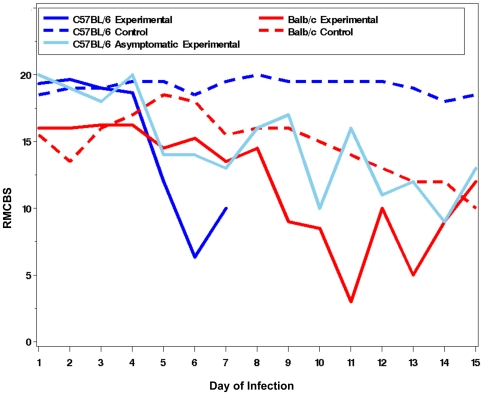
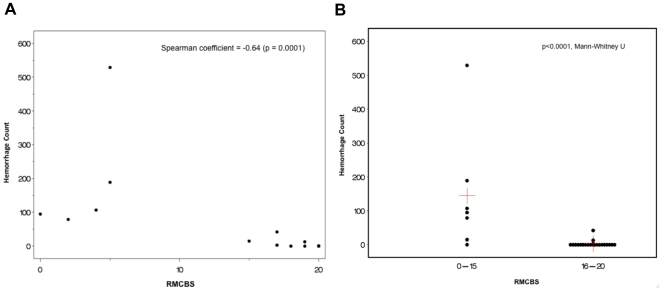
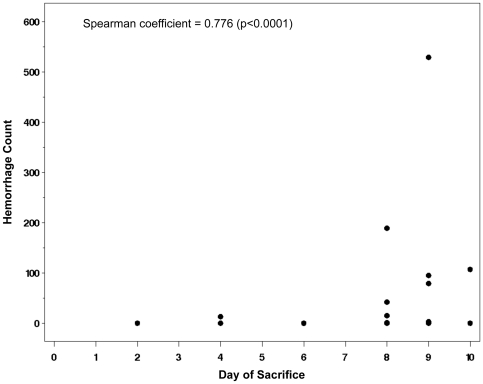
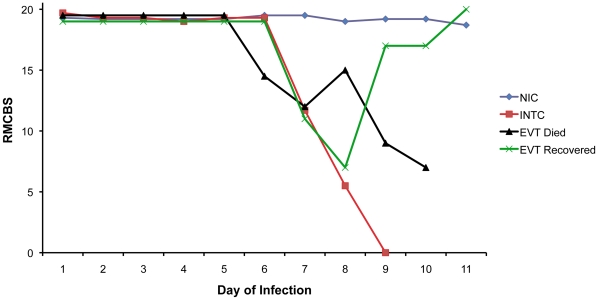
Methodology/principal findings: A quantitative, rapid murine coma and behavior scale (RMCBS) comprised of 10 parameters was developed to assess MCM manifested in C57BL/6 mice infected with Plasmodium berghei ANKA (PbA). Using this method a single mouse can be completely assessed within 3 minutes. The RMCBS enables the operator to follow the evolution of the clinical syndrome, validated here by correlations with intracerebral hemorrhages. It provides a tool by which subjects can be identified as symptomatic prior to the initiation of trial treatment.
Conclusions/significance: Since the RMCBS enables an operator to rapidly follow the course of disease, label a subject as affected or not, and correlate the level of illness with neuropathologic injury, it can ultimately be used to guide the initiation of treatment after the onset of cerebral disease (thus emulating the situation in the field). The RMCBS is a tool by which an adjuvant therapy can be objectively assessed.
Conflict of interest statement
Figures
References
-
- Breman JG. The ears of the hippopotamus: manifestations, determinants, and estimates of the malaria burden. Am J Trop Med Hyg. 2001;64:1–11. - PubMed
-
- Severe falciparum malaria. World Health Organization, Communicable Diseases Cluster. Trans R Soc Trop Med Hyg. 2000;94(Suppl 1):S1–90. - PubMed
-
- Kihara M, Carter JA, Newton CR. The effect of Plasmodium falciparum on cognition: a systematic review. Trop Med Int Health. 2006;11:386–397. - PubMed
Publication types
MeSH terms
Grants and funding
LinkOut - more resources
Full Text Sources
Medical
