


Preliminary biochemical characterization of the novel, non-AT1, non-AT2 angiotensin binding site from the rat brain
- PMID: 20960166
- PMCID: PMC3176303
- DOI: 10.1007/s12020-010-9328-2
Preliminary biochemical characterization of the novel, non-AT1, non-AT2 angiotensin binding site from the rat brain
Erratum in
- Endocrine. 2010 Oct;38(2):312
Abstract
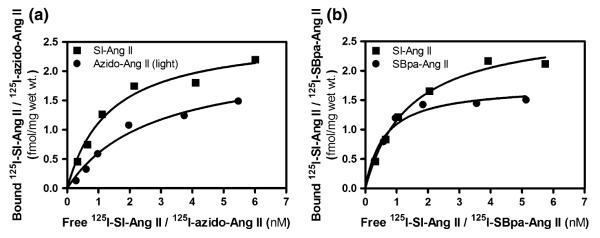
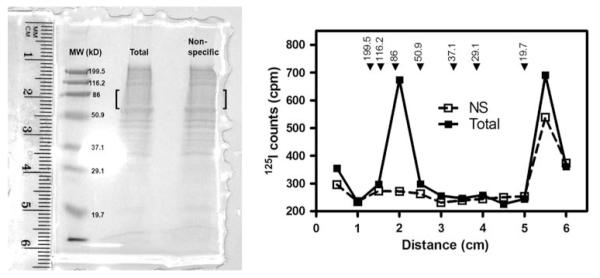
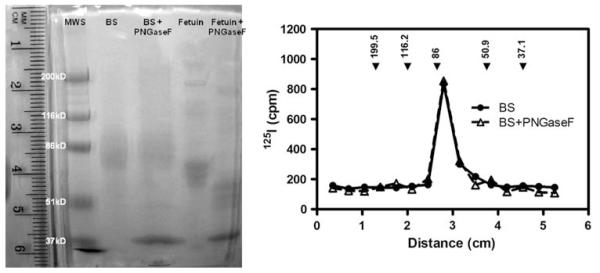
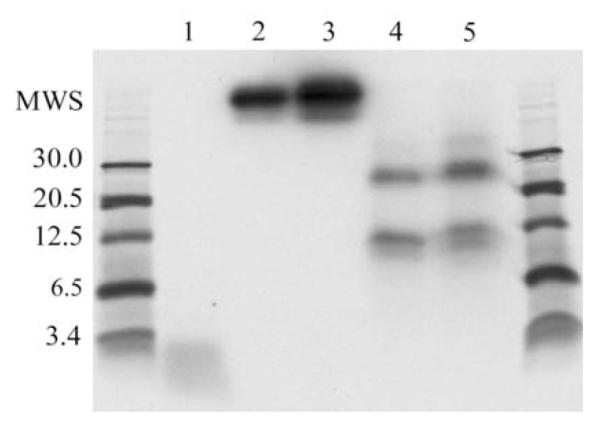
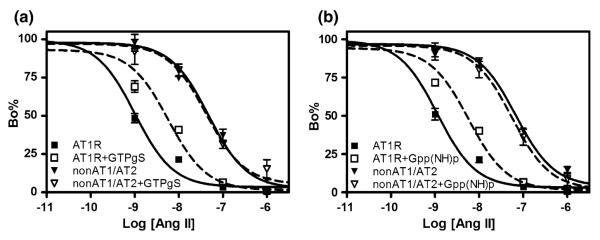
A novel binding site for angiotensins II and III was recently discovered in brain membranes in the presence of the sulfhydryl reactive angiotensinase inhibitor parachloromercuribenzoate. This binding site is distinctly different from the other known receptors for angiotensins: AT₁, AT₂, AT₄, and mas oncogene protein (Ang 1-7 receptor). Preliminary biochemical characterization studies have been done on this protein by crosslinking it with (125)I-labeled photoaffinity probes and solubilizing the radiolabeled binding site. Polyacrylamide gel electrophoresis studies and isoelectric focusing indicate that this membrane bound binding site is a protein with a molecular weight of 70-85 kDa and an isoelectric point of ~7. Cyanogen bromide hydrolysis of the protein yielded two radiolabeled fragments of 12.5 and 25 kDa. The protein does not appear to be N-glycosylated based upon the failure of PNGaseF to alter its migration rate on a 7.5% polyacrylamide gel. The binding of angiotensin II to this protein is not affected by GTPγS or Gpp(NH)p, suggesting that it is not a G protein-coupled receptor. Further characterization studies are directed to identify this protein either as a novel angiotensin receptor, an angiotensin scavenger (clearance receptor) or an angiotensinase.
Figures
References
-
- Severs WB, Summy-Long J, Taylor JS, Connor JD. J. Pharmacol. Exp. Ther. 1970;174:27–34. - PubMed
-
- Phillips MI. Neuroendocrinology. 1978;25:354–377. - PubMed
-
- Fitzsimons JT. Physiol. Rev. 1998;78:583–686. - PubMed
-
- Osborn JW, Fink GD, Sved AF, Toney GM, Raizada MK. Curr. Hypertens. Rep. 2007;9:228–235. - PubMed
-
- Phillips MI, Sumners C. Regul. Pept. 1998;78:1–11. - PubMed
Publication types
MeSH terms
Substances
Grants and funding
LinkOut - more resources
Full Text Sources
Research Materials
Miscellaneous
