


Mapping the cellular and molecular heterogeneity of normal and malignant breast tissues and cultured cell lines
- PMID: 20964822
- PMCID: PMC3096980
- DOI: 10.1186/bcr2755
Mapping the cellular and molecular heterogeneity of normal and malignant breast tissues and cultured cell lines
Abstract
Introduction: Normal and neoplastic breast tissues are comprised of heterogeneous populations of epithelial cells involving various degrees of maturation and differentiation. While cultured cell lines have been derived from both normal and malignant tissues, it remains unclear whether they retain a similar cellular heterogeneity as to that found within breast tissues.
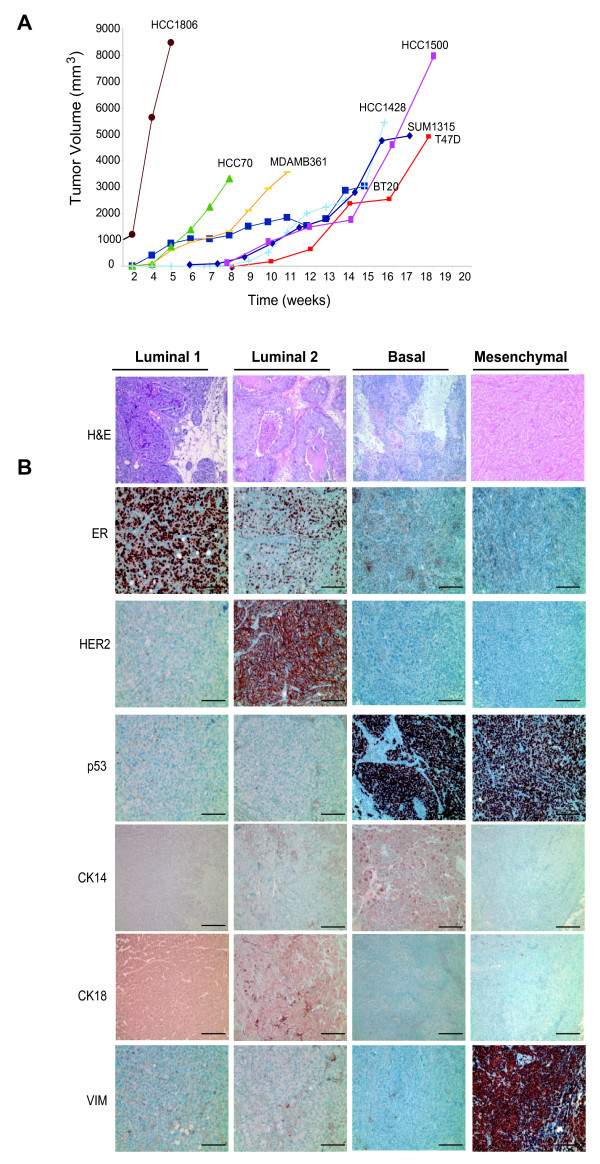
Methods: We used 12 reduction mammoplasty tissues, 15 primary breast cancer tissues, and 20 human breast epithelial cell lines (16 cancer lines, 4 normal lines) to perform flow cytometry for CD44, CD24, epithelial cell adhesion molecule (EpCAM), and CD49f expression as well as immunohistochemistry, and in vivo tumor xenograft formation studies to extensively analyze the molecular and cellular characteristics of breast epithelial cell lineages.
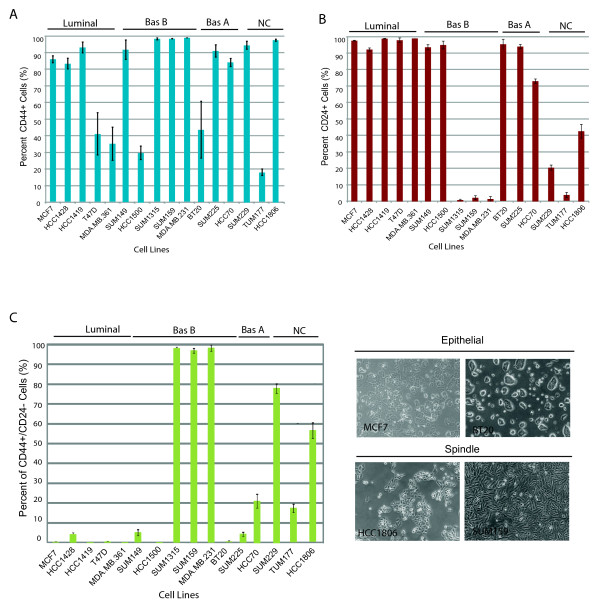
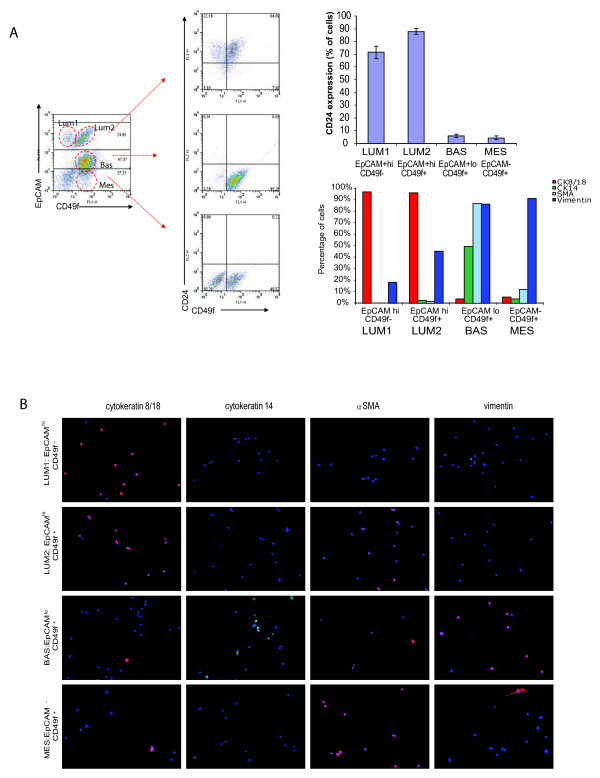
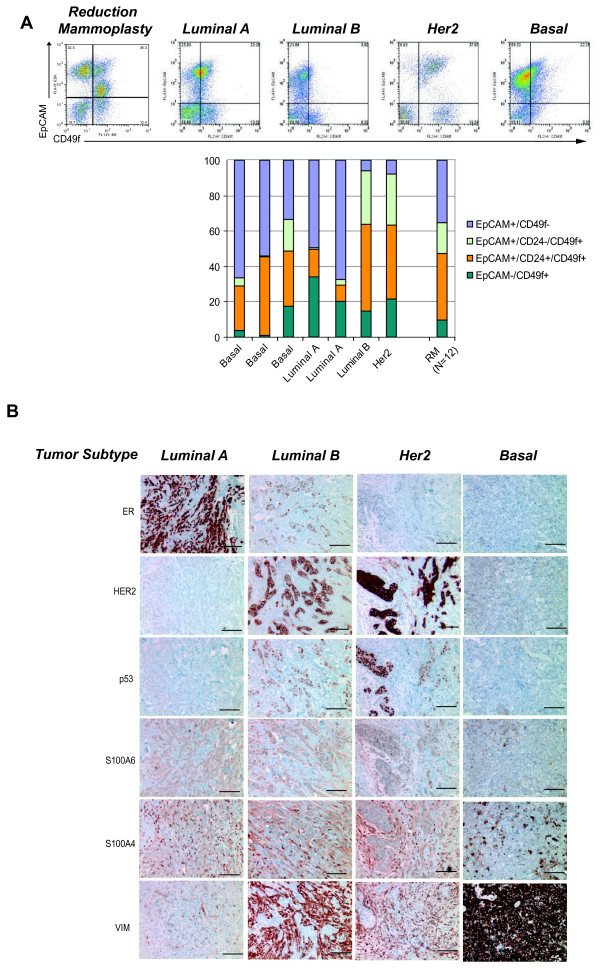
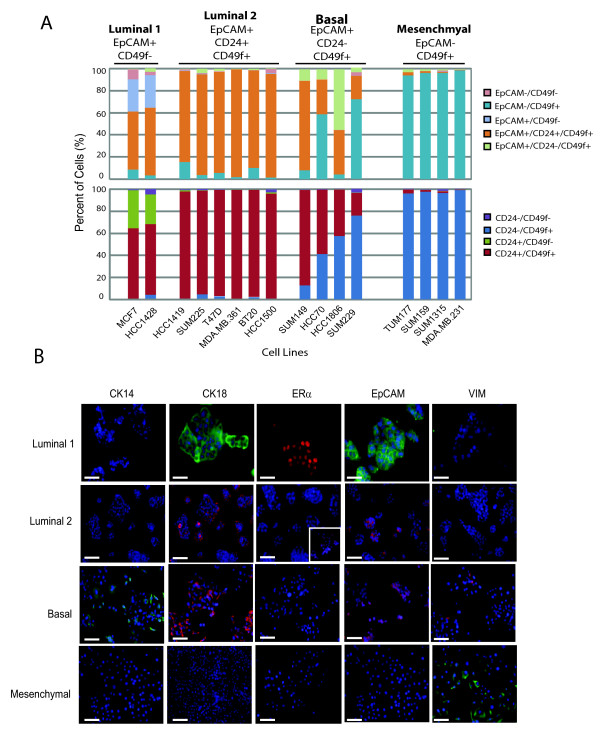
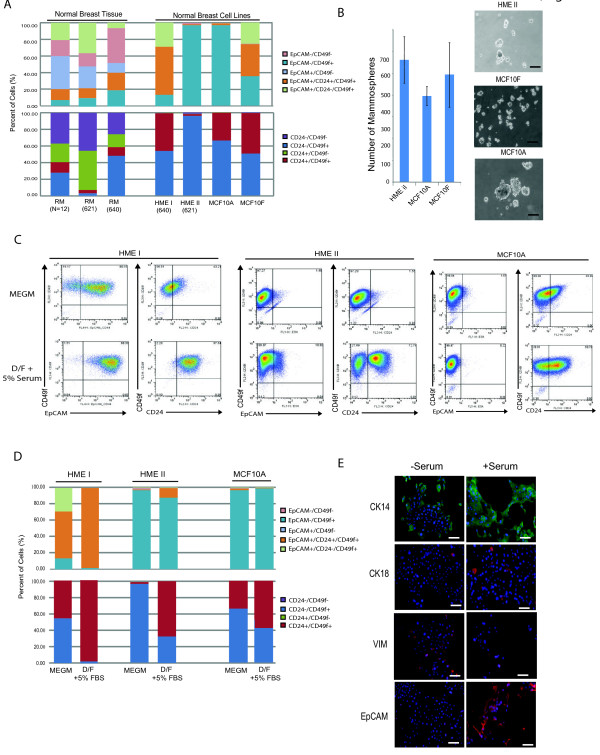
Results: Human breast tissues contain four distinguishable epithelial differentiation states (two luminal phenotypes and two basal phenotypes) that differ on the basis of CD24, EpCAM and CD49f expression. Primary human breast cancer tissues also contain these four cellular states, but in altered proportions compared to normal tissues. In contrast, cultured cancer cell lines are enriched for rare basal and mesenchymal phenotypes, which are normally present in small numbers within human tissues. Similarly, cultured normal human mammary epithelial cell lines were enriched for rare basal and mesenchymal phenotypes that represent a minor fraction of cells within reduction mammoplasty tissues. Although normal human mammary epithelial cell lines exhibited features of bi-potent progenitor cells they were unable to differentiate into mature luminal breast epithelial cells.
Conclusions: As a group breast cancer cell lines represent the heterogeneity of human breast tumors, but individually they exhibit increased lineage-restricted profiles that fall short of truly representing the intratumoral heterogeneity of individual breast tumors. Additionally, normal human mammary epithelial cell lines fail to retain much of the cellular diversity found in human breast tissues and are enriched for differentiation states that are a minority in breast tissues, although they do exhibit features of bi-potent basal progenitor cells. These findings suggest that collections of cell lines representing multiple cell types can be used to model the cellular heterogeneity of tissues.
Figures
Comment in
-
Appraisal of progenitor markers in the context of molecular classification of breast cancers.Breast Cancer Res. 2011 Jan 25;13(1):102. doi: 10.1186/bcr2792. Breast Cancer Res. 2011. PMID: 21345245 Free PMC article.
References
-
- Weisenthal LM, Kern DH. Prediction of drug resistance in cancer chemotherapy: the Kern and DiSC assays. Oncology (Williston Park) 1991;5:93–103. - PubMed
-
- Wistuba II, Behrens C, Milchgrub S, Syed S, Ahmadian M, Virmani AK, Kurvari V, Cunningham TH, Ashfaq R, Minna JD, Gazdar AF. Comparison of features of human breast cancer cell lines and their corresponding tumors. Clin Cancer Res. 1998;4:2931–2938. - PubMed
-
- Lacroix M, Leclercq G. Relevance of breast cancer cell lines as models for breast tumours: an update. Breast Cancer Res Treat. 2004;83:249–289. doi: 10.1023/B:BREA.0000014042.54925.cc. - DOI - PubMed
Publication types
MeSH terms
Substances
Grants and funding
LinkOut - more resources
Full Text Sources
Other Literature Sources
Medical
Research Materials
Miscellaneous
