


Caloric beverage consumption patterns in Mexican children
- PMID: 20964842
- PMCID: PMC2987771
- DOI: 10.1186/1475-2891-9-47
Caloric beverage consumption patterns in Mexican children
Abstract
Background: Mexico has seen a very steep increase in child obesity level. Little is known about caloric beverage intake in this country as well as all other countries outside a few high income countries. This study examines overall patterns and trends in all caloric beverages from two nationally representative surveys from Mexico.
Methods: The two nationally representative dietary intake surveys (1999 and 2006) from Mexico are used to study caloric beverage intake in 17, 215 children. The volume (ml) and caloric energy (kcal) contributed by all beverages consumed by the sample subjects were measured. Results are weighted to be nationally representative.
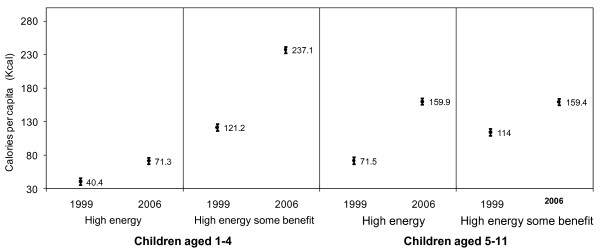
Results: The trends from the dietary intake surveys showed very large increases in caloric beverages among pre-school and school children. The contribution of whole milk and sugar-sweetened juices was an important finding. Mexican pre-school children consumed 27.8% of their energy from caloric beverages in 2006 and school children consumed 20.7% of their energy from caloric beverages during the same time. The three major categories of beverage intake are whole milk, fruit juice with various sugar and water combinations and carbonated and noncarbonated sugared-beverages.
Conclusion: The Mexican government, greatly concerned about obesity, has identified the large increase in caloric beverages from whole milk, juices and soft drinks as a key target and is initiating major changes to address this problem. They have already used the data to shift 20 million persons in their welfare and feeding programs from whole to 1.5% fat milk and in a year will shift to nonfat milk. They are using these data to revise school beverage policies and national regulations and taxation policies related to an array of less healthful caloric beverages.
Figures
References
-
- Olaiz G, Rivera-Dommarco J, Shamah T, Rojas R, Villalpando S, Hernández M, Sepúlveda J. Encuesta Nacional de Salud y Nutrición 2006. Cuernavaca - Mexico.: Instituto Nacional de Salud Pública; 2006. p. 132.
-
- Institutes of Medicine. Joint US-Mexico workshop on preventing obesity in children and youth of Mexican origin. Washington, DC, 2007: Institute of Medicine of the National Academies, the National Academies Press; 2007.
-
- Fomento Económico Mexicano S.A. Informe anual FEMSA 2000. Monterrey NL; 2000.
-
- Guerrero-Romero F, Violante R, Rodríguez-Morán M. Distribution of fasting plasma glucose and prevalence of impaired fasting glucose, impaired glucose tolerance and type 2 diabetes in the Mexican paediatric population. Paediatr Perinatal Epidemiol. 2009;23(4):363–369. doi: 10.1111/j.1365-3016.2009.01035.x. - DOI - PubMed
Publication types
MeSH terms
Grants and funding
LinkOut - more resources
Full Text Sources
Medical
