


A path model investigation of neurocognition, theory of mind, social competence, negative symptoms and real-world functioning in schizophrenia
- PMID: 20965699
- PMCID: PMC3031755
- DOI: 10.1016/j.schres.2010.09.020
A path model investigation of neurocognition, theory of mind, social competence, negative symptoms and real-world functioning in schizophrenia
Abstract
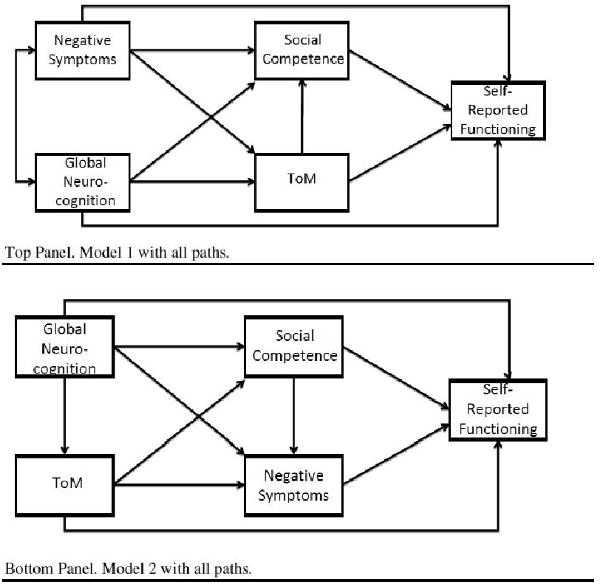
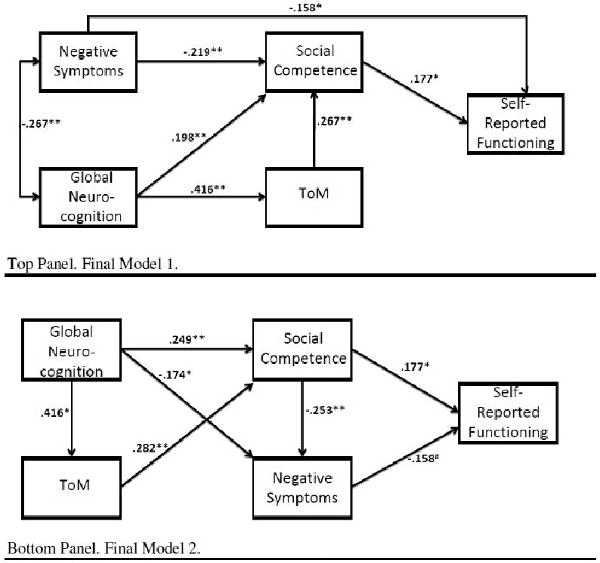
Problems in real-world functioning are pervasive in schizophrenia and much recent effort has been devoted to uncovering factors which contribute to poor functioning. The goal of this study was to examine the role of four such factors: social cognition (theory of mind), neurocognition, negative symptoms, and functional capacity (social competence). 178 individuals with schizophrenia or schizoaffective disorder completed measures of theory of mind, neurocognition, negative symptoms, social competence, and self-reported functioning. Path models sought to determine the relationships among these variables. Theory of mind as indexed by the Hinting Task partially mediated the relationship between neurocognition and social competence, and negative symptoms and social competence demonstrated significant direct paths with self-reported functioning. Study results suggest theory of mind serves as an important mediator in addition to previously investigated social cognitive domains of emotional and social perception. The current study also highlights the need to determine variables which mediate the relationship between functional capacity and real-world functioning.
Copyright © 2010 Elsevier B.V. All rights reserved.
Figures
References
-
- Addington J, Saeedi H, Addington D. Influence of social perception and social knowledge on cognitive and social functioning in early psychosis. Br J Psychiatry. 2006;189(4):373–378. - PubMed
-
- Addington J, Young J, Addington D. Social outcome in early psychosis. Psychol Med. 2003;33:1119–1124. - PubMed
-
- Beck AT, Rector NA, Stolar NM, Grant PM. Schizophrenia: Cognitive theory, research, and therapy. Guilford Press; New York: 2009.
-
- Bellack A, Brown C, Thomas-Lohrman S. Psychometric characteristics of role-play assessments of social skill in schizophrenia. Behav Therapy. 2006;37:339–352. - PubMed
Publication types
MeSH terms
Grants and funding
LinkOut - more resources
Full Text Sources
Medical
