


A copper chelate of thiosemicarbazone NSC 689534 induces oxidative/ER stress and inhibits tumor growth in vitro and in vivo
- PMID: 20971185
- PMCID: PMC3014388
- DOI: 10.1016/j.freeradbiomed.2010.10.696
A copper chelate of thiosemicarbazone NSC 689534 induces oxidative/ER stress and inhibits tumor growth in vitro and in vivo
Abstract
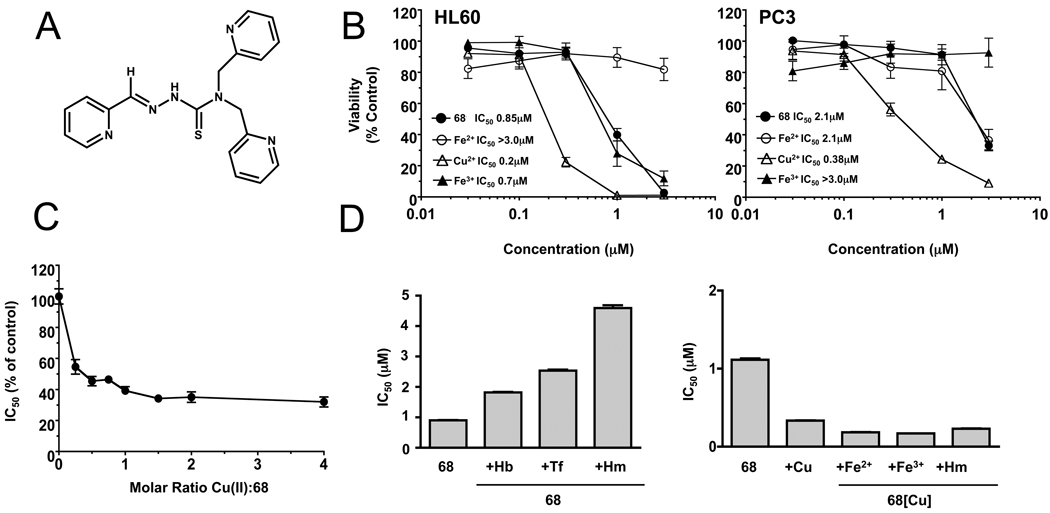
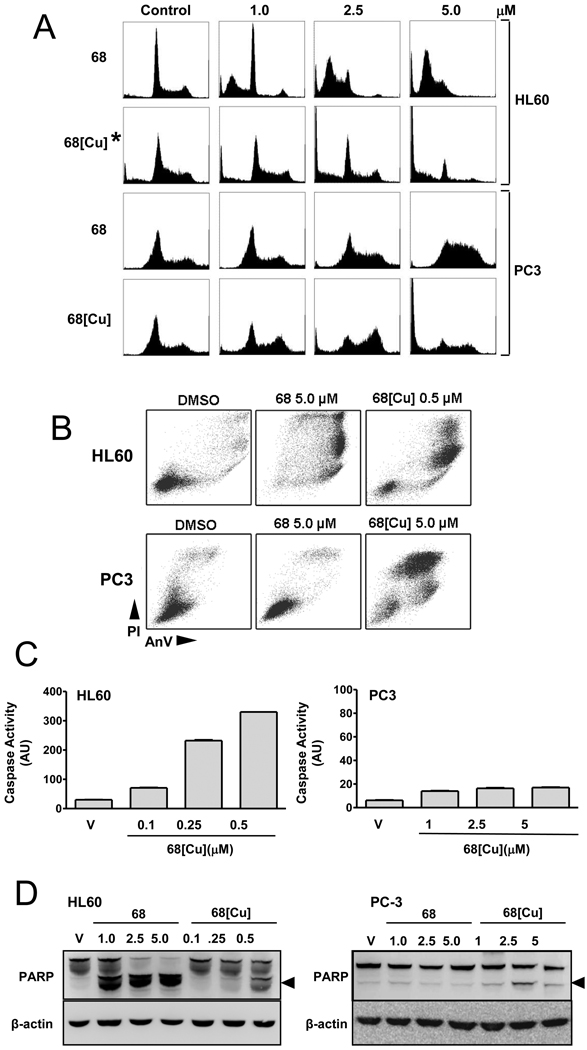
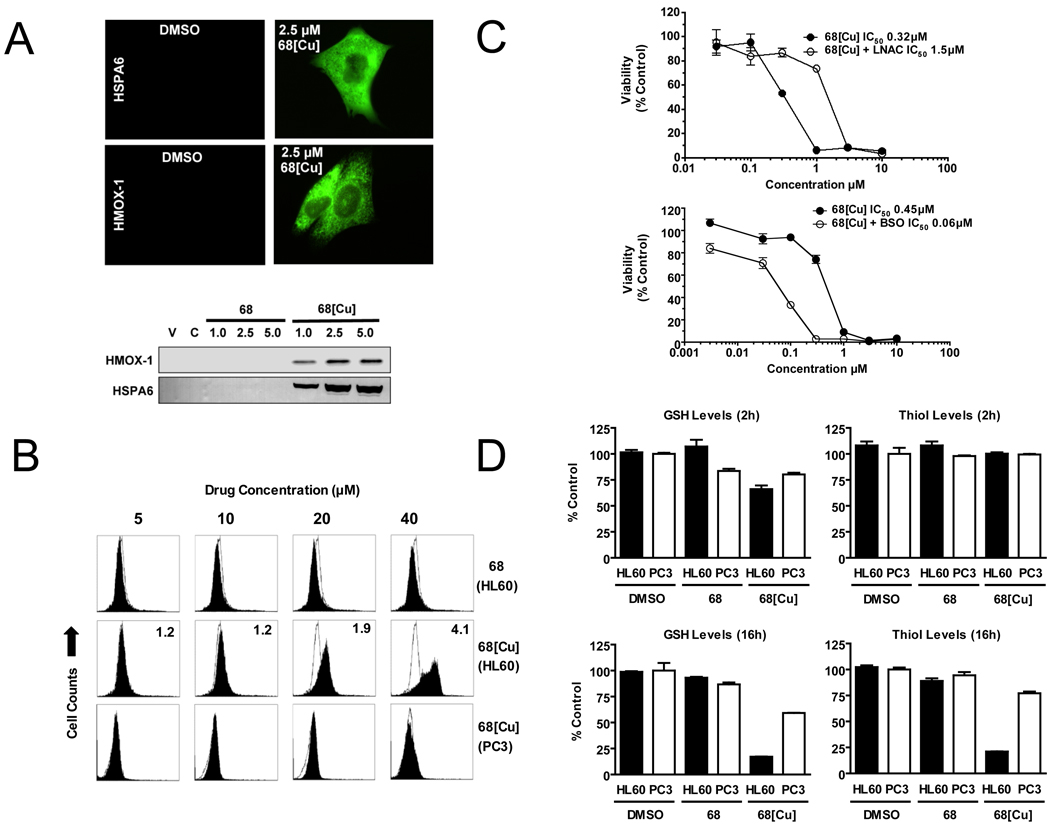
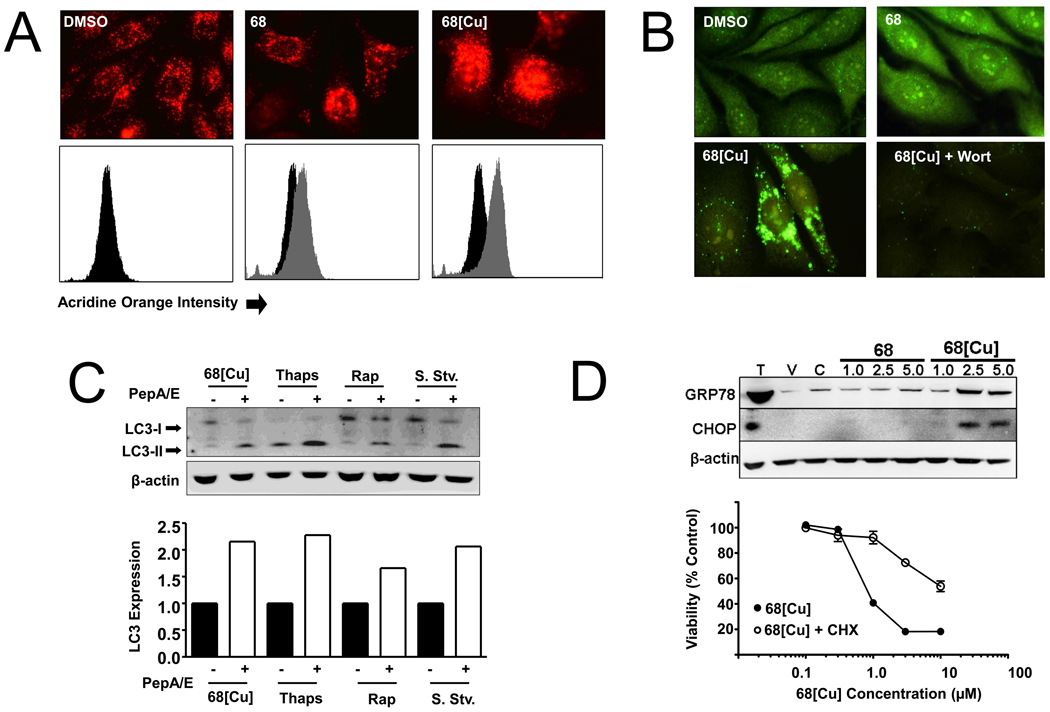
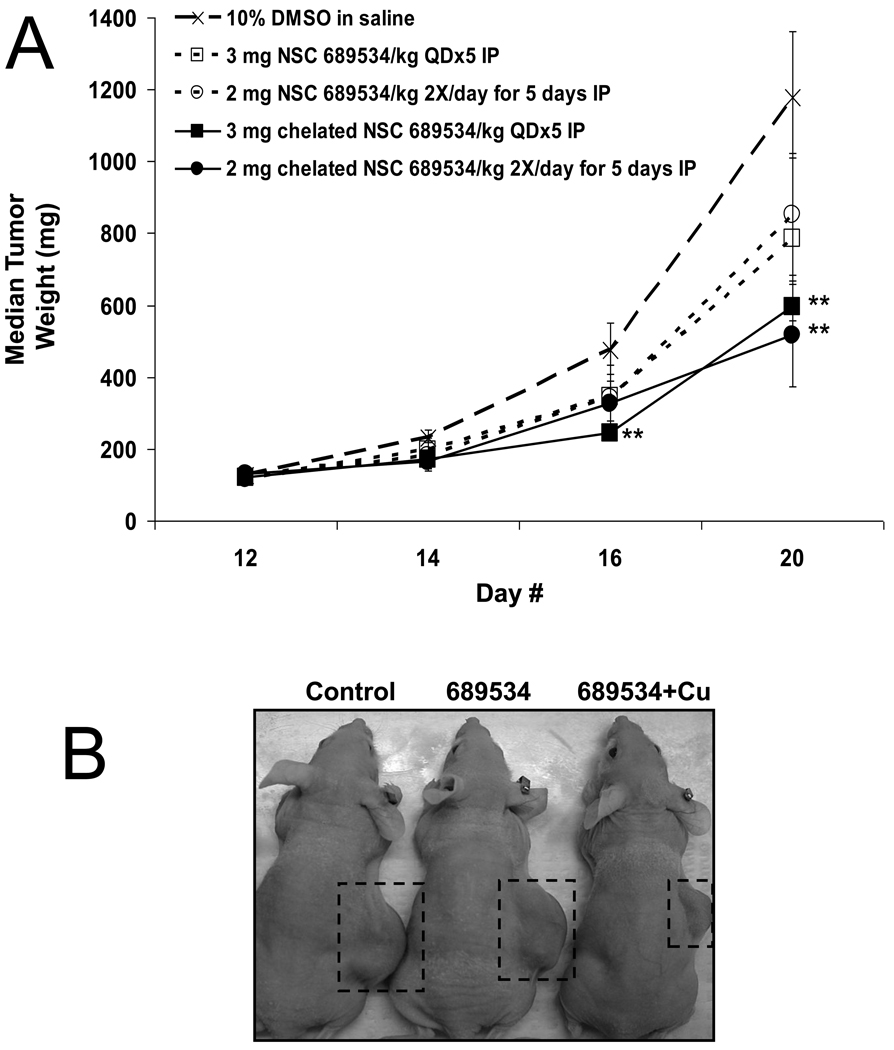
In this study, a Cu(2+) chelate of the novel thiosemicarbazone NSC 689534 was evaluated for in vitro and in vivo anti-cancer activity. Results demonstrated that NSC 689534 activity (low micromolar range) was enhanced four- to fivefold by copper chelation and completely attenuated by iron. Importantly, once formed, the NSC 689534/Cu(2+) complex retained activity in the presence of additional iron or iron-containing biomolecules. NSC 689534/Cu(2+) mediated its effects primarily through the induction of ROS, with depletion of cellular glutathione and protein thiols. Pretreatment of cells with the antioxidant N-acetyl-l-cysteine impaired activity, whereas NSC 689534/Cu(2+) effectively synergized with the glutathione biosynthesis inhibitor buthionine sulfoximine. Microarray analysis of NSC 689534/Cu(2+)-treated cells highlighted activation of pathways involved in oxidative and ER stress/UPR, autophagy, and metal metabolism. Further scrutiny of the role of ER stress and autophagy indicated that NSC 689534/Cu(2+)-induced cell death was ER-stress dependent and autophagy independent. Last, NSC 689534/Cu(2+) was shown to have activity in an HL60 xenograft model. These data suggest that NSC 689534/Cu(2+) is a potent oxidative stress inducer worthy of further preclinical investigation.
Copyright © 2010 Elsevier Inc. All rights reserved.
Figures
References
-
- Yu Y, Kalinowski DS, Kovacevic Z, Siafakas AR, Jansson PJ, Stefani C, Lovejoy DB, Sharpe PC, Bernhardt PV, Richardson DR. Thiosemicarbazones from the old to new: iron chelators that are more than just ribonucleotide reductase inhibitors. J Med Chem. 2009;52:5271–5294. - PubMed
-
- Yu Y, Wong J, Lovejoy DB, Kalinowski DS, Richardson DR. Chelators at the cancer coalface: desferrioxamine to Triapine and beyond. Clin Cancer Res. 2006;12:6876–6883. - PubMed
-
- Wadler S, Makower D, Clairmont C, Lambert P, Fehn K, Sznol M. Phase I and pharmacokinetic study of the ribonucleotide reductase inhibitor, 3-aminopyridine-2-carboxaldehyde thiosemicarbazone, administered by 96-hour intravenous continuous infusion. J Clin Oncol. 2004;22:1553–1563. - PubMed
-
- Shao J, Zhou B, Zhu L, Qiu W, Yuan YC, Xi B, Yen Y. In vitro characterization of enzymatic properties and inhibition of the p53R2 subunit of human ribonucleotide reductase. Cancer Res. 2004;64:1–6. - PubMed
Publication types
MeSH terms
Substances
Grants and funding
LinkOut - more resources
Full Text Sources
Other Literature Sources
