


Thrombospondin-1 inhibition of vascular smooth muscle cell responses occurs via modulation of both cAMP and cGMP
- PMID: 20971192
- PMCID: PMC3026097
- DOI: 10.1016/j.phrs.2010.10.014
Thrombospondin-1 inhibition of vascular smooth muscle cell responses occurs via modulation of both cAMP and cGMP
Abstract
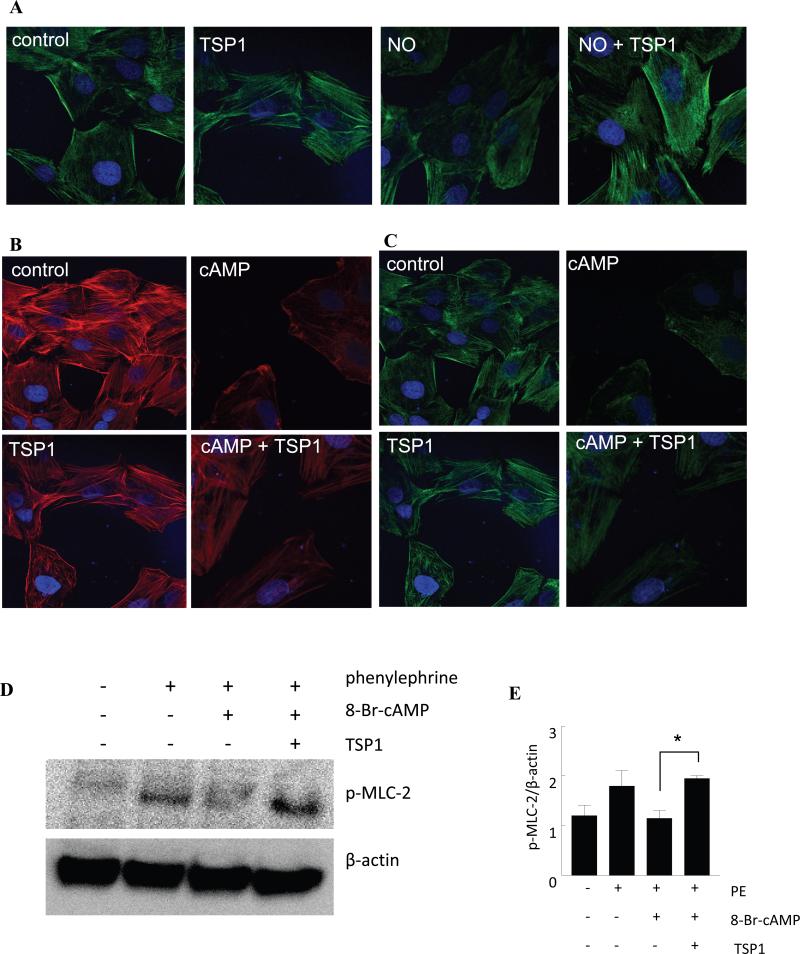
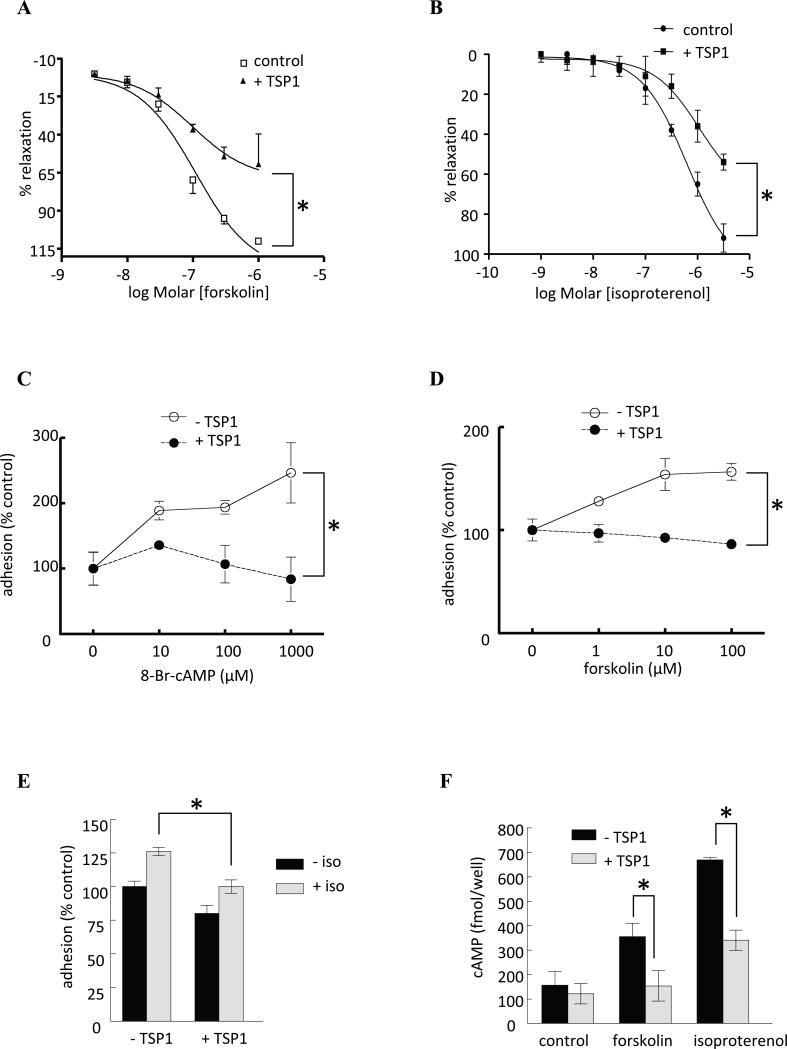
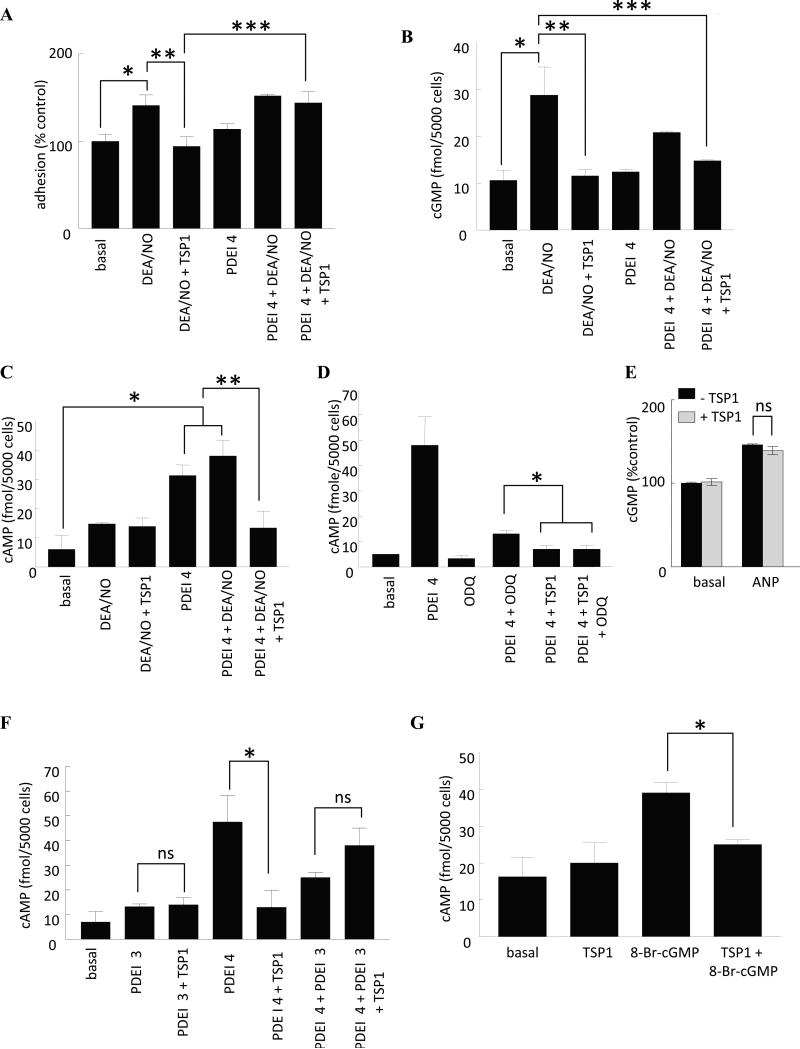
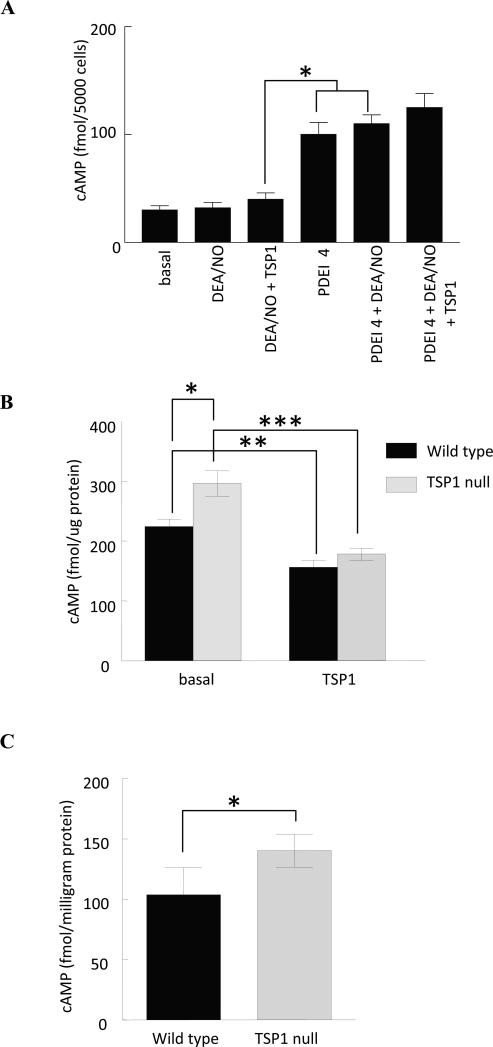
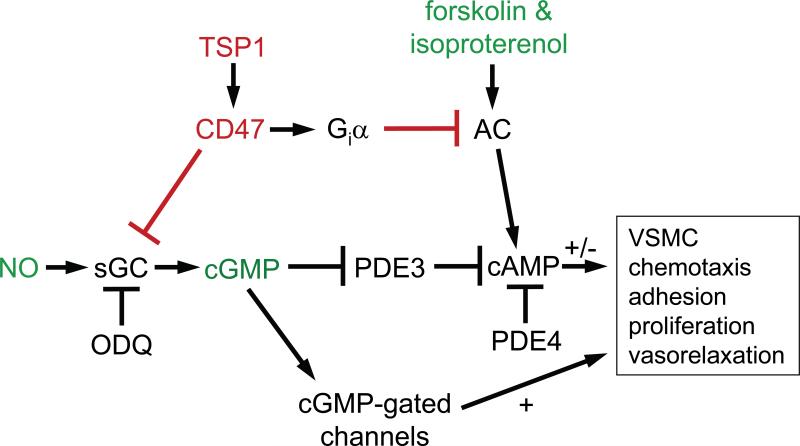
Nitric oxide (NO) drives pro-survival responses in vascular cells and limits platelet adhesion, enhancing blood flow and minimizing thrombosis. The matricellular protein thrombospondin-1 (TSP1), through interaction with its receptor CD47, inhibits soluble guanylyl cyclase (sGC) activation by NO in vascular cells. In vascular smooth muscle cells (VSMCs) both intracellular cGMP and cAMP regulate adhesion, contractility, proliferation, and migration. cGMP can regulate cAMP through feedback control of hydrolysis. Inhibition of the cAMP phosphodiesterase-4 selectively interfered with the ability of exogenous TSP1 to block NO-driven VSMC adhesion but not cGMP accumulation, suggesting that cAMP also contributes to VSMC regulation by TSP1. Inhibition of phosphodiesterase-4 was sufficient to elevate cAMP levels, and inhibiting guanylyl cyclase or phosphodiesterase-3, or adding exogenous TSP1 reversed this increase in cAMP. Thus, TSP1 regulates VSMC cAMP levels in part via cGMP-dependent inhibition of phosphodiesterase-3. Additionally basal cAMP levels were consistently elevated in both VSMCs and skeletal muscle from TSP1 null mice, and treating null cells with exogenous TSP1 suppressed cAMP levels to those of wild type cells. TSP1 inhibited both forskolin and isoproterenol stimulated increases in cAMP in VSMCs. TSP1 also abrogated forskolin and isoproterenol stimulated vasodilation. Consistent with its ability to directly limit adenylyl cyclase-activated vasodilation, TSP1 also limited cAMP-induced dephosphorylation of myosin light chain-2. These findings demonstrate that TSP1 limits both cGMP and cAMP signaling pathways and functional responses in VSMCs and arteries, by both phosphodiesterase-dependent cross talk between these second messengers and by inhibition of adenylyl cyclase activation.
Copyright © 2010 Elsevier Ltd. All rights reserved.
Figures
References
-
- Ignarro LJ. Nitric oxide as a unique signaling molecule in the vascular system: A historical overview. J Physiol Pharmacol. 2002;53:503–514. - PubMed
-
- Isenberg JS, Wink DA, Roberts DD. Thrombospondin-1 antagonizes nitric oxide-stimulated vascular smooth muscle cell responses. Cardiovasc Res. 2006;71:785–793. - PubMed
-
- Isenberg JS, Hyodo F, Pappan LK, Abu-Asab M, Tsokos M, Krishna MC, Frazier WA, Roberts DD. Blocking thrombospondin-1/cd47 signaling alleviates deleterious effects of aging on tissue responses to ischemia. Arterioscler Thromb Vasc Biol. 2007;27:2582–2588. - PubMed
Publication types
MeSH terms
Substances
Grants and funding
LinkOut - more resources
Full Text Sources
Other Literature Sources
Research Materials
Miscellaneous
