. 2011 Jan;300(1):H397-407.
doi: 10.1152/ajpheart.00679.2010. Epub 2010 Oct 22.

The cerebrovascular dysfunction induced by slow pressor doses of angiotensin II precedes the development of hypertension

Affiliations

The cerebrovascular dysfunction induced by slow pressor doses of angiotensin II precedes the development of hypertension

Carmen Capone et al. Am J Physiol Heart Circ Physiol. 2011 Jan.

Abstract

Hypertension alters cerebrovascular regulation and increases the brain's susceptibility to stroke and dementia. We investigated the temporal relationships between the arterial pressure (AP) elevation induced by "slow pressor" angiotensin II (ANG II) infusion, which recapitulates key features of human hypertension, and the resulting cerebrovascular dysfunction. Minipumps delivering saline or ANG II for 14 days were implanted subcutaneously in C57BL/6 mice (n = 5/group). Cerebral blood flow was assessed by laser-Doppler flowmetry in anesthetized mice equipped with a cranial window. With ANG II (600 ng · kg(-1) · min(-1)), AP started to rise after 9 days (P < 0.05 vs. saline), remained elevated at 11-17 days, and returned to baseline at 21 days (P > 0.05). ANG II attenuated the cerebral blood flow increase induced by neural activity (whisker stimulation) or endothelium-dependent vasodilators, an effect observed before the AP elevation (7 days), as well as after the hypertension subsided (21 days). Nonpressor doses of ANG II (200 ng · kg(-1) · min(-1)) induced cerebrovascular dysfunction and oxidative stress without elevating AP (P > 0.05 vs. saline), whereas phenylephrine elevated AP without inducing cerebrovascular effects. ANG II (600 ng · kg(-1) · min(-1)) augmented neocortical reactive oxygen species (ROS) with a time course similar to that of the cerebrovascular dysfunction. Neocortical application of the ROS scavenger manganic(I-II)meso-tetrakis(4-benzoic acid)porphyrin or the NADPH oxidase peptide inhibitor gp91ds-tat attenuated ROS and cerebrovascular dysfunction. We conclude that the alterations in neurovascular regulation induced by slow pressor ANG II develop before hypertension and persist beyond AP normalization but are not permanent. The findings unveil a striking susceptibility of cerebrovascular function to the deleterious effects of ANG II and raise the possibility that cerebrovascular dysregulation precedes the elevation in AP also in patients with ANG II-dependent hypertension.


Figures
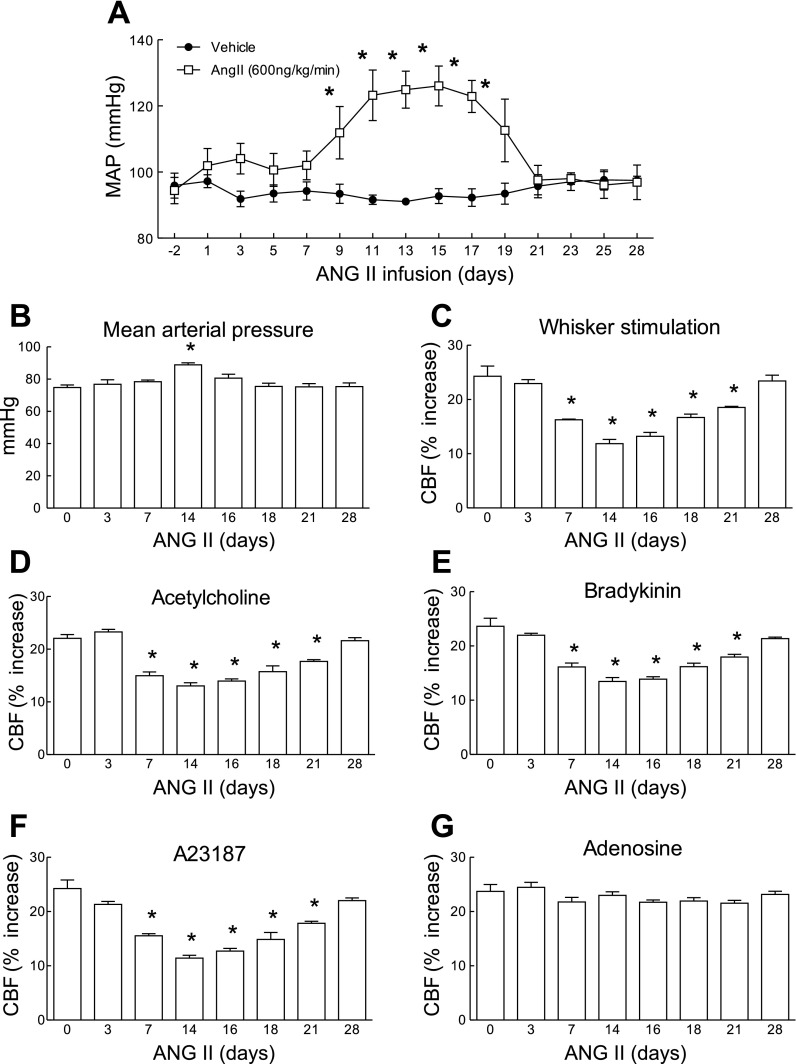
Fig. 1.
Fig. 1.
Time course of the effect of ANG II infusion (600 ng·kg−1·min−1) on mean arterial pressure (MAP) and cerebral blood flow (CBF) responses. A: recordings of MAP by radiotelemetry in mice implanted with osmotic minipumps set to deliver ANG II or vehicle for 14 days. MAP increases significantly at 9 days, reaches a plateau at 11 days, and starts to decline at 19 days. MAP returns to baseline at 21 days. *P < 0.05 from baseline and vehicle (ANOVA and Tukey's test; n = 5/group). B: increases in MAP induced by ANG II infusion in anesthetized mice in which CBF was monitored. MAP was measured through an indwelling femoral artery catheter. A significant increase is observed only at 14 days. C–G: increases in CBF induced by whisker stimulation, ACh (10 μM), bradykinin (50 μM), A-23187 (3 μM), or adenosine (400 μM) in mice receiving ANG II. Responses to whisker stimulation, ACh, bradykinin, and A-23187, but not adenosine, are attenuated at 7 days when MAP is not yet increased. Responses remain reduced up to 21 days and return to baseline at 28 days. *P < 0.05 (ANOVA and Tukey's test; n = 5/group).
Fig. 2.
Fig. 2.
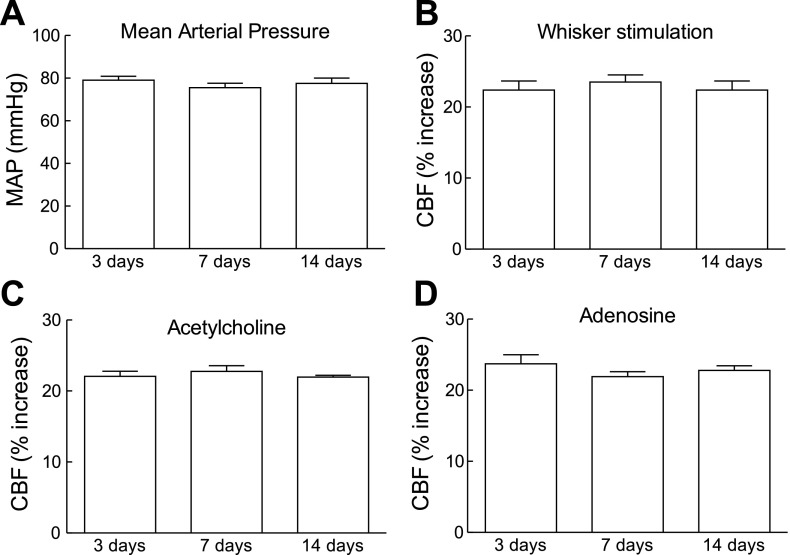
Stability of MAP and increases in CBF over time in mice implanted with osmotic minipumps loaded with saline. A: MAP measured through a femoral catheter during the CBF experiments. B–D: increases in CBF induced by whisker stimulation or topical application of ACh or adenosine. P > 0.05 (ANOVA and Tukey's test; n = 5/group).
Fig. 3.
Fig. 3.
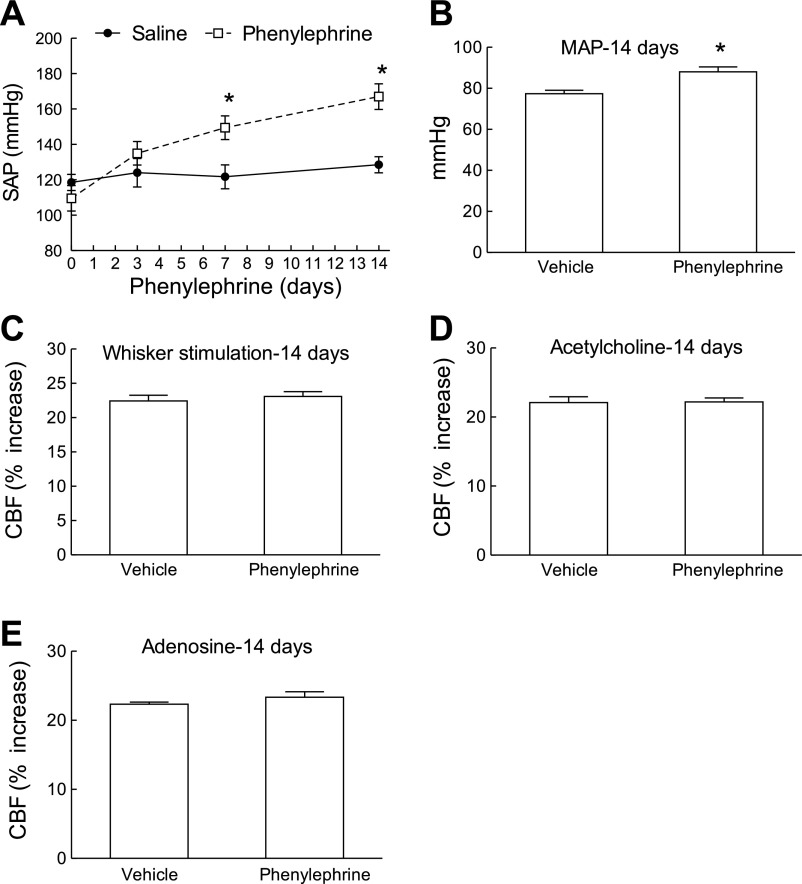
Elevation of MAP with phenylephrine (PE) does not attenuate the CBF responses. A: time course of the systolic blood pressure elevation by tail-cuff plethysmography induced by infusion of PE (3 μg·kg−1·min−1) for 14 days. SAP, systolic arterial pressure. *P < 0.05 from saline; n = 5/group. B: increases in MAP induced by PE in anesthetized mice in which CBF was monitored. C–E: despite the MAP increase, PE does not attenuate the increase in CBF induced by whisker stimulation, ACh, or adenosine. P > 0.05 from vehicle; n = 5/group.
Fig. 4.
Fig. 4.
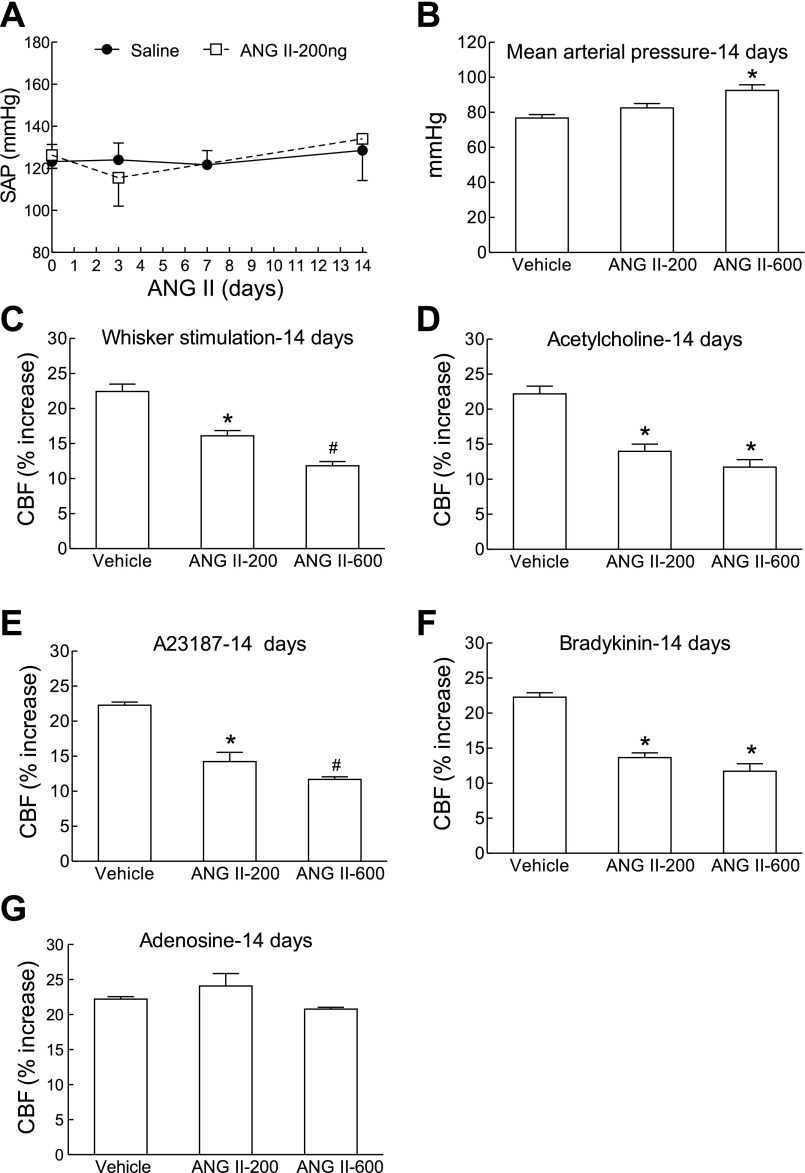
Nonpressor doses of ANG II attenuate CBF responses. A: systolic blood pressure measured by tail-cuff plethysmography during infusion of nonpressor doses of ANG II (200 ng·kg−1·min−1; n = 5/group). B: MAP measured through a femoral catheter during the CBF experiments in mice infused with ANG II (200 or 600 ng·kg−1·min−1) for 14 days. C–G: ANG II infusion (200 and 600 ng·kg−1·min−1) attenuate CBF responses to whisker stimulation, ACh, bradykinin, A-23197, but not adenosine. *P < 0.05 from vehicle; #P < 0.05 from ANG II-200 and vehicle (ANOVA and Tukey's test; n = 5/group).
Fig. 5.
Fig. 5.
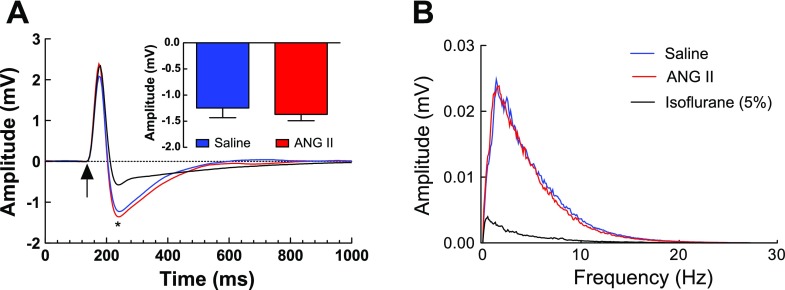
Effect of a 14-day infusion of ANG II (600 ng·kg−1·min−1) on spontaneous and evoked neural activity in the somatosensory cortex (n = 4/group). A: ANG II does not affect the field potentials evoked by activation of the whiskers (2 V; 0.5 Hz; 1-ms pulse). In contrast, the anesthetic isoflurane (5%) markedly attenuates the response. Arrow marks the application of the stimulus. *Negative wave of the field potential the amplitude of which (in mV) is shown in inset. B: ANG II does not affect the frequency distribution of the electrocorticogram, whereas isoflurane potently attenuates signal amplitude at all frequencies.
Fig. 6.
Fig. 6.
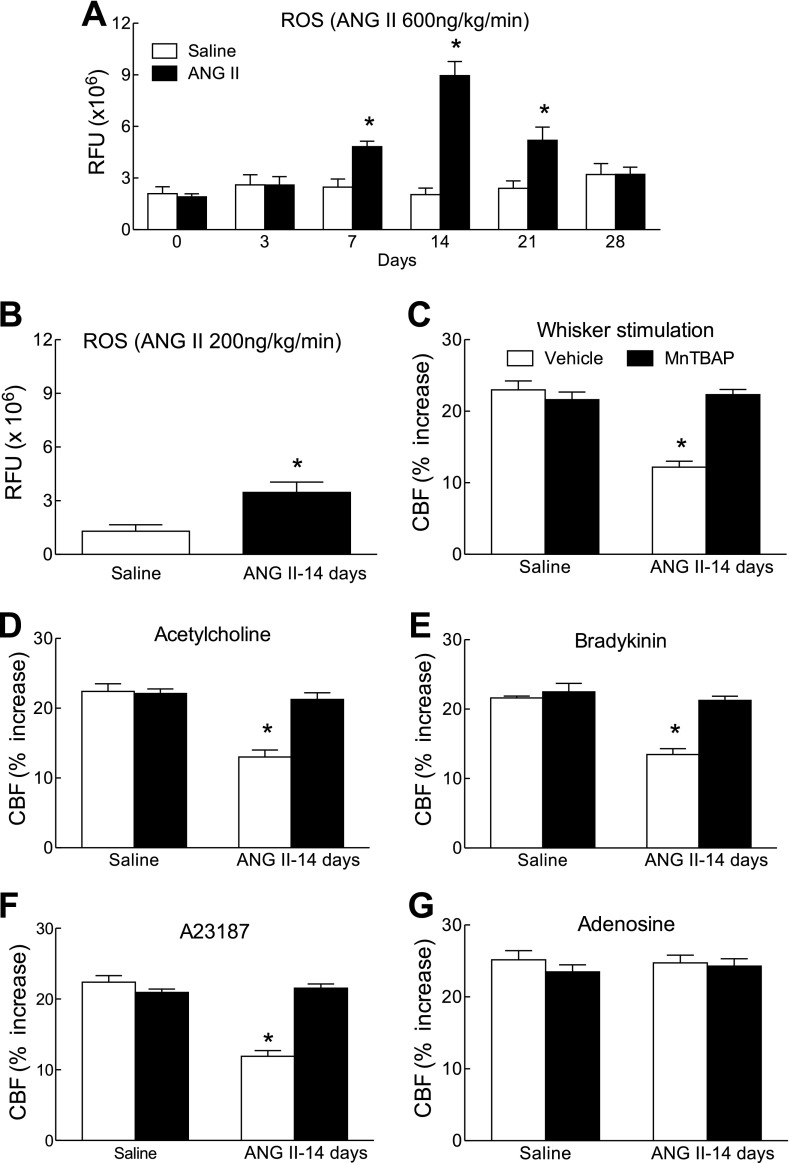
ANG II increases reactive oxygen species (ROS) in the somatosensory cortex, and the ROS scavenger manganic(I-II)meso-tetrakis(4-benzoic acid)porphyrin (MnTBAP) reverses the cerebrovascular dysfunction. A: slow pressor dose of ANG II (600 ng·kg−1·min−1) increases ROS production at 7, 14, and 21 days. ROS return to baseline at 28 days. B: nonpressor dose of ANG II (200 ng·kg−1·min−1) also increases ROS at 14 days but to a lesser extent. *P < 0.05 from saline (ANOVA and Tukey's test; n = 5/group). C–F: topical neocortical application of the ROS scavenger MnTBAP (100 μM) reverses the effect of ANG II on CBF responses to whisker stimulation, ACh, bradykinin, and A-23187. G: CBF response to adenosine is not affected. *P < 0.05 from saline and MnTBAP; n = 5/group.
Fig. 7.
Fig. 7.
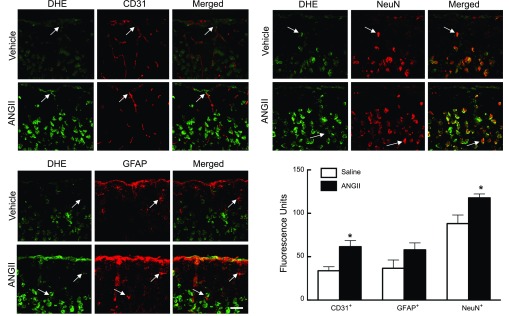
ANG II infusion for 14 days increases ROS-dependent fluorescence in endothelial cells (top, left), neurons (top, right), and astrocytes (bottom, left) compared with vehicle infusion. Microphotographs depict the somatosensory cortex from the pial surface to the deeper cortical layers. ROS were detected by the dihydroethidium (DHE) method (intravenous administration), and CD31, neuronal nuclei (NeuN), or glial fibrillary acidic protein (GFAP) immunoreactivity was used as endothelial, neuronal, and astrocytic markers, respectively. Arrows indicate colocalization of the ROS signal (DHE) with the cell markers. Bar size = 50 μm. Quantification of the fluorescent signal (bottom, right) demonstrates significant ROS increases in endothelial cells and neurons. The increase in ROS in astrocytes did not reach statistical significance. *P < 0.05; n = 4–6/group.
Fig. 8.
Fig. 8.
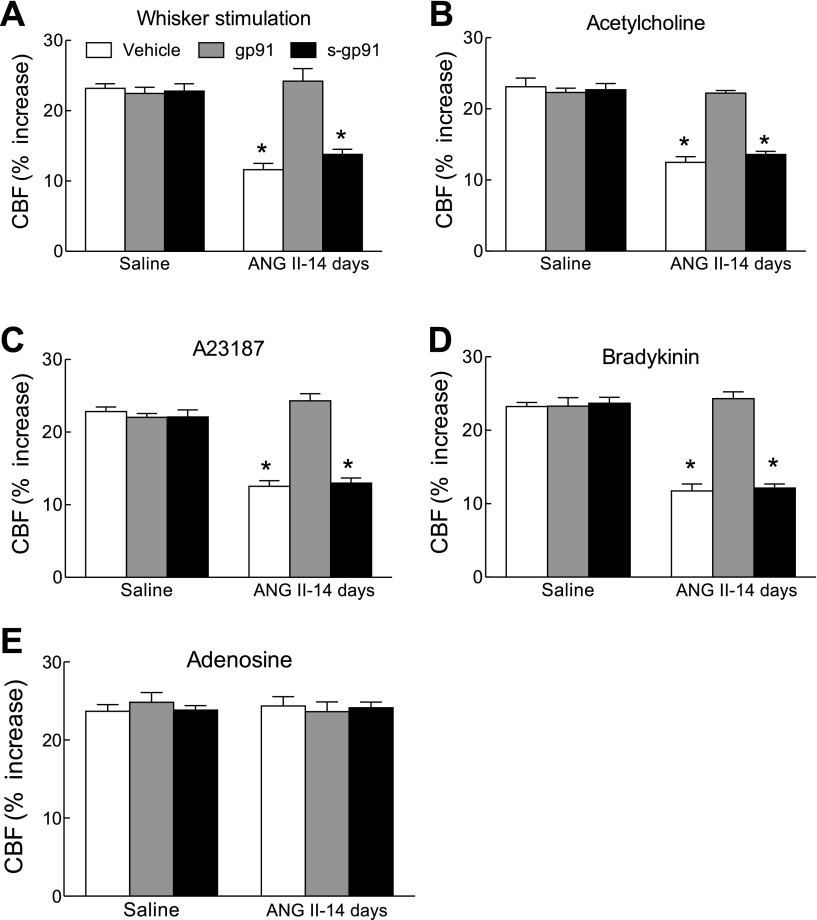
A peptide inhibitor of NADPH oxidase counteracts the cerebrovascular dysfunction induced by ANG II. A–D: gp91ds-tat (gp91; 1 μM), but not its scrambled control (s-gp91; 1 μM), reverses the effect of ANG II on CBF responses to whisker stimulation, A-23187, and bradykinin. E: CBF response to adenosine is not affected. *P < 0.05 from saline and gp91; n = 5/group.

References

    1. Andresen J, Shafi NI, Bryan RM., Jr Endothelial influences on cerebrovascular tone. J Appl Physiol 100:318–327, 2006. - PubMed
    1. Benarroch EE. Paraventricular nucleus, stress response, and cardiovascular disease. Clin Auton Res 15:254–263, 2005. - PubMed
    1. Butz GM, Davisson RL. Long-term telemetric measurement of cardiovascular parameters in awake mice: a physiological genomics tool. Physiol Genomics 5:89–97, 2001. - PubMed
    1. Capone C, Faraco G, Anrather J, Zhou P, Iadecola C. Cyclooxygenase 1-derived prostaglandin E2 and EP1 receptors are required for the cerebrovascular dysfunction induced by angiotensin II. Hypertension 55:911–917, 2010. - PMC - PubMed
    1. Chobanian A, Bakris G, Black H, Cushman W, Green L, Izzo J, Jones D, Materson B, Oparil S, Wright J, Roccella E. The Seventh Report of the Joint National Committee on Prevention, Detection, Evaluation, and Treatment of High Blood Pressure: the JNC 7 report. JAMA 289:2560–2572, 2003. - PubMed

Publication types

MeSH terms