CRF₂ mediates the increased noradrenergic activity in the hypothalamic paraventricular nucleus and the negative state of morphine withdrawal in rats
- PMID: 20973778
- PMCID: PMC3042196
- DOI: 10.1111/j.1476-5381.2010.01090.x
CRF₂ mediates the increased noradrenergic activity in the hypothalamic paraventricular nucleus and the negative state of morphine withdrawal in rats
Abstract
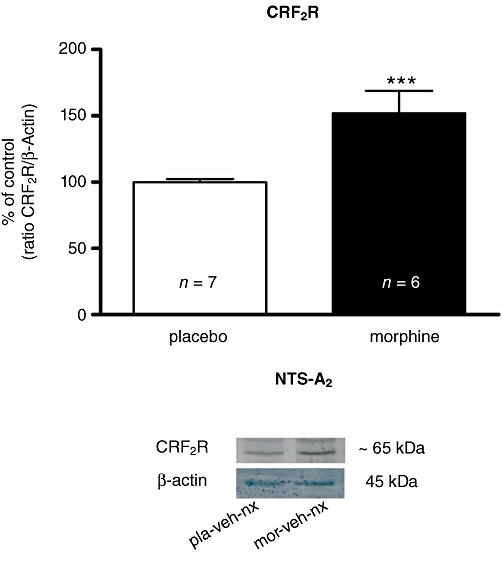
Background and purpose: Recent evidence suggests that corticotropin-releasing factor (CRF) receptor signalling is involved in modulating the negative symptoms of opiate withdrawal. In this study, a series of experiments were performed to further characterize the role of CRF-type 2 receptor (CRF₂) signalling in opiate withdrawal-induced physical signs of dependence, hypothalamus-pituitary-adrenal (HPA) axis activation, enhanced noradrenaline (NA) turnover in the hypothalamic paraventricular nucleus (PVN) and tyrosine hydroxylase (TH) phosphorylation (activation), as well as CRF₂ expression in the nucleus of the solitary tract-A₂ noradrenergic cell group (NTS-A₂).
Experimental approach: The contribution of CRF₂ signalling in opiate withdrawal was assessed by i.c.v. infusion of the selective CRF₂ antagonist, antisauvagine-30 (AS-30). Rats were implanted with two morphine (or placebo) pellets. Six days later, rats were pretreated with AS-30 or saline 10 min before naloxone and the physical signs of abstinence, the HPA axis activity, NA turnover, TH activation and CRF₂ expression were measured using immunoblotting, RIA, HPLC and immunohistochemistry.
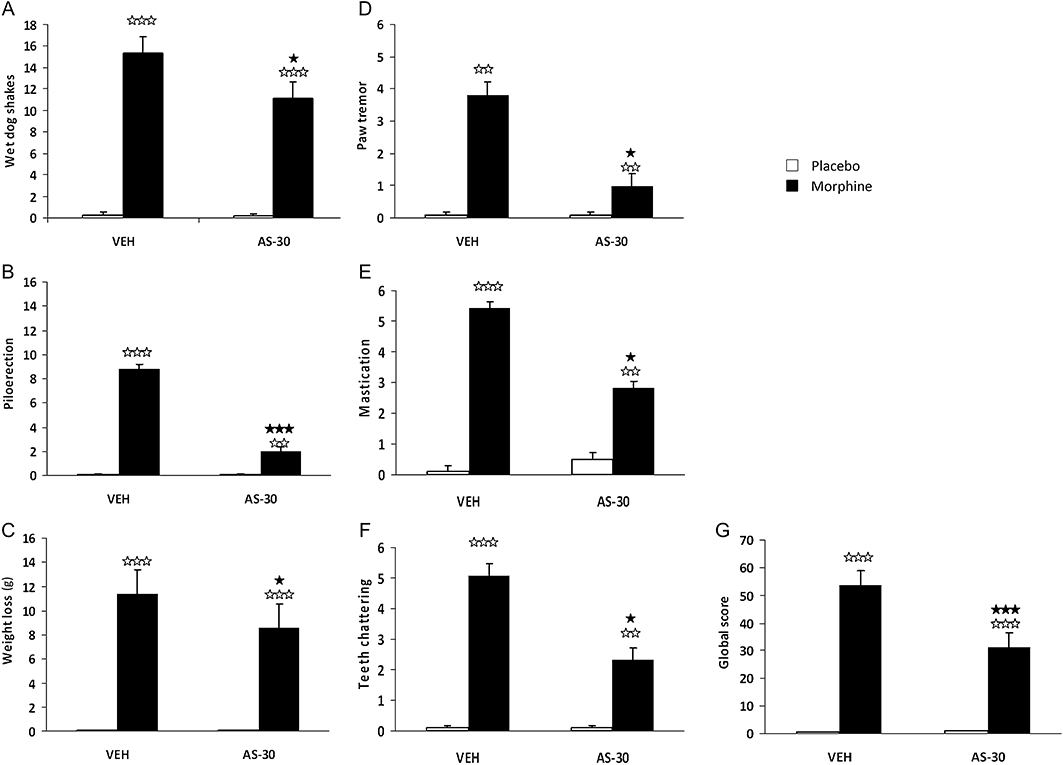
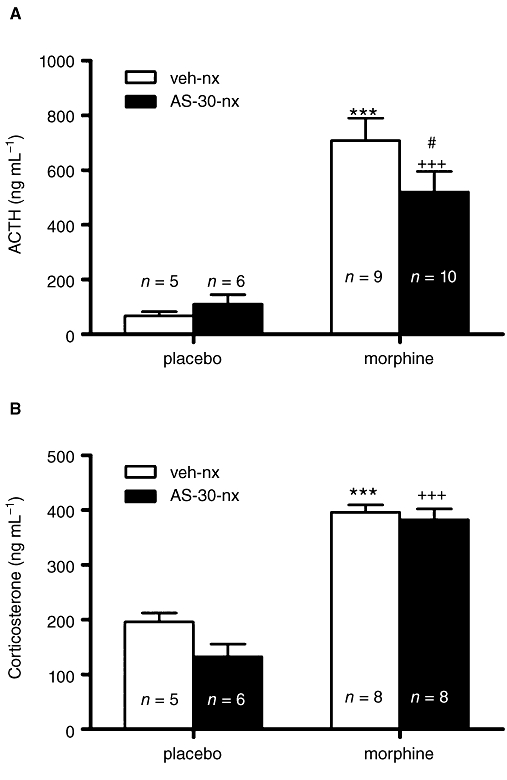
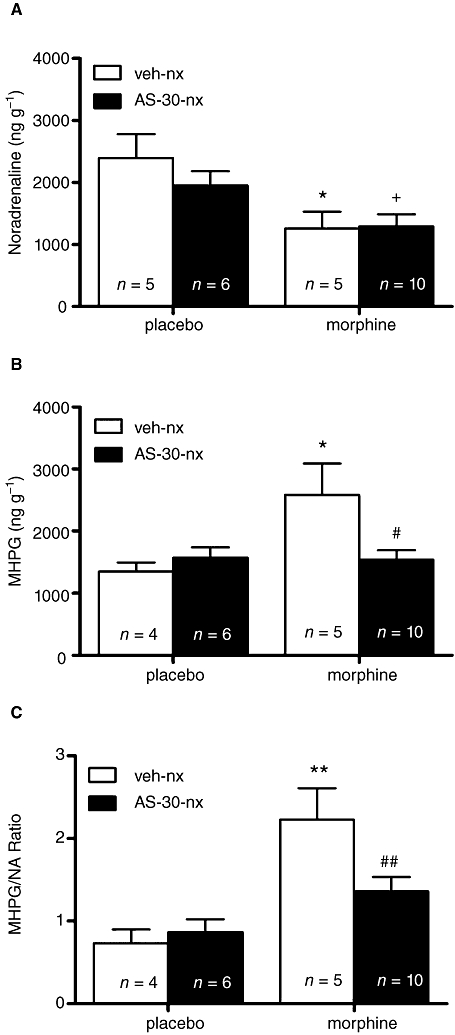
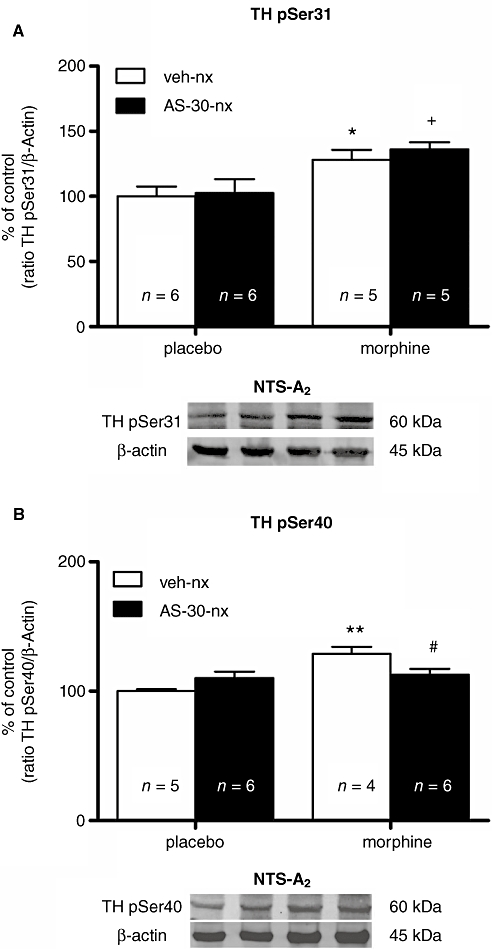
Key results: Rats pretreated with AS-30 showed decreased levels of somatic signs of naloxone-induced opiate withdrawal, but the corticosterone response was not modified. AS-30 attenuated the increased production of the NA metabolite, 3-methoxy-4-hydroxyphenylglycol, as well as the enhanced NA turnover observed in morphine-withdrawn rats. Finally, AS-30 antagonized the TH phosphorylation at Serine40 induced by morphine withdrawal.
Conclusions and implications: These results suggest that physical signs of opiate withdrawal, TH activation and stimulation of noradrenergic pathways innervating the PVN are modulated by CRF₂ signalling. Furthermore, they indicate a marginal role for the HPA axis in CRF₂-mediation of opiate withdrawal.
© 2011 The Authors. British Journal of Pharmacology © 2011 The British Pharmacological Society.
Figures
References
-
- Bobrovskaya L, Gilligan C, Bolster EK, Flaherty JJ, Dickson PW, Dunkley PR. Sustained phosphorylation of tyrosine hydroxylase at serine 40: a novel mechanism for maintenance of catecholamine synthesis. J Neurochem. 2007;100:479–489. - PubMed
-
- Deak T, Nguyen KT, Ehrlich AL, Watkins LR, Spencer RL, Maier SF, et al. The impact of the nonpeptide corticotropin-releasing hormone antagonist antalarmin on behavioral and endocrine responses to stress. Endocrinology. 1999;140:79–86. - PubMed
-
- Delfs JM, Zhu Y, Druhan JP, Aston-Jones G. Noradrenaline in the ventral forebrain is critical for opiate withdrawal-induced aversion. Nature. 2000;403:430–434. - PubMed
Publication types
MeSH terms
Substances
LinkOut - more resources
Full Text Sources
Research Materials